
Introduction
POLO shirts have long been the go-to garment that effortlessly blends casual comfort with a touch of class. Whether it’s a weekend round of golf, a business-casual office environment, or a custom uniform for a brand, the POLO shirt is everywhere. But have you ever wondered how these versatile shirts are actually made?
From selecting the right yarn to choosing the perfect collar style, every POLO shirt goes through a complex but fascinating production journey. This guide covers every essential aspect you need to know about POLO shirt production — from design to delivery.
POLO Shirt Production Process

What Defines a POLO Shirt?
A POLO shirt is typically characterized by:
- A soft collar (often ribbed or flat knit)
- A front placket with 2–3 buttons
- Short sleeves with ribbed cuffs
- Made from knitted fabrics like piqué or jersey
The History of the POLO Shirt
Origins in Sportswear
Initially designed for polo and tennis players, the shirt prioritized breathability and freedom of movement.
Lacoste’s Influence
In the 1920s, tennis player René Lacoste introduced the short-sleeved, collared design — changing fashion forever.
From Courts to Corporate Wear
POLO shirts quickly evolved into mainstream fashion and business casual wardrobes.
Fabric and Material Selection

Common Fabrics Used
- 100% Cotton: Soft, breathable, and natural
- Polyester-Cotton Blends: More durable and wrinkle-resistant
- Performance Fabrics: Include spandex or elastane for stretch
Knit Types in POLO Shirts
Piqué Knit
Features a waffle-like texture; the most traditional fabric for POLO shirts.
Jersey Knit
Smooth and lightweight; more casual and less structured.
Pattern Making and Grading
Creating the Blueprint
Each shirt starts with a pattern that defines its shape and size.
Grading for Sizes
The base pattern is graded up or down to produce sizes ranging from XS to XXL and beyond.
Cutting and Prepping
Cutting the Fabric
Automated or manual cutting methods ensure consistency across large quantities.
Fabric Relaxation
Before cutting, fabric is allowed to relax for 12–24 hours to prevent post-production shrinkage.
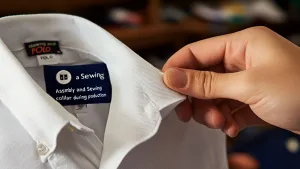
Assembly and Sewing
Constructing the Collar
Ribbed or flat knit collars are separately stitched and attached to the body.
Attaching the Placket
Precision is required to align buttons and buttonholes perfectly.
Hemming and Side Seams
Flatlock stitching or overlocking methods create durable, neat finishes.
Branding and Decoration
Logo Embroidery
Most common form of branding — typically placed on the left chest.
Printing Options
- Screen Printing: Great for bold, flat graphics
- Heat Transfer: Used for small runs and photographic prints
- Sublimation: Limited to polyester but allows full-color coverage
Color and Dyeing
Dyeing Methods
- Piece Dyeing: Fabric is dyed before cutting
- Garment Dyeing: Entire shirt dyed post-assembly
- Pigment Dyeing: Used for vintage or washed effects
Quality Control and Finishing
Inspection Points
- Fabric quality
- Stitch consistency
- Logo placement
- Color accuracy
Ironing and Packaging
Shirts are pressed, folded, tagged, and polybagged for shipping.
POLO Shirt Customization Options

Collar Types
- Ribbed collar
- Flat knit collar
- Self-fabric collar
Button Styles
- Branded
- Hidden
- Contrast buttons
Sustainability in POLO Shirt Production
Eco-Friendly Fabrics
Organic cotton, bamboo blends, and recycled polyesters are on the rise.
Ethical Labor Practices
Working with certified factories ensures fair wages and safe conditions.
Choosing a Manufacturer
What to Look For
- Minimum order quantity (MOQ)
- Sampling options
- Lead times
- Customer support
Finding the Best POLO Shirt Manufacturer guide
Red Flags to Avoid
- Poor communication
- No quality assurance policy
- Unrealistic pricing
Costs and Timelines
Cost Breakdown
| Component | Approx. % of Total Cost |
| Fabric | 35% |
| Labor | 30% |
| Overhead/Logistics | 20% |
| Branding/Labels | 10% |
| Miscellaneous | 5% |
Production Timeline
- Sample development: 7–14 days
- Bulk production: 15–30 days
- Shipping: 5–15 days, depending on destination
Common Mistakes in POLO Shirt Production
Inaccurate Sizing
Failing to test samples across sizes can lead to fit issues.
Overcomplicated Design
Unnecessary features can increase costs and production errors.
Latest Trends in POLO Shirt Production
- Use of smart textiles for moisture-wicking and UV protection
- Oversized fits and streetwear-inspired cuts
- Contrast collars and vintage dyeing techniques
Everything You Need to Know About POLO Shirt Production
From concept to completion, POLO shirt production is both an art and a science. Each stage — from fabric selection to branding — plays a critical role in delivering a high-quality garment that people love to wear. Whether you’re launching a new apparel brand or simply curious about how your favorite shirt is made, understanding this process gives you a new level of appreciation for the craftsmanship behind every collar and cuff.
FAQs
What is the best fabric for POLO shirts?
Piqué cotton is the traditional favorite due to its breathability, texture, and durability.
How long does it take to manufacture a batch of POLO shirts?
Depending on the order size, production typically takes 15 to 30 days.
Can I customize my POLO shirts with logos or prints?
Yes, customization is commonly done via embroidery, screen printing, or heat transfer.
What is the minimum order quantity (MOQ) for bulk production?
MOQs vary by manufacturer, but many start at 100–200 pieces.
How do I choose between piqué and jersey knit?
Piqué is textured and formal, while jersey is smooth and casual. Your use case determines the better fit.
Is POLO shirt production eco-friendly?
It can be! Look for organic fabrics and ethical factories with sustainability certifications.
Clear Call-to-Action (CTA)
Ready to bring your POLO shirt ideas to life?
Ninghow Apparel is your trusted manufacturing partner, offering customized wholesale POLO shirts, T-shirts, hoodies, and more for brands, businesses, and events. From design consultation to door-to-door delivery, we’ve got you covered.
👉 Contact us now for a free quote,
👉 Sign up for our newsletter to get exclusive tips on fashion production,
👉 Or explore our full product catalog and discover what makes us different!
Let’s create something amazing — together.