

Introduction: Unpacking the “Made in Italy” Brand Cachet
The prestige of Italian clothing manufacturers and the “Made in Italy” luxury supply chain is renowned worldwide. But as a buyer or brand owner, you might wonder—does the cachet just raise the final cost, or is there genuine value behind the label? In this article, we dive deep into the cost vs value debate, analyzing whether the premium for Italian manufacturing delivers more than just higher price tags. You’ll find practical comparisons, industry-backed insights, and actionable ways to assess real worth.
The True Cost of “Made in Italy” Apparel

Before diving into the glitz and glamour, it’s crucial to understand how costs for Italian-made clothing break down. From labor to materials and certifications, Italian production lines often involve higher wages, strict quality standards, and local sourcing. This combination can push up the base unit price by 20-50% compared to Eastern European or Asian alternatives. Yet, for some, the long-term value—be it craftsmanship, durability, or resale—more than justifies the sticker shock.
Why Italian Clothing Manufacturers Are Synonymous with Luxury
The luxury supply chain in Italy doesn’t just rely on tradition; it thrives on meticulous detail and centuries-old techniques. Artisans in regions like Lombardy and Tuscany practice hand-finishing, which becomes a selling point for high-end brands. Unique processes and attention to subtle details set Italian garments apart, even if some competitors have adopted similar technologies. In fact, when considering custom solutions like apparel manufacturing, having factories with reliable fit accuracy and material expertise often leads to better results.
Evaluating Cost vs Value: Are Higher Price Tags Justified?
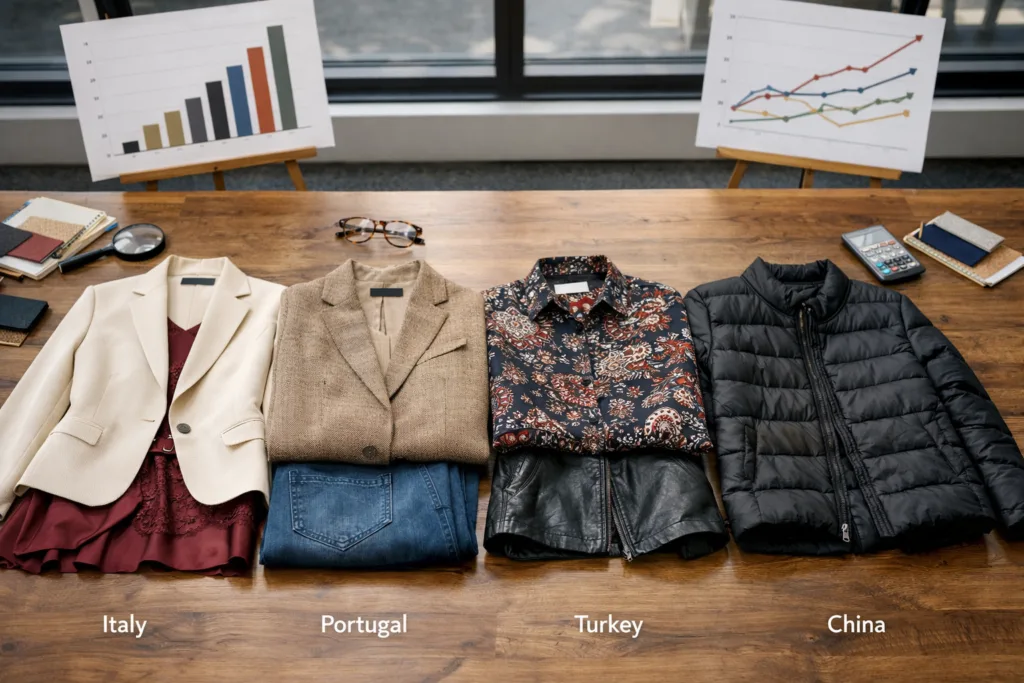
Is paying more simply about price perception or real substance? Buyers keen on sustainable sourcing face an acute dilemma: while Italy offers consistent quality, you could find comparable value at a lower cost from modern suppliers in Portugal or Turkey. Our breakdown below highlights cost calculations across regions:
| Region | Luxury Garment Avg. Cost | Durability | Brand Perception |
|---|---|---|---|
| Italy | $120 | High | Prestige/Heritage |
| Portugal | $95 | High | Sustainability |
| Turkey | $80 | Medium | Innovative/Competitive |
| China | $70 | Medium | Efficiency |
As the table shows, Italy leads in perceived prestige but not always in price-to-performance ratio.
Comparing Luxury Supply Chains: Global Insights
Luxury isn’t exclusive to Italy anymore. Brands globally source for quality and price balance. For example, as seen in Portugal’s sustainable luxury hubs, many labels prioritize eco-friendly practices alongside craftsmanship—sometimes matching Italy’s standards at 20% less cost. Similarly, Turkish denim stands out with durable, innovative washing techniques suited for European brands. For cotton, embroidery, or embellishments, Indian suppliers increasingly challenge traditional Italian strengths.
Materials and Fabric: What Sets Italy Apart?
From premium wool blends to rare silks, Italian manufacturers source superior materials, often locally. Their fabric traceability standards and low-defect rates set benchmarks for global luxury. Yet, modern international suppliers can now replicate much of this—especially if you select an experienced manufacturer focused on fabric honesty and quality control.
Fit, Pattern, and Sampling: Lessons from Experienced Garment Makers
Italian ateliers have mastered pattern cutting for over a century, but that expertise is spreading. Today’s supply chain partners increase fit accuracy through robust sampling processes. As a practical example, Ninghow Apparel, a garment manufacturer, emphasizes prototype reviews and real-world fit tests before mass production—sharing the Italian commitment to minimizing costly errors. Brands new to international sourcing should seek partners with a transparent sample-to-store timeline and responsive iteration cycles.
Quality Control and Finishing: The Final Touches
Luxury is often found in the finishing details: hand-tacked seams, reinforced hems, and invisible zips. Italy’s emphasis on repeatable quality control guarantees consistency across runs, but advanced global manufacturers have caught up by investing in automated precision checks. Finding a supplier able to document and guarantee quality checkpoints—as with apparel manufacturing quality control—can help brands balance cost and peace of mind.
Packaging, Delivery, and Retail Presentation
Packing luxury garments requires more than tissue paper and a branded box. Italian supply chain partners excel at elegant finishing, elevating the unboxing experience. For growing brands, learning from these standards—such as using custom inserts, eco-friendly wraps, and coordinated logistics—can boost perceived value without radically increasing costs.
Brand Storytelling: How “Made in Italy” Shapes Perception
Heritage-driven storytelling remains Italy’s ace in the hole. The label itself signals authenticity to buyers, often justifying a price bump. However, modern luxury brands now narrate stories around sustainability, innovation, and inclusivity. Building a loyal audience isn’t about the country of origin alone—it depends on transparent communication and proven product benefits.
Alternatives to Italy: Sourcing for Value and Quality
Competitive brands regularly compare suppliers from Italy, Portugal, Turkey, China, and India to clarifiy both cost and value. Portugal, for instance, stands out for sustainable production without major sacrifices in finish or fit; Turkey leads in technical denim; and China remains unrivaled for volume efficiencies, especially post-pandemic.
The “Brand Cachet” Debate: Who Actually Benefits?
Is the premium for “Made in Italy” just a marketing tool or a true differentiator? For established luxury brands, it undeniably helps command higher price points. But startups must weigh whether customers really value heritage over proven quality and fit from other regions. For some, the cachet is essential; for others, product substance or ethical sourcing brings better returns.
Cost Breakdown: Key Factors Influencing Final Price
| Factor | Italy | Alternatives |
|---|---|---|
| Labor | Very High | Low–Medium |
| Fabric Sourcing | Local Premiums | Mixed/Global |
| QC | Rigorous | Improving Rapidly |
| Packaging | Luxury Focus | Upgradable |
| Certifications | Established | Variable |
A brand’s budget and strategy determine which factors are worth the premium.
Understanding the Retail Markup: Does Cachet Equal Profit?
Retailers often add 2x–4x markups, banking on Italy’s cachet for easy sell-through. But savvy buyers increasingly research supply chains, making origin less of a guarantee for sales conversion. It pays to know your audience: luxury-literate shoppers may expect Italian origin, while emerging markets prioritize value and innovation.
Brand Positioning: When to Leverage “Made in Italy”
Heritage marketing is powerful, but only if supported by product excellence. If you plan to target luxury shoppers or those who value tradition, the Italian badge may boost acceptance and margins. If your buyers focus on ethical sourcing, technical innovation, or streetwear trends, quality—and not location—should guide your sourcing decisions.
Ninghow Apparel’s Perspective on Global Sourcing Realities
Having worked with brands that compare Italian, Portuguese, and Chinese supply chains, Ninghow Apparel often sees that production success hinges on actionable QC, effective sampling, and predictable communication. While Italian cachet can justify luxury pricing, many buyers end up preferring suppliers offering transparent cost breakdowns and step-by-step production oversight.
Five Red Flags: Paying for Branding vs Actual Value
- Lack of transparent materials sourcing
- No clear quality control guarantees
- Emphasis on heritage over fit and comfort
- Poor post-sale customer support
- No documentation or certification offered
Always check if the supply chain delivers more than just a fancy label.
Must-Ask Questions Before Investing in Italian Production
- What specific processes drive cost increases?
- Is after-sales support locally available?
- Are fabric and finish standards documented?
- How does turnaround time compare?
- Is the branding flexibility worth the added investment?
Buyer Strategy: Comparing Cost vs Value for Your Brand
| Criteria | Made in Italy | Other Regions |
|---|---|---|
| Retail Margin Potential | High | Moderate–High |
| Production Risk | Low | Variable |
| Innovation Access | Limited | High |
Carefully match your budget, audience, and product goals to the right region and supply partner.
Six Steps to Balancing Brand Cachet and Real Value
- Set clear product standards and KPIs
- Conduct multi-region sourcing research
- Request references, quality records, and certifications
- Review fit samples and production schedules
- Map costs against expected shelf price
- Monitor market trends for shifts in buyer priorities
Made in Italy: Is the “Brand Cachet” Worth the Cost?

Ultimately, the “Made in Italy” label does boost luxury retail pricing and shapes brand perception, but brands need to look deeper. Is the premium just a badge, or does it come with tangible benefits—performance, quality, ethics, and customer loyalty? By comparing Italian cachet with global alternatives, you can make data-driven sourcing decisions that protect profit margins and brand reputation.
Frequently Asked Questions
Does “Made in Italy” guarantee superior quality?
While “Made in Italy” signals high-quality standards, other regions increasingly match or exceed Italian quality—especially when brands carefully vet suppliers and monitor production closely.
Is producing in Italy always more expensive than other countries?
Generally, yes—Italian labor and local sourcing drive higher costs. Yet, efficiencies elsewhere can offer comparable value at lower prices, depending on material and fit priorities.
Can smaller brands access Italian luxury manufacturers?
Some Italian factories accept lower MOQs, but many prioritize established luxury labels. New brands may face longer sampling timelines and higher initial costs compared to sourcing in Portugal or Turkey.
How do Italian manufacturers ensure authenticity?
Italian suppliers often hold certifications, maintain local material sourcing, and keep transparent records of artisan techniques—helping prove authenticity and maintain brand credibility.
What areas do Italian factories truly excel in?
Key strengths include advanced pattern cutting, premium fabric sourcing, rigorous QC, and luxury packaging. Heritage branding is another distinct advantage for retail margins.
Is the “Made in Italy” premium sustainable as supply chains evolve?
The cachet remains strong for heritage-focused buyers, but sustainability, technical innovation, and transparent sourcing increasingly influence luxury consumer decisions. The premium is no longer guaranteed without product substance.