
Introduction: Mastering How to Price Clothing Brand Products
Pricing clothing brand products is more than just adding up costs and slapping on a tag. It’s a careful balance. Get it right, and your brand thrives. Get it wrong, and you risk lost sales or shrinking profit. With competition tight, smart pricing can lift your reputation and help you grow. This guide shows how to price your clothing for profit and competitiveness, making you confident every time you set a retail price.
Understanding Your Total Costs

The first step to a strong pricing strategy is knowing your true costs. Every clothing item’s price starts here. Often, brands overlook hidden expenses, cutting into margins by accident.
Direct Material Costs
Core costs include fabrics (like combed cotton, recycled polyester, or eco-friendly modal), trims, and packaging. For example, a 200gsm interlock cotton T-shirt might cost more than a lightweight polyester top. Always track bulk fabric prices—and control shade bands and dye lot approval to avoid costly re-dyes.
Cutting and Manufacturing Costs
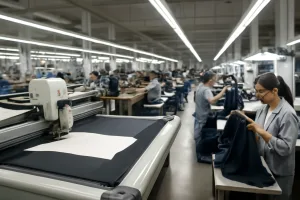
Consider all production steps. Expenses include pattern making, cutting, sewing, and finishing. Efficient line balancing and advanced machinery (like auto-cutters or flat-seam machines) save time and money. Quality checks, from inline inspections to AQL (Acceptable Quality Level) sampling, prevent returns and keep your costs controlled.
Decoration and Embellishments
Prints, embroideries, and special finishes (antimicrobial, UV protection) add value—and cost. For example, 3D puff embroidery, DTF (direct-to-film) prints, or technical coatings increase both unit cost and final retail value. Always include lab dips, strike-offs, and sample approval fees in calculations.
Overheads and Indirect Costs
These include salaries, rent, marketing, utilities, and distribution. Don’t forget logistics and compliance expenses (such as OEKO-TEX or GOTS certification and testing). Fold them into your costing model to avoid profit leakage later.
Cost Table: Fabric & Finish Impact on Unit Cost
| Fabric/Finish | Avg. Cost (USD/pc) | Best Use | Adds Retail Value? |
|---|---|---|---|
| 180gsm Ring-Spun Cotton Jersey | $2.10 | Basic T-shirts, Promotions | No |
| 220gsm GOTS Organic Cotton Piqué | $3.90 | Premium Polos, Uniforms | Yes |
| 230gsm rPET/Recycled Poly Fleece | $3.75 | Activewear, Athleisure | Yes |
| Moisture-Wicking Finish | +$0.35 | Golf, Tech Tees | Yes |
| Sublimation Print (All-Over) | +$0.80 | Polyester Athleisure | Yes |
Profit Margin Calculation Methods
After costs, you need to figure out how much profit each piece brings. Calculate clear margins using these methods:
- Markup percentage: Add a fixed % over cost. For example, cost x 2.0 (100% markup).
- Gross Profit Margin: (Retail Price – Cost) / Retail Price x 100%. Healthy apparel margins often target 55%–70%.
- Keystone Markup: Double the total cost for simple pricing. Use for basics when market pricing is stable.
- Variable Margin by Category: Premium segments (like eco-activewear or corporate polos) carry higher markups than basic T-shirts due to perceived value and lower price wars.
Profit Example
If a polo costs $7.00 (all-in) and you sell it wholesale at $14.00, the gross profit margin is (14-7)/14 = 50%. For a collection, always set a target margin range by category, then check your portfolio for outliers.
Market-Oriented Pricing Approaches
Profitable brands don’t price clothing in a vacuum. Market research and competitor analysis matter. Find out what others charge for similar items—especially brands with matching quality, finishes, and story.
Types of Market Pricing
- Competitive pricing: Set prices in line with top rivals. Basics like tees and hoodies need close benchmarking.
- Penetration pricing: Price lower to enter or grow in a crowded market (often for new sportswear lines or team kits).
- Premium pricing: Set higher prices to signal better craftsmanship or sustainability. Works for organic, ethical, or design-led brands.
- Bundle pricing: Sell sets (e.g., polo + short + cap) at a special rate. Great for tournaments or corporate programs.
Key Considerations
Location affects pricing too. Big city retailers charge more. E-commerce cuts overhead, but logistics and returns management cost extra. Always map your sales channels before setting final prices.
Brand Positioning and Pricing Power
Your brand position controls both customer expectations and your price ceiling. Is your story built around sustainable sourcing, technical performance, or bold design? Your messaging should match your price tag.
How Brand Influences Price
- Quality claims: Show proof of OEKO-TEX or GOTS fabric use, or use high-res photos of double-needle seam finishes.
- Design signatures: Custom patterns, advanced fits, or unique trims (like ribbed collars or laser-cut vents) add perception of value.
- Reputation and trust: Consistent sizing, stable colors, and reliable delivery build loyalty—allowing for firmer pricing.
Expert Insight: “At Ninghow Apparel, consistent fit and pre-shrunk fabrics help our customers reduce returns by over 20%, supporting both profit and brand value.”
Brand Tier and Price Expectations
Know your tier: Entry (price-led), mid-tier (focus on quality or comfort), or premium (emphasis on special details or sustainability). Proof points and story justify higher prices. Customers pay extra for trust, not just trend.
How to Price Clothing Brand Products
Combine all the above steps into a clear, repeatable process for pricing clothing brand products.

- Calculate all costs. Include direct, indirect, logistics, compliance, and sample costs for each style.
- Set a margin target. Pick a standard markup/margin for core and premium lines. Adjust based on real market data.
- Analyze competitors. Chart at least three direct rivals, noting fiber content, GSM (grams per square meter), finish level, and retail price. Use this data to adjust your range.
- Factor in brand position. Does your brand offer proven quality, tested performance, or ethical sourcing? Build a value story that justifies your price.
- Test and monitor. After launch, watch sell-through rates, returns, and feedback. Adjust your pricing if needed.
Sample Pricing Calculation Table
| Item | Direct Cost | Overhead | Target Margin % | Recommended Price |
|---|---|---|---|---|
| Basic T-shirt (180gsm cotton) | $2.00 | $0.80 | 60% | $7.00 |
| Performance Polo (220gsm poly piqué) | $3.50 | $1.20 | 65% | $13.50 |
| Organic Hoodie (340gsm fleece) | $7.00 | $2.20 | 70% | $30.60 |
Valuing Features and Finishes
Special features—like flatlock seams, moisture-wicking treatments, or 3D embroidery—let you justify higher prices. Be specific about improvements. Claiming “anti-pilling” carries more weight if you reference ISO 12945 pilling test results, for example.
Popular Features Worth Pricing Higher
- Technical knits (French terry, pique, interlock for luxury polos)
- Lab-tested performance (AATCC 61 colorfastness or ISO 105 for UV resistance)
- Eco-content (GOTS organic or rPET, with traceability proof)
- Special decoration (all-over sublimation, 3D embroidery)
- Packaged presentation (recycled paper hangtags, printed carton labels)
Reserve your best features for hero products with higher margin targets.
Volume, MOQ, and Lead Time—Pricing Impacts
Order volume and lead time affect your costs and your ability to negotiate factory pricing. Lower MOQs (minimum order quantities) and rush orders often drive up per-unit cost. For example, Ninghow Apparel offers flexible MOQs but encourages batch production for optimal price breaks. Build these realities into your base cost when pricing clothing brand products for both B2B and retail channels.
MOQ Table: Price Break Example
| Order Qty (pcs) | Unit Cost ($) | Lead Time (weeks) |
|---|---|---|
| 200 | $11.50 | 5–6 |
| 600 | $9.20 | 6–7 |
| 2,000 | $7.80 | 8–10 |
Always plan production rounds to maximize price advantages. Passing savings to your customers—or increasing margins—is your call.
Legal, Testing, and Sustainability Factors in Pricing
Meeting safety, labeling, and sustainability rules means extra steps and costs. For instance, testing for CPSIA or REACH compliance on labels and inks, plus proof of GOTS sources, adds value and reduces risk. Brands serious about sustainability often invest in certified recycled or organic materials and eco-packaging. Use clear care labels (ISO 3758), full fiber contents, and batch-level traceability to signal trust. These investments support higher prices and customer loyalty.
Optimizing Your Pricing Strategy Long-Term
Pricing isn’t set once and left forever. Track sell-through, returns, competitor moves, and customer response. Monitor the effects of price changes on both volume and profit. Use promotions and bundle offers for slow movers, but defend the price of signature items. Update your pricing for rising fabric costs or new compliance rules.
Tools for Smarter Pricing Management
- Margin tracking spreadsheets
- Cloud-based inventory management software
- Regular cost audits and vendor negotiations
- Test group feedback for new launches
With a disciplined, data-driven approach, your pricing will both protect your profit and keep you ahead of the competition.
Next Steps: Launch with Confidence

Now you know how to price clothing brand products for lasting success. Blend detailed cost breakdowns, sharp competitor research, and a strong brand story. Make each pricing decision support your reputation, your customer promise, and your business goals. When in doubt, consult with experienced partners like Ninghow Apparel; their know-how in quality, fit, and sustainable manufacturing ensures your clothing delivers on its value—at every price point.
Frequently Asked Questions
How do I determine the best markup for my clothing line?
Choose a markup by analyzing your total costs, expected profit, and what similar brands are charging; markups usually range from 2x to 3x your full item cost.
What costs should I include when pricing clothing?
Include material, manufacturing, labor, packaging, decoration, quality testing, compliance, logistics, and overhead expenses in your total price calculation.
How does brand positioning affect my clothing prices?
Strong brand positioning justifies higher prices because customers will pay more for trusted quality, unique design, or sustainable values that match your brand story.
Should I adjust pricing for wholesale vs. retail sales?
Yes; wholesale prices are lower to account for large orders, while retail pricing aims for a higher margin per piece to cover marketing, distribution, and store costs.
How do small volumes (low MOQ) impact my unit price?
Small order volumes often raise production costs per item since factories have fixed machine set-up and labor costs, making prices per unit higher for low MOQs.
Why are certifications and testing important for apparel pricing?
Certifications and lab tests prove quality and compliance, letting you justify premium prices and meet buyer, retailer, and legal requirements with confidence.