
Understanding Small Order Surcharge, Sampling Cost & Unit Economics
Clothing startups and small brands often face the tough choice: pay a surcharge for a low MOQ (minimum order quantity) or commit to a bulk order that might tie up thousands in inventory. The decision goes beyond just the upfront price tag. If you’ve ever wondered whether paying extra for low MOQs makes sound business sense, you’re not alone. Factoring in small order surcharges, sampling costs, and unit economics is critical to creating a sustainable launch strategy.
What Is a Small Order Surcharge?
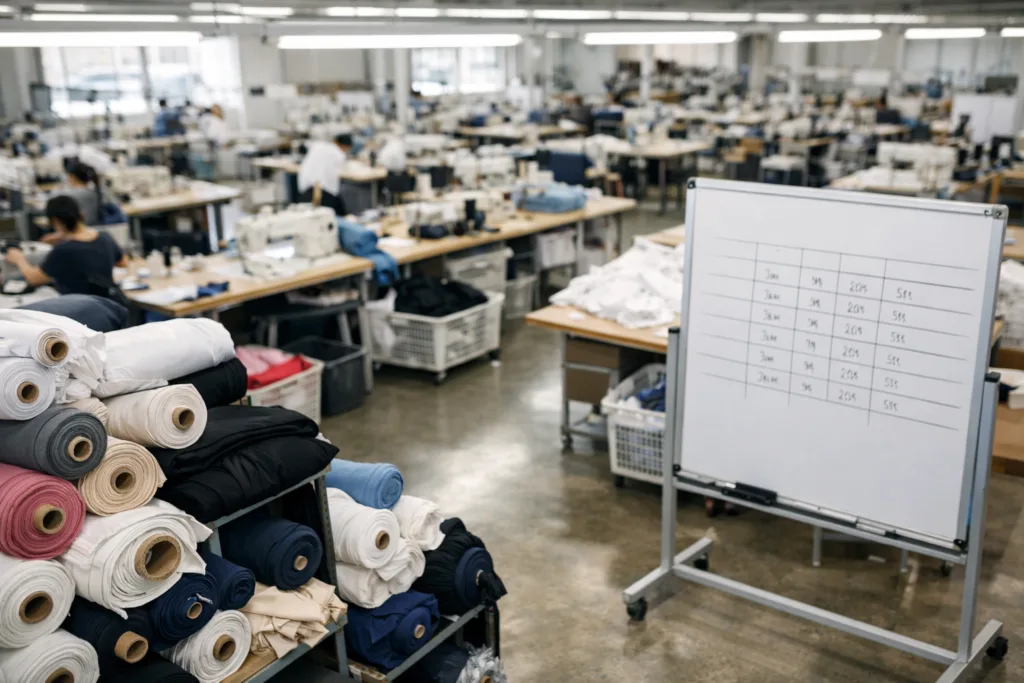
A small order surcharge is an extra fee manufacturers charge when you want to place an order below their standard MOQ. This compensates factories for setup, labor, and materials costs spread over fewer units, increasing their per-garment expense. Learn more about low MOQ garment manufacturing to see typical thresholds and expectations.
Sampling Costs: Why Samples Cost More Per Piece
Sampling helps brands validate fabrics, fit, and details before committing to bulk. Each sample produced—especially with custom trims or patterns—needs separate machine setup, manual oversight, and extra time. That’s why samples carry a much higher per-unit cost—sometimes 3-10x bulk pricing.
Explaining Unit Economics: The Real Apparel Cost Breakdown
Unit economics is the calculation of profit and loss for each unit sold. For apparel, it takes into account:
- Manufacturing cost per piece (including surcharges)
- Sampling & development costs amortized over units
- Shipping, warehousing, and delivery fees
- Packaging and labeling
- Potential discounts and returns
Why Factories Charge More for Low MOQs
Factories operate efficiently with larger orders. Machine setup, pattern-making, and labor are spread over hundreds or thousands of pieces. For small orders, these fixed costs aren’t minimized, so prices per item are higher. Reliable quality control also has the same baseline cost regardless of batch size.
Cost Analysis: Paying 30% Surcharge vs. Inventory Overload
Let’s compare two real-world scenarios for a T-shirt brand:
| Scenario | Order Size | Unit Cost | Surcharge | Total Cost | Inventory Risk |
|---|---|---|---|---|---|
| Low MOQ (w/ 30% Surcharge) | 100 pieces | $6.50 | Yes | $650 | Low |
| Factory MOQ (No Surcharge) | 500 pieces | $5.00 | No | $2,500 | High |
If market demand is uncertain, the funds ‘saved’ per unit on a bigger order can be wiped out by unsold stock, markdowns, or financing costs. A surcharge can be a smart hedge for startups, especially when total capital is limited.
The Hidden Cost of Overstock: Tying Up Capital
Excess inventory ties up your money, racks up warehousing fees, and may force you to liquidate slow sellers at deep discounts. This is called the ‘opportunity cost’—money spent on deadstock is money you can’t use for marketing, sampling new styles, or fixing production issues. Paying a premium for a low MOQ can protect your cash flow and agility.
When Is Paying Extra for Low MOQ Worth It?
Paying a surcharge for a small batch is worth it if:
- You’re testing new markets, designs, or fits
- You lack accurate demand forecasts
- Your total available funds are limited
- Your brand values exclusivity or limited editions
- Warehousing/storage is costly or logistically difficult
Balancing MOQ Surcharges vs. Scaling Ambitions
Startups may feel pressure to ‘go big’ to get better unit costs—but high MOQs often lead to cash constraints and inventory headaches. Instead, intentionally paying a small order surcharge can free up resources for design tweaks, marketing, or a stronger product launch.
Pitfalls of Overcommitting to a Factory MOQ
Ordering more than you can realistically sell creates several risks:
- Forced markdowns or promotional giveaways
- Seasonal obsolescence (fashion changes, unsold old designs)
- Difficulty pivoting to new concepts or fits
- Tied-up working capital, limiting growth
How to Negotiate MOQs and Surcharges as a Startup
Brands should be transparent about their growth plans and cash constraints. Sometimes factories can meet you halfway or shift surcharges lower for a long-term client. Reading expert tips on small-batch negotiation can boost your leverage and confidence in these conversations.
Real-Life Advice: Insights from Ninghow Apparel
Ninghow Apparel, as a garment manufacturer, has found startups benefit most from paying a surcharge when launching a new fit or experimenting with unique fabrics. In these cases, a low-risk test order (even with elevated per-unit costs) often leads to better long-term margin retention, as deadstock and cash strain are minimized. Their sampling team reminds new brands: it’s usually less painful to pay a 30% premium on a small order than to deal with five boxes of unsold inventory at year’s end.
Case Study: Startup Brand Opts for Low MOQ and Wins Big
An eco-focused streetwear label partnered with a factory for a 120-piece run, paying a 25% surcharge for a low MOQ. Though the cost per hoodie was higher, the brand sold out quickly, reinvested revenue, and scaled their next order for volume discounts—without any warehousing expense or dead inventory. Paying more upfront unlocked agility and market learning.
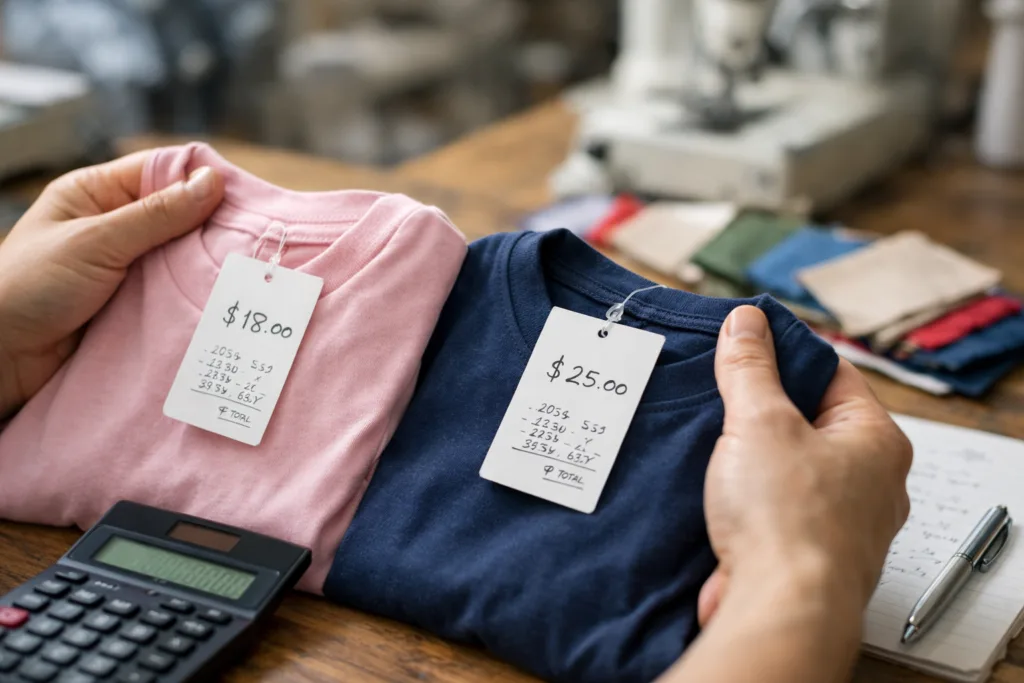
How to Calculate if a Surcharge is “Worth It” (Practical Formula)
Here’s a simple process:
- Estimate market demand and ideal launch batch size.
- Get quotes for both low MOQ (with surcharge) and standard MOQ (no surcharge).
- Forecast expected sell-through in 3-6 months.
- Calculate total dollars tied up in unsold inventory for factory MOQ scenario.
- Compare warehousing and opportunity cost versus extra you’d pay in surcharges.
In most early-stage scenarios, break-even is reached with the smaller batch, even if per-piece pricing seems painful. It’s a classic case where “cheaper” can cost more in the long run.
How Sampling Costs Affect Bulk Order Decisions
High sampling costs can be a reason to order only what you need, as overbuying after minimal testing can backfire. For complex styles or premium trims, paying a surcharge for a limited batch after sampling reduces the risk of a costly misstep.
How to Reduce Per-Unit Costs Without Overordering
Consider the following:
- Negotiate tiered pricing: higher for first batch, discounts for reorders
- Bundle fabric/yarn bookings with other brands (factory “pooled” production)
- Stay flexible on body color or trims to fit factory workflow
- Use standard patterns to cut development costs
Creative Alternatives to Small Order Surcharges
Some factories let you combine multiple styles or colorways into a single MOQ, or work on open programs where unsold pieces can be repurposed or rebranded later. These options can lower your total risk without inflating costs.
Comparative Table: Low MOQ Surcharge vs Standard MOQ Bulk Order
| Criteria | Low MOQ (+ Surcharge) | Bulk Order (No Surcharge) |
|---|---|---|
| Upfront Capital Needed | Lower | Higher |
| Cash Flow Flexibility | Better | Worse |
| Inventory Risk | Low | High |
| Per-Unit Cost | Higher | Lower |
| Pace of Feedback & Pivot | Faster | Slower |
| Warehousing Cost | Minimal | High |
Supply Chain Agility and Its Value for Small Brands
Fast-moving supply chains support piloting new designs or responding to trends. Paying a surcharge for this agility can outweigh the drawbacks of higher per-piece pricing if flexibility drives future profit or brand growth.
Potential Downsides: When Paying Extra Doesn’t Pay Off
There are scenarios where paying a surcharge is less optimal:
- You have established demand from previous sales data or pre-orders
- You can warehouse and finance extra stock efficiently
- Designs are evergreen or ‘core’ basics not likely to go out of style
Summary Table: Major Factors Influencing Low MOQ Surcharges
| Factor | Maximum Impact |
|---|---|
| Number of Styles | More styles = higher surcharge |
| Customization Level | More custom = higher cost |
| Sampling Requirements | Complex sampling = higher per-unit charge |
| Factory Relationship | Long-term = potential surcharge reduction |
| Repeat Orders | Established history = better rates |
Strategies to Mitigate Small Order Surcharges
Consider partnering with other micro-brands to split orders, aligning launches to optimize for fabric runs, or negotiating guaranteed reorder commitments (while starting small). Factories like Ninghow Apparel’s fabric experts can sometimes recommend stock fabrics or “shared MOQ” programs to lower your launch costs.
Paying Surcharges: When is it Worth Paying Extra for Low MOQ?
Here’s the bottom line: For brands with uncertain demand, limited capital, or a need to test new products, paying a premium for lower MOQs is frequently the wiser move. It can save you thousands by avoiding unsellable stock and empower you to adapt quickly to feedback. However, it’s crucial to run the numbers: calculate sampling, surcharges, and likely sell-through. When in doubt, lean toward flexibility—even at a higher unit price—unless you have blockbuster data to back a big order.
Conclusion: Making the Smarter Cost Decision for Your Stage
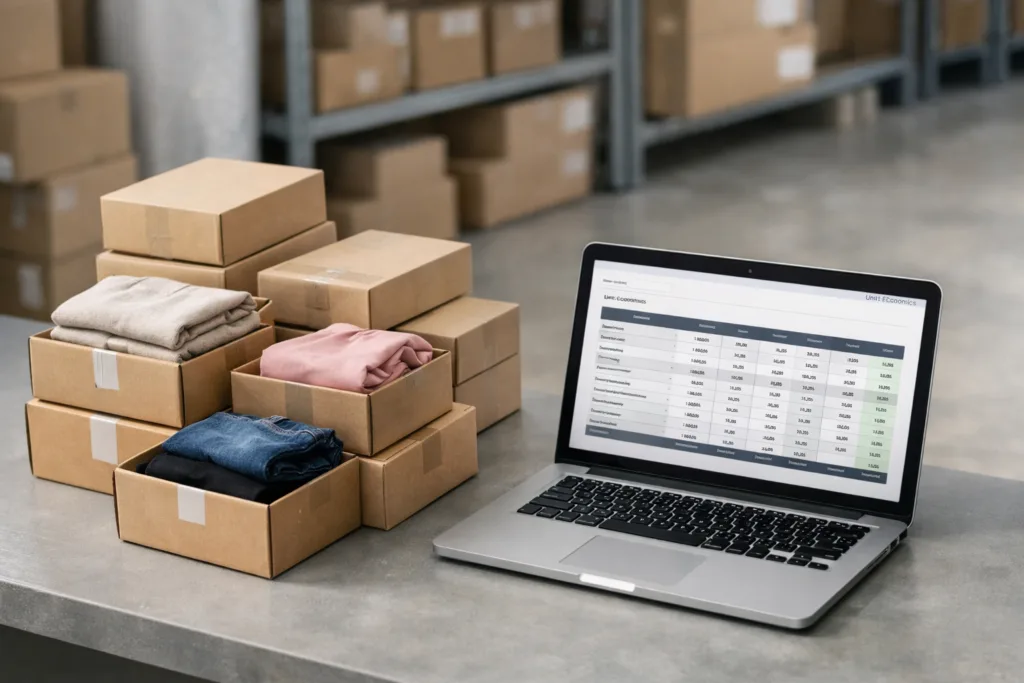
Whether you’re a startup or a scaling label, balancing production costs with market agility remains a core challenge. Paying a small order surcharge—while it might sting at first glance—often positions brands for greater long-term success and smarter use of capital. Analyze your real demand, cash position, and risk tolerance before chasing volume discounts. Remember: unsold product is costlier than almost any surcharge. In manufacturing, sometimes paying a little more now means losing a lot less later.
Frequently Asked Questions
Are small order surcharges always negotiable?
Not always. Some factories have firm policies, but others may offer reductions for new clients or discuss lower surcharges if future orders are expected.
What is a fair small order surcharge for low MOQ?
Typical surcharges range from 15% to 50% over standard pricing, depending on complexity, number of styles, and custom elements. 25–35% is common for basic styles.
Can small brands avoid surcharges completely?
Only if they join shared programs, find micro-factories, or negotiate pooled production, but it’s rare with custom specs or unique designs.
Does paying a surcharge guarantee better quality or service?
No; the surcharge reflects cost inefficiencies, not quality upgrades. Consistent QC still depends on the factory’s standard practices.
What’s the biggest risk of not paying extra for low MOQ?
Overordering to avoid surcharges can lock up capital in unsold inventory, which is often much costlier in the long run than the original surcharge.
How can I calculate the opportunity cost of deadstock?
Estimate how much money would be tied up in unsold goods and compare this against the surcharge amount. Include warehousing and markdown costs for accuracy.
Related Reading
- MOQ Explained: Why Factories Want Minimums & How It Affects Startups
- 7 Pro Sourcing Strategies for Small-Batch Startups on a Tight Budget
- MOQ vs MCQ: How to Navigate Color Minimums Without Breaking the Bank
- Cracking the Code: True Cost Calculation for Custom Shorts
- The Complete Guide: From Sample to Store in a Fast-Moving Market