

Understanding the Path: From Sample to Bulk Shorts Production
Moving from the drawing board to shipping hundreds or thousands of shorts starts with a well-planned workflow. Let’s follow each stage, pointing out essential actions and expert tips to avoid common pitfalls.
Product Development and Tech Packs
Strong product development begins with tech packs—the technical documents that outline your garment’s precise measurements, fabrics, trims, tolerances, construction details, and artwork. They guide your manufacturer and ensure everyone is on the same page. A complete tech pack should include fit specs, size grading, trims list, and Pantone or fabric color references.
Fabric and Finish Selection
The choice of fabric shapes comfort, function, cost, and style. For shorts, common fabrics include:
- Combed cotton (20s/24s/32s)
- Organic cotton (GOTS-certified)
- Recycled polyester (rPET blends), adding stretch fibers like elastane
- Performance knits: single jersey, French terry (good for sweat shorts), and lightweight twills or poplins
Choose finishes based on end use: moisture-wicking and anti-odor treatments for athletic shorts; peach finish or brushed back for softness in loungewear; UPF (ultraviolet protection) for outdoor lines.
| Fabric Type | Properties | Best Use Scenarios |
|---|---|---|
| Combed Cotton | Soft, breathable, durable, 180–240 gsm | Loungewear, streetwear, youth basics |
| Recycled Polyester Blend | Moisture-wicking, durable, 130–180 gsm | Performance/athletic shorts |
| French Terry/Fleece | Mid-heavy weight, warm, 280–360 gsm | Sweat shorts, resort wear |
| Peach-finish Poplin | Smooth surface, crisp feel, light | Casual, beach, or coaching shorts |
scale up shorts manufacturing

Scaling up shorts manufacturing takes more than simply repeating the sample process. Each added step brings new checks to maintain fit, color, handfeel, and label accuracy across large batches. Let’s dive into the workflow and best practices for making shorts at scale.
Lab Dips, Strike-Offs, and Bulk Approval
Start with fabric swatches and lab dips—small test batches dyed to your Pantone color. Run lab dips under controlled lab conditions and check them in daylight and under D65 light to catch shade differences. For printed or decorated shorts, strike-offs (small printed samples) confirm artwork placement, clarity, and finish.
Pattern Making, Size Grading, and Prototypes
Turning a design into a pattern means translating a flat idea into three-dimensional clothing. Professional pattern makers create base patterns and then grade them—scaling up or down for sizes S, M, L, XL, etc.—to ensure consistent fit throughout your range.
- Sample cutting: Use both manual and digital auto-cutters for accuracy, especially with stretch or blended fabrics
- Size set trials: Produce short runs in all graded sizes, checking for comfort and proportion
Pre-Production Samples (PP Samples)
PP samples, or pre-production samples, are made with bulk-ready materials and trims. They must match all bulk specs and serve as the gold standard for large-batch runs. Brands and manufacturers, like Ninghow Apparel, hold a “PP sample approval” meeting—checking every detail against the tech pack before green-lighting mass production.
Optimizing Cut & Sew for Bulk Production
When scaling, even small pattern differences can cause problems in fit and appearance. Here’s how factories maintain tight tolerances:
- Marker making: Arranges all pattern pieces on fabric with optimized layout, reducing waste
- Fabric relaxation: Letting fabric rest before cutting minimizes shrinkage and misalignment
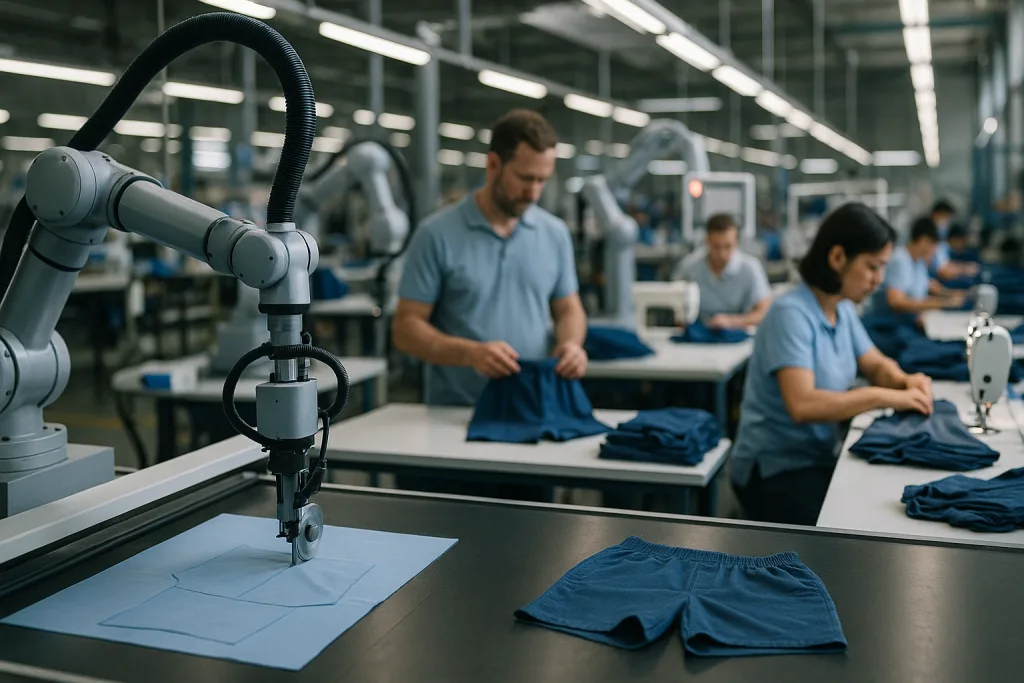
- Cutting methods: Auto-cutters enable precision; manual cutting handles thick or difficult fabrics
- Assembly line balancing: Workers specialize—some handle side seams, others attach waistbands or pockets, balancing speed and quality
Key Stitching and Construction Details
Shorts must handle daily movement, so stitching is critical. Main seams use ISO 301 (lockstitch) or ISO 504 (overlock), with coverstitch hemming for durability and a clean look. Bartacks strengthen stress points, like pocket openings and belt loops. For waistbands, elastic insertion and drawcord openings need extra attention.
Decoration: Prints, Embroidery, and Labels
Bulk decoration methods depend on design:
- Screen print (plastisol for vibrant colors; water-based for soft handfeel)
- DTF (Direct to Film) for intricate, multi-color graphics even on dark fabrics
- Sublimation for all-over prints, mainly on poly blends
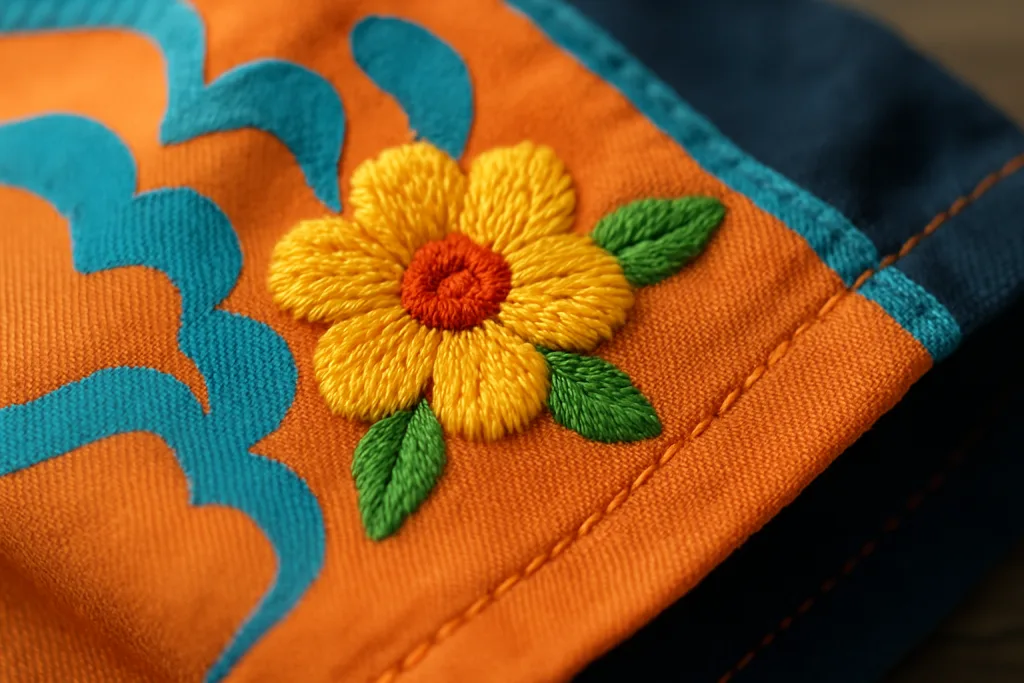
- Embroidery for crisp, long-lasting branding on pockets or hems; 3D embroidery available for logos
Labels—woven, printed, or heat-transferred—must be durable and comply with care-label standards (ISO 3758 symbols).
Inline and Endline Quality Control
Large batches demand systematic quality control. Inline checks happen during sewing, ensuring thread, seam type, and construction standards. Endline QC covers:
- Spec checks: Measuring inseams, outseams, and tolerance across all sizes
- Puckering, skew, and fabric defects: Checking for visible issues
- Decoration quality: Ensuring prints or embroidery are consistent, without color bleeding
- Accessory checks: Needle detection for safety in children’s and some adult lines
- Random QC and AQL: Lot sampling based on international standards like ANSI/ASQ Z1.4
Testing & Compliance for Bulk Shorts
Meet all regulatory demands. Tests may include:
- Colorfastness (ISO 105-C06 for washing, X12 for rubbing)
- Dimensional change (AATCC 135/150 for shrinkage after washing)
- Pilling resistance (ISO 12945)
- Seam strength (ASTM D1683)
For shorts exported to the US or EU, confirm OEKO-TEX STANDARD 100 certification and label/ink compliance with OEKO-TEX, REACH, and local safety guidelines like CPSIA for children’s garments.
Packing, Ratio Packs, and Logistics
Efficient packing and shipping help prevent damage and keep costs in check. Decide between bulk or individual polybagging, which protects shorts and eases retail sorting. Use master cartons with all details: barcodes, EAN/UPC, size, color, quantity. For retail or team orders, ratio packs bundle sizes in pre-set counts (e.g., 2S/4M/4L/2XL per carton). Hangtags and woven labels display branding and care instructions. Export packaging follows Incoterms terms—EXW, FOB, CIF, or DDP—depending on buyer contracts.
Working with Your Manufacturing Partner
Choosing an experienced manufacturer shortens lead times and resolves common scale-up issues. Partners like Ninghow Apparel bring tested systems for fit, color, consistency, and compliance, offering OEM/ODM support. Clear, timely feedback—at every approval stage—keeps things on track. Frequent communication enables smooth transitions from sample to bulk, reducing cost and risk.
Pro tip: Allow at least 15-21 days for PP sample approvals and final tweaks before starting mass production, especially when using new fabrics or colorways.
Business Outcomes: Speed, Cost, Consistency
Every technical decision—from fabric selection to seam type—affects your business. Higher GSM fabrics cost more but enhance durability; automated cutting reduces labor cost and improves consistency; more complex prints add to MOQ and lead time. Balance these factors to match your market segment, price point, and delivery promise.
- Durability and Fit: Use stable knits and precise tolerances
- Color Consistency: Rely on shade bands and bulk color checks
- Print/Embroidery Quality: Choose suitable techniques for size, handfeel, and durability
- MOQ and Lead Time: Plan bulk orders in MOQ multiples (often 500/1,000 units per color/size split)
Common Pitfalls and How to Avoid Them
- Skipping fit trials or bulk lab dips—leads to product returns
- Poor marker planning—results in high fabric waste
- Inconsistent approval processes—causes shipment delays
- Missing compliance testing—risks export blockages
- Lack of packaging controls—results in damaged or mis-shipped goods
The Role of Technology in Scaling Up
Modern factories rely on digital patterning, automated cutting, and ERP systems for tracking production lots. Fabric roll tracking, barcode labeling, and inline QC tools increase transparency, speed, and accountability—making errors traceable and easier to fix before they reach retail.
How to Scale from Sample to Bulk Shorts Production
To scale up shorts manufacturing, follow an integrated workflow:
1. Develop clear tech packs and approve lab dips/strike-offs.
2. Create graded patterns and run size set samples.
3. Approve pre-production samples, matching bulk trims, labels, and decorations.
4. Optimize cut and sew lines, with clear markers and line balancing.
5. Run continuous inline and endline QC, using measurement spec tables.
6. Conduct all required fabric and finished garment lab tests.
7. Plan accurate packing, barcode/labeling, and export logistics.
8. Keep tight communication and documentation at every step.
Applications: Where Scaled Shorts Production Matters
Scaled shorts manufacturing supports brands across:
- Sports and athleisure apparel (golf, running, gym)
- Streetwear launches and seasonal basics
- Uniforms for teams, schools, and hospitality
- Promotional programs and retail chains seeking consistent quality
Rely on processes proven by Ninghow Apparel and similar OEM/ODM specialists to ensure every pair of shorts—across models and colorways—matches brand standards.
Frequently Asked Questions
What is the typical MOQ for bulk shorts production?
The minimum order quantity (MOQ) for bulk shorts production usually starts around 500–1,000 pairs per color or style, depending on fabric and decoration methods.
How do you ensure color consistency in bulk shorts manufacturing?
Factories use lab dips, shade bands, and bulk color checks under controlled lighting to maintain color consistency across all batches of shorts.
What lab tests are recommended for shorts before bulk production?
Key tests include colorfastness, shrinkage (AATCC 135/150), seam strength (ASTM D1683), and pilling resistance, ensuring durability and compliance.
How does pattern grading affect fit in scaled shorts production?
Grading creates patterns for each size, ensuring the fit remains consistent across all sizes in the bulk run and avoids customer complaints.
Which decoration methods work best for large-scale shorts production?
Screen printing and embroidery are cost-effective and durable for large runs, while DTF and sublimation suit more complex color needs.
How long does it take to move from approved sample to bulk shipment?
Most factories need 30–60 days for bulk shorts production after PP sample approval, depending on order size and fabric availability.