

A clear RFQ can save days of back-and-forth and reduce the risk of receiving quotes that look comparable but are actually based on different assumptions. When buyers ask for “a custom T-shirt quote” without enough technical detail, manufacturers often have to estimate fabric, printing, sizing, branding, and packing requirements, which can lead to mismatched pricing, delayed sampling, or revisions later in the process.
If you are evaluating a custom t-shirt manufacturer for RFQ inquiries, the goal is not just to get a fast number. A useful RFQ helps the supplier understand your product, your branding requirements, your expected order structure, and the commercial conditions behind the quote so the response is grounded in the real project rather than guesswork.
Why vague quote requests create inaccurate pricing
A message such as “I want to custom T-shirt” usually leaves too many open variables. The factory still needs to know the fabric type, garment weight, fit, print method, print locations, colorways, order quantity, size breakdown, packaging, and destination. If these details are missing, the quote may be based on the supplier’s assumptions rather than your actual product requirements.
This matters because small specification changes can alter the cost structure. A 100% cotton jersey tee is different from a cotton-poly blend. A chest print is different from a full-back print. A standard sewn neck label is different from a heat-transfer label plus branded hangtag and individual polybag. An RFQ works best when it reduces assumptions early.
For buyers managing more than one SKU or comparing multiple vendors, it also helps to review how to prepare a stronger apparel RFQ so your request format is consistent across suppliers and easier to compare later.
What a good custom t-shirt RFQ should help the manufacturer understand
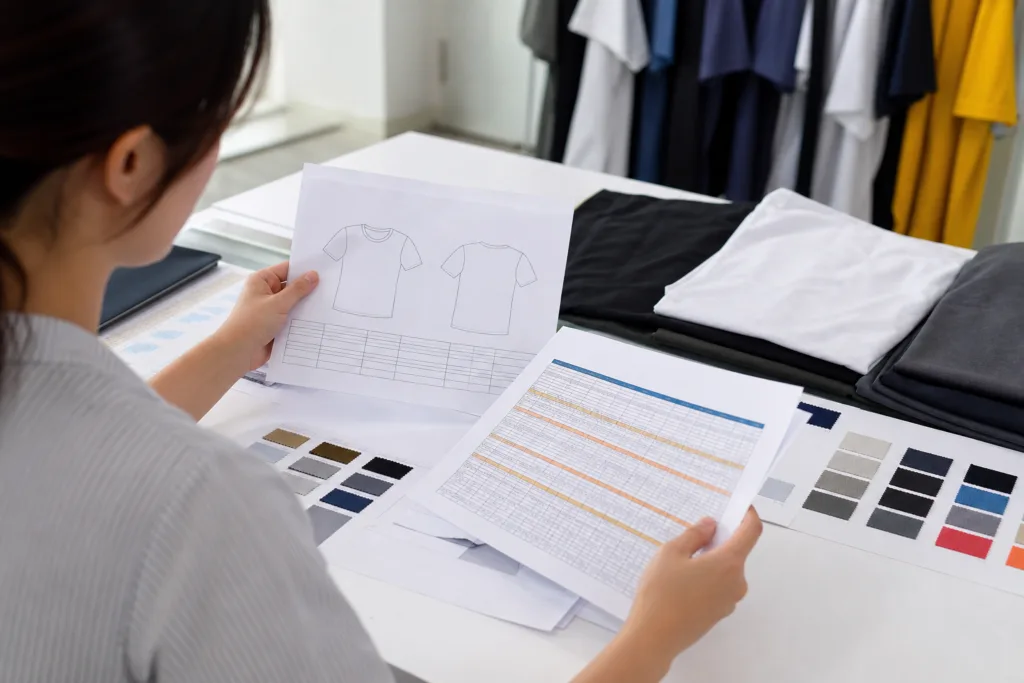
A strong custom t-shirt RFQ should give the manufacturer enough information to answer five practical questions:
- What exactly is the garment being made?
- How many units are needed, and in what size and color mix?
- What customization methods and branding details are required?
- What sample, production, and delivery timing is expected?
- What commercial assumptions should be included in the quote?
When these points are clear, the supplier can quote more accurately, flag risks earlier, and recommend alternatives if your target price, MOQ, or timeline does not match the requested specification.
The core information every RFQ should include
Quantity and color count
Start with the total order quantity and the number of colorways. A quote for 300 pieces in one color is very different from 300 pieces split across six colors. More colors can affect fabric dyeing, cutting efficiency, printing setup, and packing complexity.
Size breakdown
Always include the expected ratio by size instead of giving only a total unit count. For example, 1,000 pieces across XS-XXL with a balanced run will be priced and planned differently from a size curve heavily weighted toward XL and XXL. If you need help structuring this, use a practical approach to bulk t-shirt size ratio planning before sending the RFQ.
Fabric composition and weight
Fabric is one of the most important quote drivers. Include composition, approximate GSM, finish, and any performance expectation. Even if you do not know the final specification, you should state the direction clearly, such as:
- 100% cotton single jersey, soft handfeel
- 95/5 cotton spandex jersey for more stretch
- 240 GSM heavyweight cotton for a structured streetwear feel
- 180 GSM cotton-poly blend for promotional use
If you have a target handfeel, drape, or use case, mention it. That helps the manufacturer recommend an appropriate fabric instead of pricing the wrong one.
Choosing the right fit before you request a quote
Fit changes both cost and development complexity. A regular fit basic tee may be quoted from an existing base block, while an oversized or boxy silhouette may require different measurements, shoulder drop, body width, sleeve shape, and grading rules.
Regular fit
Usually the easiest option for bulk programs, uniforms, and general retail basics. It is easier to benchmark and often simpler for first-round sampling.
Oversized fit
Common in streetwear and fashion-forward casualwear. Buyers should clarify whether “oversized” means longer body length, wider chest, dropped shoulder, longer sleeve, or a combination of all four.
Boxy fit
A boxy tee typically has a wider body and shorter length. This can affect marker efficiency and the amount of fabric used per garment, so it should not be left as a vague style note.
Slim fit
Slim silhouettes need more precise measurement expectations because tolerance issues become more noticeable. If your brand has an existing fit standard, include a measurement chart or a reference sample.
At this stage, a manufacturer such as Ninghow Apparel will usually look for either a tech pack, a measurement chart, or at least clear reference photos with fit notes. Without that, fit assumptions can lead to inaccurate sampling and inconsistent costing.
How to prepare logo and artwork files for quotation
Artwork quality affects both quoting and sampling. If the print details are unclear, the manufacturer may not know whether your design is suitable for screen printing, heat transfer, DTG, embroidery, puff print, or another method. That uncertainty can change setup cost, per-unit cost, and production feasibility.
Your RFQ should include:
- Artwork in editable or high-resolution format when possible
- The intended print method if already known
- Pantone references or color expectations
- Approximate artwork dimensions
- Placement notes for each logo or graphic
If your files still need cleanup, it helps to review proper t-shirt artwork file preparation before asking for final pricing or sample development.
Print details that directly change the price
Many buyers mention only that the shirt has “a logo,” but manufacturers need much more than that. Printing cost is not based only on whether artwork exists. It depends on how complex the print is and how it will be applied in production.
Print placement
Front chest, full front, full back, sleeve, hem, and neck print placements each involve different workflow considerations. Multiple placements on one garment increase labor and setup time.
Print size
A small left-chest print and a large oversized back graphic are not interchangeable for costing. The larger the print area, the more likely the cost will change due to ink use, screen count, transfer size, or machine time.

Number of colors
For screen printing especially, the number of colors matters. A one-color print is simpler to quote than a design with several solid colors, halftones, gradients, or specialty effects.
Special effects
Puff print, reflective print, foil, discharge, silicone, and high-density effects should always be specified in the RFQ. These are not small finishing notes; they can materially change sampling needs and production cost.
Branding requirements beyond the garment
Many quote requests focus on the T-shirt body and overlook trim and packing details. That can make a quote look lower at first, only to rise later once brand requirements are added.
List any of the following if they apply:
- Woven neck label or printed neck label
- Size tab
- Hangtag and string type
- Care label content and placement
- Folded packing method
- Individual polybag requirements
- Barcode sticker or carton marking rules
- Retail-ready packaging expectations
These details are especially important for private label programs, distributor orders, and retail supply chains where presentation and compliance consistency matter.
Sample requests, lead times, and delivery expectations
Your RFQ should separate sample expectations from bulk production expectations. Manufacturers need to know whether you want a quick development sample, a pre-production sample based on approved materials, or a sales sample for internal review. Each request serves a different purpose and affects timing.
It is also helpful to state whether the quote should include sample charges, sample freight, and estimated production lead time after approval. If your team is new to development flow, understanding the apparel sample approval process can prevent confusion between initial prototype work and bulk-ready approvals.
For production timing, mention your target ship date, not just “urgent” or “ASAP.” A calendar date gives the supplier something real to assess against fabric lead time, trim preparation, print scheduling, and capacity.
Shipping destination and Incoterms should be in the RFQ
The same custom t-shirt RFQ can produce very different final quotes depending on delivery terms. A factory quote may be ex-works, FOB, CIF, DDP, or based on another agreed shipping structure. If you do not specify the commercial basis, you may end up comparing numbers that include very different scopes.
Include:
- Final delivery country and city
- Preferred Incoterm if known
- Whether you want product-only pricing or landed-cost guidance
- Target carton quantity rules if relevant
- Any retailer routing or labeling requirements
This is especially important for procurement teams comparing multiple suppliers, because freight, export handling, and duty assumptions can make a low garment price look better than it really is.
A copy-and-paste custom t-shirt RFQ template
You can use the structure below to make your quote request easier to evaluate:
| RFQ Item | What to Provide |
|---|---|
| Product type | Custom T-shirt, short sleeve or long sleeve, target market or use case |
| Order quantity | Total units and units per colorway |
| Size breakdown | Ratio by size for each color |
| Fit | Regular, oversized, boxy, slim, or measurement chart attached |
| Fabric | Composition, GSM, finish, handfeel expectations |
| Color | Pantone, reference sample, or visual reference |
| Artwork | Files attached with placement and size notes |
| Print method | Screen print, embroidery, transfer, DTG, puff, etc. |
| Branding | Neck label, care label, hangtag, packaging details |
| Sample request | Development sample or pre-production sample, quantity needed |
| Timeline | Target sample date and target ship date |
| Shipping terms | Destination and requested Incoterm |
| Quote format | Unit price, sample cost, lead time, packing assumptions |
A simple template like this makes it easier for suppliers to respond in a structured way and easier for buyers to compare the answers.
How a manufacturer turns an RFQ into a production plan
From a factory perspective, a quote is not just a sales number. It is an early production assumption. The supplier typically checks whether the requested fabric can be sourced at the stated MOQ, whether the print artwork is suitable for the proposed method, whether the fit requires pattern work, whether the branding package adds extra steps, and whether the timeline is realistic.
If key details are missing, the supplier may either delay the quote and ask follow-up questions or price with assumptions. Neither option is ideal for the buyer. A better RFQ helps the manufacturer identify risks before development starts, which improves quote accuracy and reduces avoidable changes later.
Common RFQ mistakes that slow down quoting or cause pricing errors
- Giving a total quantity without a size ratio
- Attaching low-resolution artwork with no dimensions
- Using fit terms like “oversized” without measurement references
- Not specifying fabric composition or target weight
- Ignoring labels, hangtags, and packaging requirements
- Requesting “best price” without giving shipping terms
- Asking for urgent production without a target delivery date
- Comparing quotes that are based on different Incoterms or sample assumptions
Most quote problems are not caused by bad intent. They usually happen because the buyer and manufacturer are each filling in missing information differently. The more complete your RFQ is, the less room there is for misunderstanding.
Final checklist before sending a t-shirt manufacturer quote request
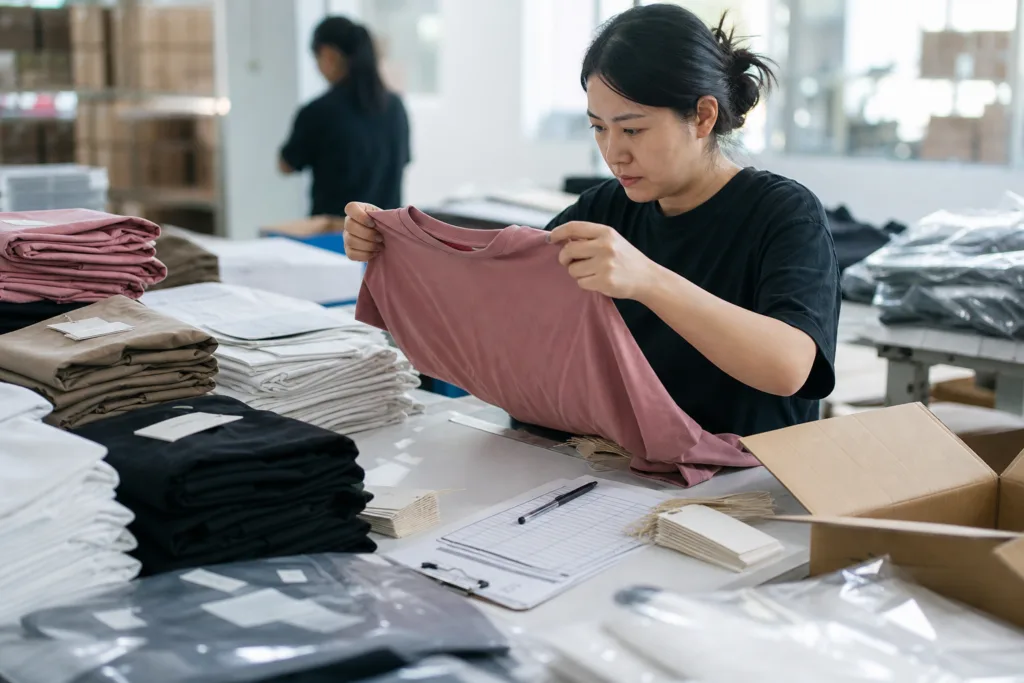
Before sending your custom t-shirt RFQ, confirm that you have included the product type, quantity by color, size breakdown, fit direction, fabric details, artwork files, print specifications, branding trims, sample expectations, target dates, and shipping terms. If any of these are still uncertain, state that clearly so the supplier knows which points are fixed and which are open for recommendation.
A good RFQ does not need to be overly technical, but it does need to be complete enough for the manufacturer to quote the same product you have in mind. That is what leads to faster replies, fewer revisions, and a more reliable path from pricing to sampling to bulk production.
FAQ
What is a custom t-shirt RFQ?
A custom t-shirt RFQ is a quote request that gives a manufacturer the information needed to price a T-shirt project accurately, including quantity, sizes, fabric, fit, print details, branding, and shipping terms.
How much detail should I include in a custom t-shirt RFQ?
You should include enough detail to reduce supplier assumptions, especially around fabric, fit, artwork, print placement, size ratio, labeling, packaging, timeline, and delivery terms.
Can I ask for a quote before I finalize the artwork?
Yes, but you should state that the artwork is provisional and provide approximate print size, placement, and color count so the manufacturer can give a preliminary quote with clear assumptions.
Why do manufacturers ask for size breakdown instead of total quantity only?
Size ratio affects fabric consumption, cutting efficiency, and production planning, so a total quantity alone is often not enough for accurate costing.
Should packaging and labels be included in the RFQ?
Yes, because neck labels, hangtags, care labels, folding method, polybags, stickers, and carton requirements can all change the final unit cost and packing workflow.
What is the best format for sending a t-shirt RFQ?
A clear email or spreadsheet with a structured item list, attached artwork, measurement notes, quantity table, and shipping details is usually the easiest format for manufacturers to review and quote.