

Choosing the right packaging for hoodies is more complex than choosing packaging for lighter garments. Hoodies take up more space, carry more weight, wrinkle differently, and often need to serve multiple goals at once: product protection, brand presentation, warehouse efficiency, and cost control. For buyers planning streetwear drops, corporate distributions, or e-commerce fulfillment, packaging decisions can affect freight, handling speed, and the customer experience just as much as the garment itself.
That is why packaging should be planned alongside garment development rather than added at the end. If you are evaluating custom hoodie packaging and production support, it helps to align packaging specs with fabric weight, fold method, labeling, and order destination early in the process. A packaging plan that works for a retail-style streetwear launch may create unnecessary labor for a corporate order, while an e-commerce pack format may need extra protection that is not necessary for bulk internal distribution.
Why hoodie packaging needs a different strategy than T-shirt packaging
Hoodies are bulkier, thicker, and usually more expensive per unit than T-shirts, so packaging decisions carry more operational impact. A folded heavyweight hoodie can quickly increase carton dimensions, raise shipping charges, and reduce the number of units that fit into a standard warehouse location. That makes packaging a cost and logistics issue, not only a branding decision.
Hoodies also vary widely in construction. A lightweight French terry pullover, a brushed fleece zip hoodie, and an oversized heavyweight streetwear style do not behave the same way inside a bag or carton. The right packaging choice depends on fabric thickness, hardware, print sensitivity, embroidery bulk, and whether units will be handled one by one or in grouped distributions.
How packaging goals change by use case

Streetwear packaging priorities
Streetwear buyers usually care about product presentation, perceived value, and launch consistency. Packaging often supports the brand story through hang tags, branded stickers, custom poly bags, tissue, or a cleaner fold presentation. In this use case, packaging is part of the unboxing moment and can influence how premium the hoodie feels on arrival.
At the same time, presentation should not override practicality. If packaging is too fragile, too labor-intensive, or too customized for a modest run, it can add avoidable cost and delay without improving the product itself.
E-commerce packaging priorities
E-commerce packaging is usually driven by protection, dimensional efficiency, and fulfillment speed. The goal is to keep the hoodie clean, dry, and presentable while moving through pick-pack-ship workflows with minimal extra handling. In many cases, the best packaging is not the most elaborate option but the one that protects the garment while keeping parcel size under control.
Corporate order packaging priorities
Corporate orders often need packaging to support distribution logic. The buyer may need units sorted by employee, branch, department, size run, or event list. In this setting, packaging has to make receiving and handout easier. Decorative add-ons may matter less than readable outer labeling, accurate size grouping, and fast unit sorting.
For teams planning bulk hoodie buying for corporate orders, packaging works best when it matches the distribution method from the start. A simple individual bag with clear external size and name coding can be more valuable than premium presentation if the hoodies need to be issued quickly across multiple people or locations.
Streetwear packaging decisions: presentation without unnecessary complexity
Streetwear packaging often includes four common choices: hang tags, stickers, individual bags, and branded presentation details. The right mix depends on drop size, brand position, and where the hoodie will be sold.
- Hang tags: Useful for retail feel, pricing, story cards, or care messaging. They add value when the brand wants a complete finished-product look.
- Stickers: Often low-cost and flexible, but better as a nice extra than a substitute for useful packaging.
- Poly bags: Important for dust and moisture protection, especially before final delivery or warehousing.
- Presentation fold: A clean, consistent fold can improve perceived quality even without expensive extras.
For many launches, simple branded packaging performs better than overloaded packaging. A well-sized clear or frosted bag, a neat fold, a clear size label, and a quality hang tag can achieve a premium result without creating unnecessary manual work.
If the hoodie program will continue beyond one drop, think early about keeping hoodie specs consistent across reorders. Packaging details such as fold direction, tag placement, bag size, barcode position, and carton pack ratio should be standardized as part of the repeatable product spec, not re-decided every season.
E-commerce packaging decisions: protection, parcel efficiency, and fulfillment speed
For e-commerce, packaging has to protect the garment through longer shipping journeys and multiple handling points. Hoodies are more vulnerable to compression marks, moisture exposure, and oversized parcel charges than lighter tops, so packaging should be selected with shipping conditions in mind.
Wrinkle and presentation control
Some wrinkle is unavoidable in transit, but fold method and bag fit still matter. Overly tight packaging can create harsh fold lines, while oversized bags allow garments to shift and lose presentation. Heavy brushed fleece or decorated hoodies may also need extra attention if prints, appliques, or zippers could press against the fabric during transport.
Moisture and dust protection
Individual inner bags are often a practical baseline for hoodies shipped through parcel networks. They help reduce risk from warehouse dust, carton exposure, and light moisture during transit. This is especially important when products may sit in inventory before final shipment to the customer.
Returns and fulfillment handling
If returns are common in the sales channel, packaging should be easy to reopen and reprocess. Buyers should decide whether labels, barcodes, or SKU stickers belong on the product bag, outer parcel, or both. These details affect warehouse speed and relisting accuracy more than many new brands expect.
When reviewing costs, do not look only at unit packaging price. Hoodie packing choices can also create hidden apparel costs that affect packaging and freight through larger carton dimensions, slower fulfillment, more warehouse touchpoints, and higher parcel rates.
Corporate order packaging decisions: sortability often matters more than branding
Corporate hoodie orders usually succeed when packaging supports clear distribution. The buyer may need each hoodie bagged separately, grouped by team, packed by site, or labeled to match an employee list. In those cases, packaging should be built around accuracy and speed rather than visual storytelling.
Useful options can include individual size labels, employee name stickers, department grouping, carton summaries, or color-coded sorting methods. These choices help reduce handout mistakes and make receiving easier for HR teams, event staff, or internal coordinators.
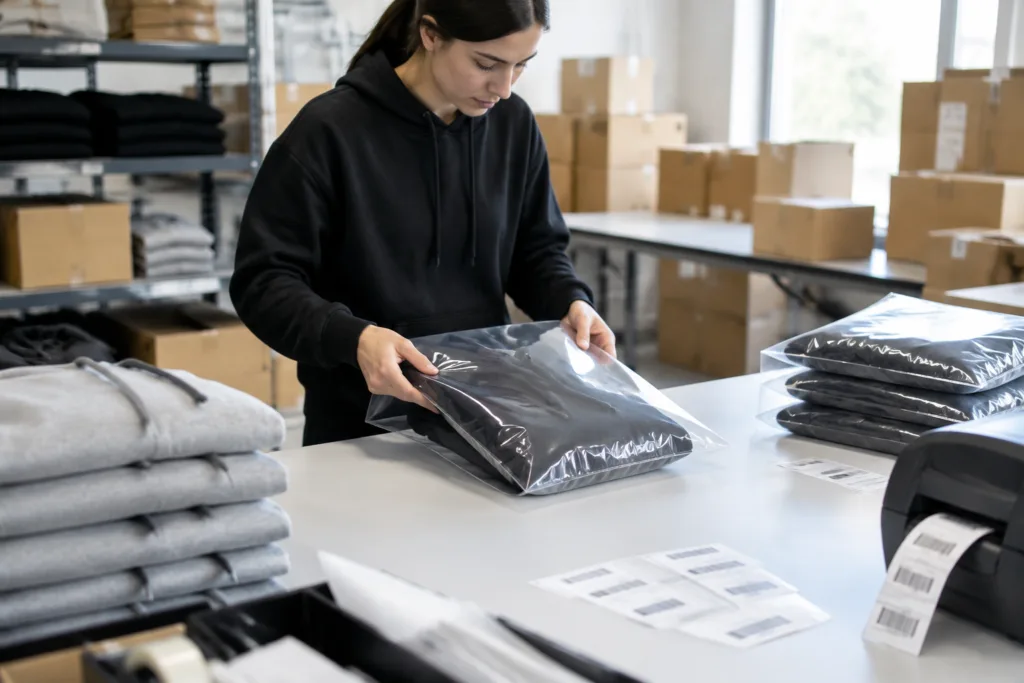
From a manufacturer perspective, this is where early communication matters most. Ninghow Apparel and similar production partners usually need the sorting rules before packing starts, especially if the order requires mixed size runs, separate branch allocations, or special insert materials. Late packaging changes on corporate orders can add manual labor and increase packing error risk.
How hoodie bulk and dimensions affect cartons, freight, and warehouse handling
Hoodies consume carton volume quickly. Even when unit count looks manageable on paper, actual packed volume can shift sharply depending on fabric weight, zipper hardware, hood thickness, and fold style. A heavy oversized hoodie may reduce carton efficiency enough to increase shipping cost per unit in a meaningful way.
| Packaging factor | Main impact | Buyer concern |
|---|---|---|
| Thicker fleece fabric | Larger carton volume | Higher freight and storage cost |
| Individual bags with inserts | More material and labor | Higher unit packing cost |
| Presentation folding | Slower packing time | Longer packing workflow |
| Custom labels and sorting | More handling steps | Packing accuracy and lead time |
| Oversized fit | Fewer units per carton | Warehouse and parcel efficiency |
Carton planning should consider not only how many units fit, but also how those cartons will move through freight channels, warehouse shelving, and final distribution. A slightly simpler unit pack can sometimes reduce enough outer-carton volume to improve total landed cost.
Sustainable hoodie packaging options without sacrificing protection
Sustainability decisions should be practical. If a packaging format reduces waste but causes damage, moisture issues, or poor fulfillment performance, it may not be the right operational choice. The better approach is to reduce unnecessary components first and then select materials that support both protection and presentation.
Practical options may include reducing oversized bags, limiting non-essential inserts, simplifying multi-layer presentation materials, and selecting packaging formats with cleaner material use. For many hoodie programs, the most effective sustainability improvement is not adding a trendy eco element but removing packaging steps that do not meaningfully protect or support the product.
How packaging choices affect unit price, MOQ, lead time, and production complexity
Every added packaging component can affect cost and workflow. Custom printed bags, special folds, barcode application, inserted cards, extra labels, or individual sorting instructions each add a layer of labor or procurement. Some are worth it. Others only make sense at certain order volumes or in certain sales channels.
Buyers should usually evaluate packaging in four dimensions:
- Unit price: Materials and labor both matter.
- MOQ: Some custom packaging elements may require minimum runs separate from the garment MOQ.
- Lead time: Packaging components may need their own sourcing and approval cycle.
- Complexity: More packing steps create more room for delay or packing errors.
A packaging plan that looks affordable in isolation may become expensive once manual sorting, special labeling, or larger freight volume is added. That is why a complete order review is important before approval.
What to include in a PO or tech pack for hoodie packaging requirements
Many packaging problems begin because the buyer describes the hoodie clearly but leaves packing instructions vague. A good PO or tech pack should spell out exactly how the finished unit should be presented and how cartons should be packed.
- Individual bag type and size
- Bag material or finish if important
- Fold method and garment orientation
- Hang tag requirement and attachment point
- Sticker, barcode, SKU, or size label placement
- Insert cards or special collateral
- Carton pack ratio by size or color
- Sorting instructions by employee, department, or location if applicable
- Outer carton marking requirements
- Any shipping, retail, or marketplace compliance needs provided by the buyer
Before issuing final approvals, it helps to use a production-ready checklist before bulk hoodie manufacturing so packaging details are reviewed together with labeling, size breakdown, artwork, and shipping expectations.
Common mistakes brands make when specifying hoodie packaging
The most common mistake is treating packaging as decoration instead of part of product delivery. That often leads to over-designed packs for budget-sensitive orders, or under-specified packs for channels that need stronger protection and easier fulfillment.
- Choosing packaging before confirming sales channel
- Using T-shirt style packaging logic for heavyweight hoodies
- Ignoring carton volume and freight impact
- Adding too many custom elements for a small run
- Failing to define sorting rules for corporate distributions
- Leaving label placement unclear
- Approving garment samples without reviewing packaging samples or mockups
- Not documenting packaging specs for future reorders
A second mistake is assuming the cheapest packaging option is always the most efficient. If it slows fulfillment, increases damage risk, or creates repacking work later, it may cost more overall.
A practical packaging checklist before you place a hoodie order

Before approving a hoodie production run, buyers should be able to answer a few operational questions clearly. Where will the hoodie go first: a retail customer, an e-commerce parcel network, a company distribution point, or a warehouse? Does each unit need individual branding, or does the order mainly need protection and fast sorting? Will packaging affect freight enough to change the real landed cost?
If those answers are defined early, packaging becomes a useful part of the product system rather than a late-stage problem. The best hoodie packaging is usually the one that fits the use case, protects the garment, supports handling, and stays realistic for the order size and budget.
FAQ
Do hoodies usually need individual poly bags?
In many cases, yes, especially for e-commerce, warehousing, and cleaner presentation. Individual bags help protect hoodies from dust, moisture, and handling marks, but the exact bag type should match the sales channel and fulfillment method.
Is premium streetwear packaging always worth the extra cost?
Not always. Premium packaging makes more sense when unboxing and brand presentation directly support the selling model, but for smaller runs or price-sensitive programs, simple and consistent packaging often delivers better value.
How should corporate hoodie orders be packed?
Corporate orders are usually easiest to manage when units are packed for sorting accuracy. That can mean individual size labels, employee or department grouping, and clear carton markings based on the buyer’s distribution list.
Can sustainable hoodie packaging still protect the product well?
Yes, if the packaging format is chosen carefully. The strongest approach is usually to remove unnecessary materials first and then select protective options that still support storage, transit, and product presentation.
What packaging details should be written into a hoodie PO?
Include the unit bag type, fold method, label placement, barcode requirements, insert materials, carton ratios, and any sorting instructions. The more clearly packaging is documented, the lower the risk of packing errors or approval delays.
When should packaging be finalized during hoodie development?
Packaging should be finalized before bulk production starts and ideally during sample review or pre-production planning. This helps align materials, labor steps, carton planning, and lead time before the order is packed at scale.