
Understanding MOQ: The Backbone of Manufacturing Deals
Why do factories always mention a “minimum order quantity” (MOQ)? If you’re starting a clothing brand or scaling up, you might wonder if factories set MOQs just to frustrate or turn away small buyers. In truth, MOQ isn’t a barrier; it’s a foundation. Factories use MOQs to balance their own start-up costs, raw materials, machine settings, and workflow efficiency. Let’s break down what MOQ means, the economics behind it, and why it shapes factory and brand relationships worldwide.
What is MOQ? Why Factories Demand Minimum Orders

MOQ stands for “Minimum Order Quantity.” It’s the smallest number of units a factory will accept in a single production run. This isn’t just a number picked at random. Factories—including those producing t-shirts and other apparel—set MOQs based on a mix of economic realities and technical limitations. Understanding MOQ is essential for every brand considering bulk or custom manufacturing. When MOQ is misunderstood, it leads to mismatched expectations and hard negotiations—something experienced factory teams like those at Ninghow Apparel have seen countless times.
MOQ Meaning in Practice
MOQ is the minimum number you must order for a factory to start production. For example, a low MOQ might be 100 pieces per style per color, while larger factories may require 1,000 or more. MOQs protect both sides from wasted resources. They ensure a production run is cost-effective after considering labor, equipment setup, and raw material sourcing.
Why Factories Insist on MOQ: Behind the Scenes
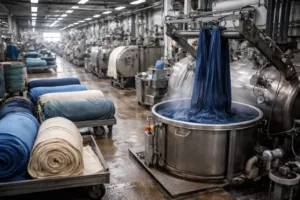
Let’s shift perspectives for a moment. Imagine running a dye house. Turning on the dye vat, mixing chemicals, and running test samples costs nearly the same whether you dye 50 meters or 500 meters of fabric. These setup costs don’t change much with order size. The “minimum” is the break-even point where the machinery, labor, and resources are used efficiently. Now, picture a cutting workshop specializing in polo shirts. Firing up machines, training workers on new patterns, and managing trims all take effort. MOQ lets the factory spread these costs over enough items so production remains efficient and wages are covered. In short, MOQs keep the line running and ensure factories (and customers) aren’t losing money.
The Economics Behind Minimum Order Quantity
MOQ is rooted in manufacturing economics. Here’s why:
- Setup Costs: Preparing machines, patterns, dyes, or embroidery programs costs time and materials—regardless of how many units are produced.
- Bulk Fabric Orders: Factories often have to buy materials in pre-set minimums (e.g., 500 meters per color), imposed by mills or trims suppliers.
- Labor and Workflow: Production teams are more efficient when working on larger runs, which justifies the time to set up each new item.
For instance, the dyeing process for custom fabrics requires a minimum “dye lot” to fill the dye vat. There’s actually a fixed start-up cost to create custom shades or prints, which remains whether you cut it into 50 or 500 garments. This is also why woven labels, screen prints, and custom zippers usually require bulk orders.
Dyeing Vat Charges and Their Impact on MOQ
The dyeing vat (or “dyeing keg”) is a large tank needed for coloring fabrics. Each time a new color is specified, a factory must clean and reset the vat. The process is resource-intensive, involving water, chemicals, and technical time. Mills typically require a minimum quantity to make the dye cost-effective and to avoid color inconsistency for small lots. This directly makes the MOQ for custom-dyed garments higher—and it’s not just a policy; it’s a technical necessity.
Cutting, Sewing, and Finishing: The Human Side of MOQ
Beyond machines, skilled workers need to re-tool, train, and check patterns for accuracy at the start of each new production. Factories like Ninghow Apparel often manage dozens of custom fits and styles. Changing thread types or machine guides for each run adds time. Spreading these labor costs over only a handful of items is rarely viable. If MOQs were always “one-off,” factories couldn’t keep pay, quality, or delivery reliable.
Types of MOQ: Style, Color, and Size
Not all MOQs are the same. Factories may set:
- Per Style MOQ: The minimum units required for each apparel design.
- Per Color MOQ: The minimum units of each color, especially for custom-dyed or printed fabrics.
- Per Size MOQ: Less common, but sometimes required for special sizes or custom fits.
Understanding these categories helps you plan design range and order strategies. This way you avoid costly surprises and can negotiate smarter—with manufacturers of hoodies or any apparel line.
MOQ Examples in Apparel: Real-World Scenarios
| Product | MOQ Per Style | MOQ Per Color |
|---|---|---|
| T-Shirts | 200 | 100 |
| Polo Shirts | 300 | 150 |
| Hoodies | 250 | 120 |
Why the difference? Fabric source and trims dictate what’s possible. A “low MOQ” may be higher for all-over screen prints or high-performance fabrics. Always clarify with your factory what drives their numbers.
The Influence of Raw Material Sourcing on MOQ
Fabric mills, trim suppliers, and even packaging vendors set their own minimum order policies. If an apparel brand wishes to use a specific sustainable cotton blend, the yarn supplier may only sell in blocks of 1,000 meters. Factories can sometimes combine orders across clients, but for unique styles and colors, this isn’t an option. Material ordering is often the single largest driver of overall MOQ requirements.
Batch Production and “Start-Up” Costs
Factories operate on a batch model. “Setting up” for a production run takes time and money, separate from the running costs. These fixed costs (pattern making, machine calibration, QC planning) have to be rationalized across the whole batch. If the batch is too small, the per-unit price becomes unmanageable. MOQs protect both sides from uneconomical scenarios.
Why Not Accept Smaller Orders?
Some new brands ask, “Why not just make 20 pieces?” The honest answer: the factory may lose money, run inefficiently, or produce poor-quality goods due to setup shortcuts. Sometimes, small orders are feasible if they fit into larger production slots or use standard stock fabrics and trims.
MOQ and Price: How Quantity Shapes Unit Cost
Generally, the higher your order quantity, the lower your per-unit price. This is because setup and material minimums are divided among more items. For small MOQs, factories may have to buy more material than needed, driving up the unit cost. Bold brands can use this effect strategically—order for several drops at once to get better pricing.
Negotiating MOQ: What’s Flexible, What’s Not
Some MOQs aren’t as rigid as they seem. If a style uses common fabrics and trims, or if there’s available capacity, factories may work with you to create a test order (“proto run”) at lower MOQs. For truly unique colors or performance finishes, MOQs are ruled by upstream suppliers and technical limitations; factories have less flexibility here.
MOQ in Different Countries and Market Contexts
Asian factories, such as those in China, Bangladesh, and Vietnam, often have higher MOQs due to their volume-driven business model. However, many are rapidly launching low-MOQ lines to attract startups and boutique brands. European and US workshops may offer lower MOQs but at higher unit prices. Consider your brand’s growth strategy and willingness to manage inventory.
Low MOQ Factories: Opportunities and Trade-Offs
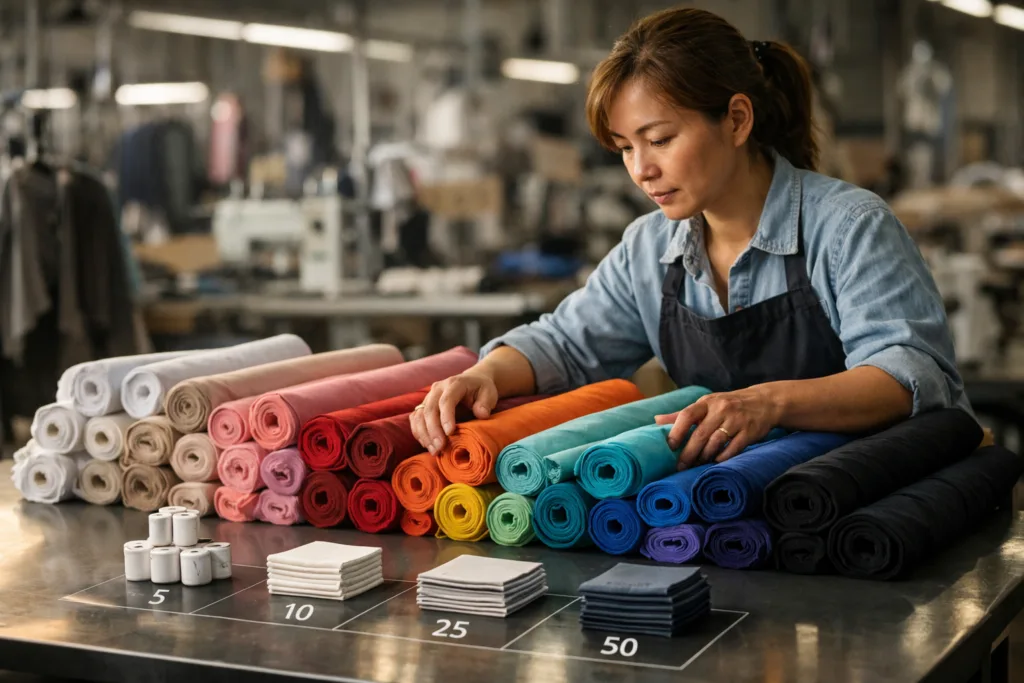
Low MOQ manufacturers exist, but often offer a limited set of fabrics, colorways, or sizing to make it work. Startups benefit from lower risk, but may need to compromise on customization or speed-to-market. Always check if stock is “ready to dye” (RTD) or fully custom.
MOQ and Sustainability: Waste and Inventory Management
MOQ can impact your waste profile. Ordering too much leads to leftover inventory and possible waste, while ordering too little may inflate your energy and material footprint per item. Sustainable-focused manufacturers strike a balance: offering clear guidance on batch sizes and sharing leftover fabric with upcycling partners or local communities.
Apparel Startups: How to Approach MOQ and Growth
If you’re just starting, don’t panic. Focus on a narrow style range, try to choose standard materials and colors, and build a strong sampling relationship with your supplier. Over time, as your brand grows, factories like Ninghow Apparel can open up more customized solutions and better pricing. Treat early MOQ conversations as a trust-building phase, not a transaction.
When Can You Negotiate MOQs? Real-World Factors
- When using standard materials or colors
- When joining a factory’s “production pool” (shared slots with other brands)
- When ordering repeat runs of a proven style (factories already have your patterns and setup)
MOQs are least flexible for technical fabrics, one-off artwork, or special fits. Always ask why a specific MOQ applies—knowing the driver helps you find creative solutions.
MOQ FAQs: Common Buyer Questions and Answers
Can I split my MOQ across colors?
Sometimes. If the underlying fabric is the same, color splitting is easier. But most dyehouses set MOQs per color, not per fabric style.
How does pattern or style complexity affect MOQ?
Intricate styles (contrast panels, embroidery, custom labels) have higher setup costs. This often means a higher MOQ per style.
What happens if I order less than the MOQ?
Factories may refuse the order or quote a much higher price to cover start-up, material minimums, and inefficiency costs.
Are lower MOQs always a good idea for startups?
Not always—you’ll pay more per item, and have fewer choices in custom features. Consider your risk profile and marketing plan.
Can brands negotiate lower MOQs over time?
Yes. If you show consistent growth and reliability, factories may reduce MOQs for repeat styles or season-on-season replenishment.
Do factories ever charge fees instead of setting MOQs?
Some may offer small runs for a “setup fee” in place of normal MOQ. This pays for wasted material and technical effort on their side.
Conclusion: MOQ is Partnership, Not Punishment
Understanding MOQ is key to building a successful supplier relationship. MOQs come from real costs—dye vats, setup time, bulk materials—not from arbitrary gatekeeping. If you treat the MOQ conversation as a chance to learn about manufacturing realities, you’re more likely to find efficiency, quality, and price points that work. Factories thrive on steady, predictable orders; buyers thrive when brands scale smartly and sustainably. Negotiating with knowledge, not just price, is the win-win route in apparel manufacturing.
Frequently Asked Questions
Why do factories set MOQ for every new color?
A new color requires a full dyeing vat setup, cleaning, and calibration—costly steps no matter the quantity. This technical step drives per-color MOQ.
How can I lower my MOQ as a newcomer?
Start with standard fabrics and basic styles, build a relationship, and look out for stock or pooled production slots to reduce your first order risk.
How do factories like Ninghow Apparel calculate MOQs?
They consider fabric supplier minimums, production time, quality checks, and setup needs for each style, balancing efficiency and flexibility.
Can one MOQ apply to different sizes?
Yes, MOQs are often spread over a size range (e.g., from S to XL), as long as the total unit count per color or style is met.
Are MOQs lower for stock or ready-to-dye fabrics?
Usually, yes. Stock or RTD materials remove the need for custom mill minimums, allowing factories to offer smaller production runs.
Will MOQs change as my brand grows?
Most factories offer more flexibility or lower MOQs for established, reliable buyers—especially for repeat orders and popular styles.
Related Reading
- How to Pick Between Clothing Factories and Suppliers for Your Next Project
- Pricing Clothing for Profit: Simple Steps to Stay Competitive and Sustainable
- Will China Remain the World’s Factory in 2026? Key Insights for Apparel Brands
- From Sample to Launch: The Full Timeline for New Clothing Brands
- Scaling Your Brand with a T-Shirt Factory: Practical Tips and Pitfalls