

Understanding Polo Shirts Production Cost: Why It Matters
When it comes to custom apparel, polo shirts are a staple across corporate uniforms, sportswear, and casual collections. But how much does it really cost to produce a custom polo shirt? Understanding the true polo shirts production cost can empower businesses to make informed sourcing decisions, negotiate better deals, and ensure profitability.
In this article, we dive deep into every factor that shapes the cost structure of manufacturing a custom polo shirt. From fabric to labor, customization to logistics—we cover it all.
Key Components Influencing Polo Shirt Pricing
Polo shirt production cost is not based on a single element. It is a cumulative outcome of several interrelated components, each adding value and expense.
Fabric Types and Their Cost Impact

Fabric forms the foundation of any polo shirt. Common materials include:
- Cotton (Combed, Ring-Spun, Piqué) – Known for breathability and softness. Prices vary from $2.50 to $4.00 per yard depending on quality.
- Polyester – Durable and moisture-wicking. Cost-effective at around $1.80 to $2.80 per yard.
- Blends (Cotton-Poly, Spandex Mix) – Offer balanced performance, priced between $2.50 and $3.50 per yard.
Fabric GSM (grams per square meter) and knit type (flat knit, piqué, jersey) also affect pricing.
Yarn Quality and Dyeing Techniques
Higher quality yarn ensures better longevity, color fastness, and texture. Reactive dyeing, VAT dyeing, and digital dyeing all come with different cost implications. Reactive dyeing, preferred for vibrant color retention, can add $0.50–$1.00 per shirt.
Manufacturing Process and Labor Costs
Labor is the backbone of polo shirt production. Skilled workers are required for pattern making, sewing, assembling, and quality checking.
Pattern Making and Cutting Precision
Creating a precise pattern ensures a perfect fit. While digital pattern systems save time, traditional manual cutting can be more cost-effective for smaller runs. Expect costs around $0.30–$0.60 per piece.
Sewing Complexity and Labor Hours
More design features (plackets, ribbed collars, side slits) mean more labor hours. A standard polo shirt requires 15–20 minutes of sewing, translating to $1.50–$3.00 in labor cost depending on region.
Customization Costs: Printing and Embroidery
Adding logos or artwork introduces additional pricing layers.
Screen Printing vs. Heat Transfer: Price Comparison
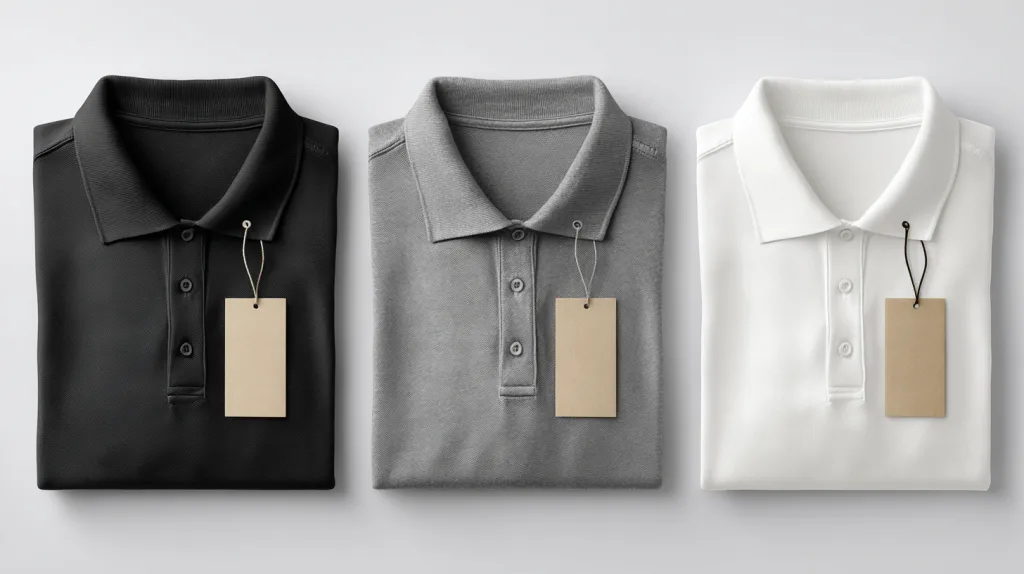
- Screen Printing: Economical for bulk, ~$0.20–$0.80 per print.
- Heat Transfer: Better for complex designs, costs $0.60–$1.50 per unit.
Embroidery Thread Count and Stitch Density
Embroidery is priced based on stitch count. Higher density or multicolor logos can cost $1.50–$3.00 per piece.
Packaging and Branding: Hidden Costs Unveiled
Custom tags, hangtags, polybags, and boxes all add up.
- Basic packaging: $0.15–$0.30
- Premium branding (woven labels, recycled packaging): $0.40–$0.80
MOQ and Order Volume: How Quantity Affects Cost
Lower MOQs often mean higher unit prices. Producing 50 pieces may cost $8–$20 each, whereas a 5,000-piece order can reduce unit cost to $4–$6 due to economies of scale.
Geographical Cost Differences in Polo Production
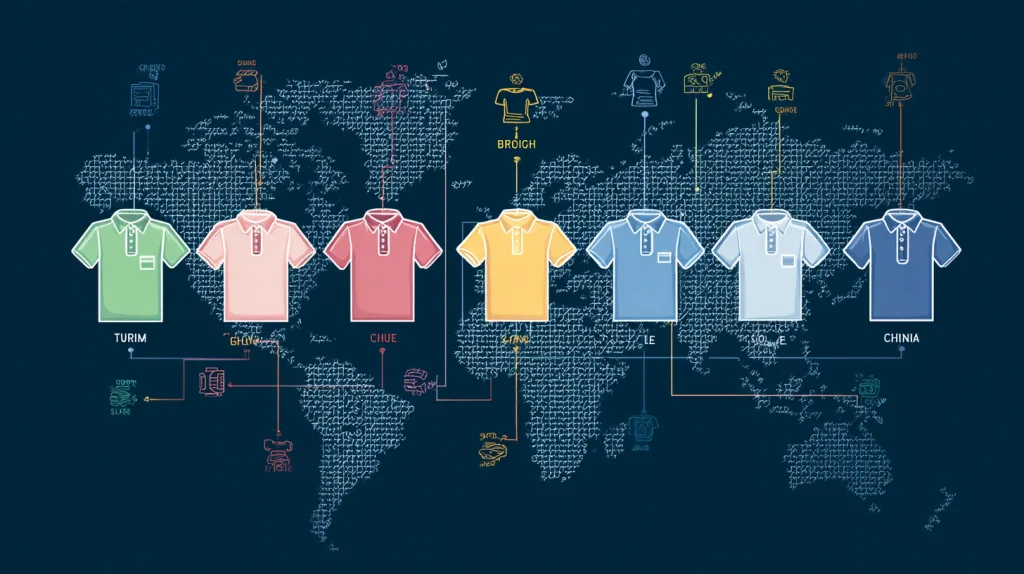
Labor and overhead vary globally:
| Region | Labor Cost (Avg. per shirt) | Notes |
|---|---|---|
| Bangladesh | $1.00–$1.80 | Low cost, large capacity |
| China | $1.50–$2.50 | Balanced cost and tech |
| Vietnam | $1.20–$2.00 | Strong export infrastructure |
| Turkey | $2.50–$3.50 | Proximity to EU, fast lead time |
OEM vs. ODM Services: What’s the Cost Trade-off?
- OEM (Original Equipment Manufacturing): Client provides full tech pack, generally lower development cost.
- ODM (Original Design Manufacturing): Manufacturer designs product; includes design fees but saves time.
ODM service may add $100–$500 in design/setup fees per project.
Quality Control and Inspection Fees
To maintain brand reputation, quality checks are essential. Third-party QC inspections range from $100–$300 per batch or $0.10–$0.30 per unit.
Shipping, Duties, and Final Delivery Costs
International logistics add a major cost component:
- Sea Freight: $0.20–$0.50 per shirt (bulk)
- Air Freight: $1.50–$3.00 per shirt (urgent)
- Import Duties: Vary by country (e.g., 8–12%)
Case Study: Comparing Two Custom Polo Projects
- Project A (100 pcs, basic cotton, screen printed):
- Total Cost: ~$120
- Per Unit: $12.00
- Project B (5,000 pcs, performance blend, embroidered):
- Total Cost: ~$25,000
- Per Unit: $5.00
Volume, material, and decoration all play critical roles.
Tips to Reduce Polo Shirts Production Cost Without Sacrificing Quality
- Choose mid-range fabric blends
- Simplify customization design
- Optimize packaging choices
- Consolidate shipping
- Work with OEM for large orders
Conclusion: Making Smart Polo Shirt Manufacturing Decisions
Understanding the full spectrum of polo shirts production cost enables smarter budgeting and negotiation. Whether you’re a fashion startup or an established brand, balancing quality with cost is key to long-term success.
FAQ: Common Questions About Polo Shirts Production Cost
1. What is the average production cost of a custom polo shirt?
Depending on quantity and customization, it ranges from $4 to $20 per piece.
2. How does MOQ affect the cost per unit?
Higher MOQs reduce cost due to bulk fabric sourcing and process efficiency.
3. What is the most cost-effective fabric for polo shirts?
Polyester blends offer good performance at lower cost than 100% cotton.
4. Is embroidery more expensive than printing?
Yes, embroidery typically costs 2–3 times more due to stitch labor.
5. How can I lower shipping costs for polo shirts?
Use consolidated sea freight and plan orders in advance to avoid express fees.
6. Do custom tags and packaging significantly impact cost?
Yes, branding elements can add $0.30–$1.00 per unit depending on complexity.