

Shorts Sizing Across Regions: How to Cater to Global Markets
Global apparel brands face a unique challenge: shorts sizing varies widely between regions. When selling to international markets, clear labeling and accurate size conversion are critical for customer satisfaction. Errors can lead to higher returns, poor reviews, and lost sales. Ninghow Apparel, a leader in OEM/ODM clothing manufacturing, helps brands navigate these issues with precision and reliability.
Understanding International Shorts Sizing Guide

Shorts sizing isn’t a one-size-fits-all system. Three main standards dominate: US (American) sizing, European sizing, and Asian sizing. Each uses different starting points, increments, and fits.
The Differences Between US, EU, and Asian Sizing Standards
- US/American Sizing: Typically uses waist circumference in inches (e.g., 30″, 32″, 34″). Focuses on relaxed fit and longer inseam.
- European Sizing: Based on waist measurement in centimeters (e.g., 40, 42, 44). Styles tend to be slimmer, with some countries preferring shorter lengths.
- Asian Sizing: Usually numbers like M, L, XL, pegged to local standards. Cuts run smaller–an Asian L often fits like a US S or EU 44.
Comparative Shorts Sizing Table
| US Size (inches) | EU Size (cm) | Asian Size | Waist (cm) | Hip (cm) |
|---|---|---|---|---|
| 30 | 40 | M | 76-78 | 94-96 |
| 32 | 42 | L | 80-82 | 98-100 |
| 34 | 44 | XL | 84-86 | 102-104 |
| 36 | 46 | XXL | 88-90 | 106-108 |
Why Shorts Sizing Differs Across Markets
Body shapes, fit preferences, and fashion trends shape each region’s sizing system. Americans tend to prefer looser, longer shorts. Europeans choose more tailored fits. Asian sizes run smaller and shorter, reflecting local averages. Even labeling conventions differ: while US uses numbers tied to body measurements, Asian sizing can be purely alphanumeric.
Cultural and Anthropometric Influences
- Asian markets account for generally lower average body mass and height.
- European customers value style and silhouette.
- Americans expect comfort and casual length.
Impacts of Inaccurate Sizing on Global Business
Lack of clarity can frustrate buyers, leading to confusion and costly returns. Offering detailed, region-aware sizing is proven to reduce return rates and increase repeat purchases.
Best Practices for Shorts Sizing Labeling
Catering to multiple regions requires thoughtful labeling. Brands should provide dual or triple size indications on labels and product pages. Consistent, accurate conversion is crucial.
Converting Sizes Effectively
- Start with a reliable size chart based on actual garment measurements, not just label values.
- Include key specs: waist, hip, inseam, thigh circumference.
- Show US, EU, and Asian equivalents for each size.
- Use visuals or diagrams for measurement points.
Common Shorts Sizing Labeling Formats
- US: Waist size in inches (e.g., 32″)
- EU: Waist in centimeters + “EU” sizing code
- Asia: Alphanumeric (e.g., L/XL) with matching waist in cm
Modifying Sizing Strategy for Global Reach
Successful global brands literally “rework” sizing to fit local needs. This can mean creating region-specific grade sets or adding intermediate sizes. Ninghow Apparel customizes tech packs and graded patterns for each target region, ensuring accuracy and consistency.
Size Set Development and Grading Systems
Apparel grading determines how a garment increases in size from one set to the next. It requires careful planning:
- Asian grade sets typically use smaller increments (2 cm between waist sizes).
- European and US sets may jump by 4–5 cm or 2 inches.
- Ensure flexibility for stretch fabrics (e.g., elastane blends) where sizing tolerances can widen slightly.
Recommended Regional Modifications
Expert Insight: Brands targeting Asian buyers should downsize by one or two grades from standard US/EU patterns. For Europe, slim the pattern while maintaining strength and durability using high-stitch-count seams.
Fabric Choices and Construction for Better Fit
The right fabric improves comfort and sizing forgiveness. Cotton blends (like 32s combed cotton) offer softness and flexibility. rPET (recycled polyester) with 8% elastane gives 4-way stretch, ideal for adjustable fits.
Popular Fabric Types for Shorts
- Single Jersey (160–180 gsm): For lightweight lounge shorts.
- French Terry (220–280 gsm): Suitable for athleisure and sweat shorts.
- Twill/Poplin (180–240 gsm): Best for outdoor and uniform shorts.
- Fleece (280–360 gsm): For winter weight, streetwear styles.
Finishing and Performance
- Moisture-wicking and anti-odor treatments increase comfort.
- Peach finish and pre-shrinking stabilize sizing after wash.
- UV and stain-release coatings provide premium, long-lasting wear.
Sizing Adjustments: Tech Packs and Tolerances
Tech packs define the exact measurements and tolerances for shorts. Pattern grading controls “step sizes” between S, M, L, XL, and ensures the fit stays consistent across batches.
The Role of Measurement Tolerances
- Waist tolerances usually ±1.5 cm; hip ±2 cm; inseam ±1 cm.
- Tighter tolerances may be needed for uniform programs or luxury streetwear.
Sample and Production Flow
Smart brands test each region’s grade set with actual wearers. After lab dips and fabric approval, makers cut sample sets using auto-cutters. Patterns are compared against spec tables during inline QC.

Decoration, Accessories, and Size Marking
Screen-print care labels, heat transfer size marks, or woven tags–each impacts perception. For multi-market shorts, include bilingual or trilingual size labels: US, EU, and Asia.
Common Decoration Techniques
- Water-based screen print for soft, durable labels
- 3D embroidery for logos; maintain fine resolution for small size marks
- Fabric badge or hang tags for retail clarity
Quality Assurance and Global Sizing Consistency
Quality control at every step reduces sizing mistakes. Garments should go through AQL checks, inline and endline spec measurement, and needle detection for accessories.
Global Compliance and Testing
- Test for dimensional stability (AATCC 135/150) and seam strength (ASTM D1683).
- Colorfastness checks (AATCC 61/8) maintain visual identity across regions.
- Labels and inks must meet standards like OEKO-TEX STANDARD 100 and GOTS.
Packaging and Distribution
Size ratio packs simplify distribution to global retailers. Polybag specs list all sizes in cm and inches. Care labels display ISO 3758 symbols. Carton marks and barcodes aid logistics and customs clearance.
Export Packaging Best Practices
- Separate packs by region-specific size runs.
- Include hangtags with region-wise sizing info.
- Follow Incoterms (FOB, CIF, DDP) for cost transparency and lead time planning.
Shorts Sizing Across Regions: How to Cater to Global Markets
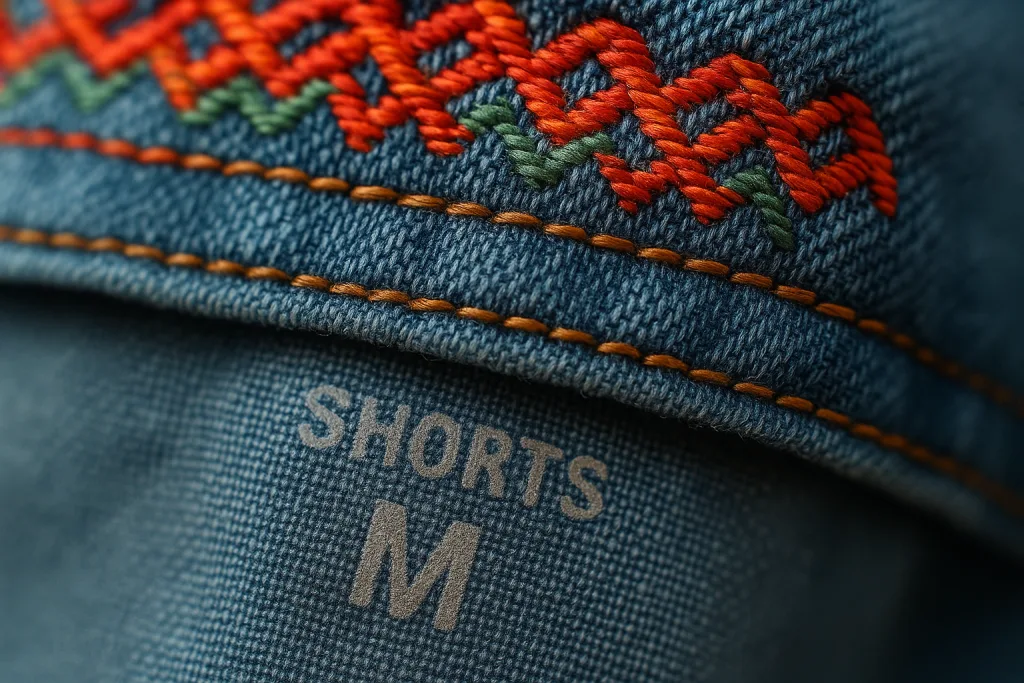
Succeeding in worldwide shorts sales means more than just translating labels. Brands must understand local sizing cultures, manufacture precise grade sets, create clear multi-region charts, and maintain consistent quality. Partnering with experienced manufacturers like Ninghow Apparel ensures all these elements come together, from the first sample to final shipping.
Strategic Sizing Moves for International Expansion
- Research target market body shapes and fit preferences.
- Prepare region-specific tech packs and size charts.
- Use flexible fitting if intended for multi-market batches.
- Communicate sizes clearly in online and physical retail channels.
Choosing the Correct Sizing Labeling Strategy
Multi-region brands often adopt dual (US/EU or US/Asia) or triple marking formats. Test these systems for clarity and market feedback. Update as regions evolve their standards for shorts sizing.
Frequently Asked Questions
How can I convert shorts sizes between US, EU, and Asian systems?
Start with actual garment waist and hip measurements. Use a conversion table to match US inches, EU centimeters, and Asian alphanumeric sizes. Always double-check size specs for each brand.
What is the best way to label shorts for international markets?
Include dual or triple labeling on your product: US, EU, and Asian sizes, plus clear measurements in both cm and inches. Diagrams help users check fit before buying.
Why do Asian shorts sizes run smaller than US or European ones?
Asian sizing reflects different average body shapes and local fit preferences. The patterns use smaller increments between sizes and typically have shorter leg lengths.
Which fabrics improve shorts fit across different regions?
Stretch blends like cotton-elastane and soft knits like jersey or French terry adapt better to sizing differences, offering more comfort and flexibility for various body types.
How do manufacturers ensure global sizing consistency?
They use region-specific grading, tight tolerances, and frequent QC checks. Testing samples in target markets and checking against spec tables prevent errors and ensure uniform fit.
Can sizing be customized for promotional or teamwear shorts?
Absolutely. Brands and organizations can request custom grade sets, labeling formats, and fit adjustments for uniforms, promo events, or specific athletic needs with OEM partners.