

A custom hoodie can sit in two very different market positions. It can feel like event merchandise, giveaway apparel, or company swag, or it can look like a product with shelf value in a brand collection. The difference is rarely one dramatic choice. More often, it comes from a chain of design, material, fit, branding, and finishing decisions that work together.
For buyers planning retail-ready hoodie manufacturing, the real challenge is not simply adding a logo to a blank. It is building a hoodie that looks intentional from fabric handfeel to hood shape, from label execution to packaging. When these details are handled correctly, the product supports stronger brand perception and a more defensible selling price.
What makes a hoodie look promotional vs. retail-ready
Promotional hoodies usually reveal themselves through shortcuts. The fabric may feel thin or overly generic, the fit may be inconsistent, the hood may collapse, the print may be too large, and the trims may feel selected for speed rather than brand alignment. Even when the garment is technically wearable, it does not communicate product value.
Retail-ready hoodie design works differently. It starts with a clear customer position and then translates that into fabric weight, silhouette, branding restraint, construction details, and presentation. A premium-looking hoodie does not need to be flashy. In many cases, it looks more refined precisely because fewer elements are competing for attention.
That distinction matters for wholesale buyers, brand founders, and sourcing teams. If the garment needs to succeed in boutiques, online stores, club programs, or curated collections, every visible decision has to support the idea that this hoodie belongs in a retail environment rather than a promotional campaign.
Why retail-ready hoodie design matters for brand perception and selling price
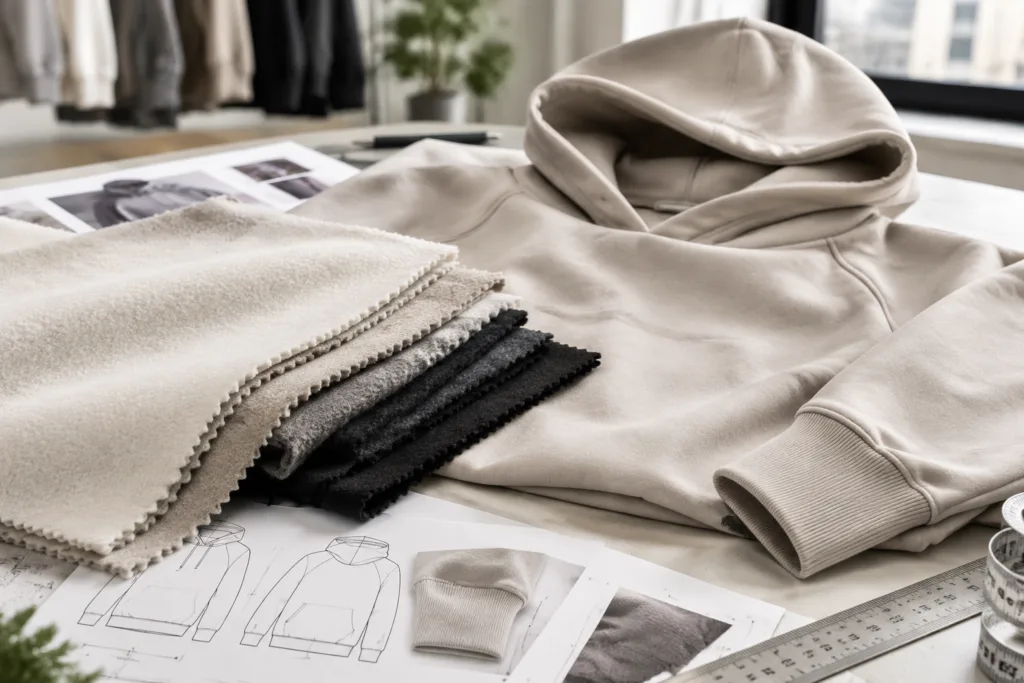
Hoodies are often compared quickly. A customer may touch the fabric once, glance at the chest graphic, inspect the hood, and decide within seconds whether the item feels worth the price. If the garment reads as promotional, the buyer immediately expects a lower price point.
Retail-ready development improves more than appearance. It also affects how the product photographs, how it hangs on the body, how repeat orders perform, and how easily a brand can build consistency across future drops. A cleaner hoodie design language can help a label look more established, even at an early stage.
From a manufacturing perspective, this is why design intent has to be clear before sampling begins. If the goal is premium retail positioning, the specification package should reflect that from the start instead of trying to fix a basic hoodie with last-minute branding upgrades.
Fabric handfeel, GSM, and surface finish shape premium value
Fabric is usually the first quality signal people notice, whether they realize it or not. Weight matters, but premium value is not created by GSM alone. The handfeel, face smoothness, drape, and recovery all contribute to whether a hoodie feels substantial and polished or basic and disposable.
Many brands benefit from comparing fleece structures, yarn quality, and brushing level before committing to bulk production. A heavier hoodie can feel elevated, but if the surface pills quickly or the silhouette becomes stiff, the result may still miss the retail mark. This is why choosing the right hoodie GSM should be tied to fit direction, target season, and end-market price point rather than treated as an isolated number.
Surface finish is equally important. A clean face supports embroidery and premium printing better than a fuzzy or uneven face. Enzyme wash, silicone finish, compact knitting, or controlled brushing can all influence how refined the garment looks. The right choice depends on the brand aesthetic and the product category the hoodie needs to sit beside.
For premium custom development, buyers should also evaluate shrinkage behavior, color retention, and how the fabric performs after washing. A hoodie that looks good only at the sample stage is not retail-ready in a reliable sense.
Hood construction details that signal quality
The hood is one of the strongest visual indicators of whether a hoodie feels premium. A hood that is too shallow, too pointed, or too limp can make the entire garment look inexpensive. On the other hand, a hood with good depth, balanced opening shape, and enough structure creates a more intentional silhouette.
Double-layer hoods often look more substantial than single-layer versions, especially in midweight and heavyweight programs. Lining choices should support the exterior fabric and avoid unwanted bulk. Drawcord quality, eyelet finish, and topstitch consistency also affect the final impression.
In manufacturer review, it is worth checking how the hood sits both worn and unworn. A hood may look fine on a flat table but collapse badly on a hanger or mannequin. That issue matters in e-commerce photography, wholesale presentations, and retail rails where first impressions happen before the garment is touched.
Kangaroo pocket, cuffs, and hem can change the final look
Small construction elements often separate a polished hoodie from an average one. Pocket height, pocket opening width, rib proportion, and hem recovery all influence whether the finished garment appears balanced. If the kangaroo pocket sits too low or too high, the hoodie can look awkward even if the fabric is strong.
Cuffs and hem rib should feel compatible with the body fabric. If the rib is too thin, too loose, or off-tone, the garment immediately loses a premium edge. Strong recovery helps the hoodie keep its shape through wear and washing, which is especially important for repeat retail sales.
Topstitching should also be reviewed closely. Uneven seam appearance, waviness around the pocket, or poor corner finishing can make a hoodie look mass-basic rather than retail-calibrated. These are not secondary issues. On a minimalist hoodie, they become part of the product design language.
Logo placement and size should support the garment, not dominate it
One of the fastest ways to make a custom hoodie look promotional is oversized branding without enough design restraint. Large center-chest graphics, very bright contrast marks, and heavy logo repetition can all reduce perceived value when the goal is premium retail positioning.
A more refined approach often uses scale, spacing, and placement with greater control. Small left-chest embroidery, tonal print, sleeve detail, back neck mark, or a thoughtfully positioned hem label may create stronger brand identity than an oversized front statement. For many collections, better hoodie logo placement decisions come from first defining the customer impression the brand wants to create: understated, street-driven, athletic, or luxury casual.
This is also where decoration method matters. High-density embroidery, clean screen printing, appliqué, or silicone branding each creates a different retail signal. The right choice depends on the fabric face, intended margin, and how visible the branding should be at first glance.
Inside branding details add retail credibility
Customers do not only evaluate the outside of a hoodie. They also notice the inside finish. Main label quality, neck tape, care label layout, size presentation, hangtag design, and fold presentation all help the garment feel like a considered retail product rather than a decorated blank.
Private label programs usually benefit from building a consistent inside-branding system early. That may include woven main labels, printed neck labels where appropriate, neatly positioned size marks, and care labels that are readable without feeling oversized or distracting. These elements improve both customer experience and perceived legitimacy.
In projects handled by Ninghow Apparel, buyers often find that inside details become more important as the outer branding becomes more minimal. When the garment exterior is clean and restrained, the interior finishing helps confirm that the product was developed as a complete retail item, not adapted at the last stage.
Fit direction for premium hoodies
Fit is one of the most powerful design decisions in retail-ready hoodie development. A strong fabric cannot fully rescue a silhouette that feels dated, generic, or mismatched to the intended customer. Brands should define whether the hoodie is oversized, boxy, relaxed, or regular before finalizing fabric weight and rib proportion.
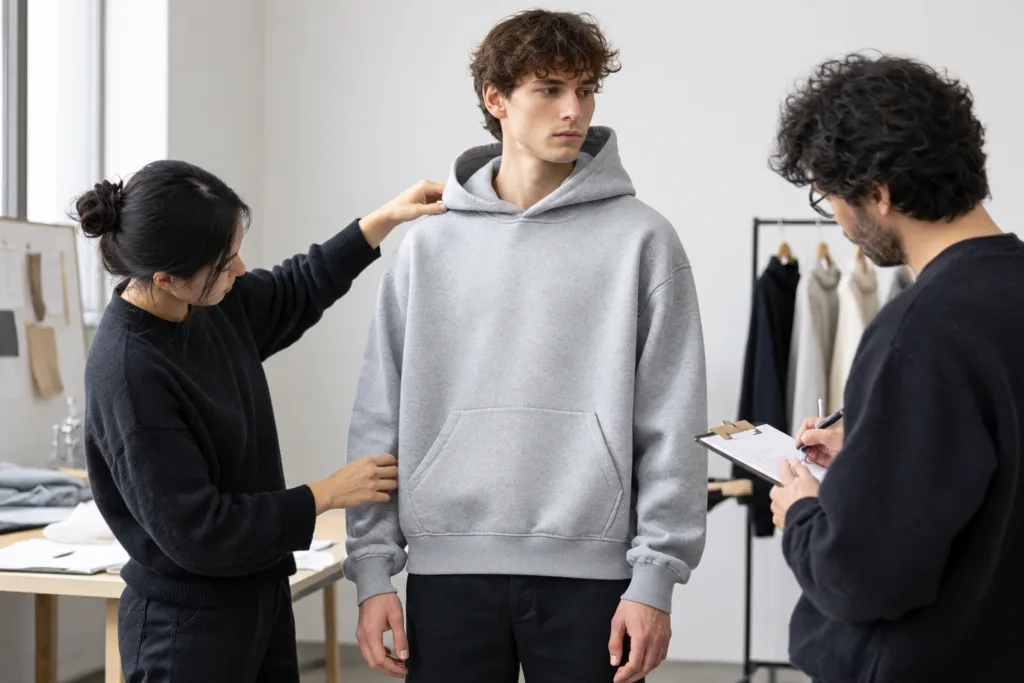
Oversized and boxy fits often need careful control in shoulder drop, body length, sleeve volume, and hood scale. Without balance, they can look sloppy instead of current. Regular fits need equal attention, because a standard silhouette can still feel elevated when the proportions are sharp and the grading is consistent. Brands exploring oversized hoodie fit development should evaluate not only trend appeal but also target customer shape, size range, and return risk.
For premium positioning, fit should also be reviewed on more than one sample size when possible. A silhouette that works well in one size may lose its intended shape when graded if measurement rules are not aligned with the design concept.
Color depth, dye quality, and palette strategy create a more elevated look
Premium-looking hoodies usually have color discipline. Deep blacks, stable neutrals, rich garment tones, and well-controlled seasonal colors help the collection look cohesive. In contrast, weak dye depth, inconsistent shade matching, or overly random color choices can make even a well-made hoodie feel less refined.
Brands should think beyond single-SKU color selection. A retail-ready palette works across the full range, supports product photography, and aligns with the intended sales channel. Wholesale buyers especially notice when a brand presents colors that feel commercially curated rather than experimental without direction.
Fabric and dye method also affect how color reads. Some tones look softer and more premium with washed treatments, while others need cleaner saturation to support a sharper brand identity. Sampling under different lighting conditions is useful before confirming production standards.
Sampling and fit review before bulk production
A premium hoodie should be judged in sample form as a product, not only as a technical garment. The review should cover fit, fabric handfeel, logo scale, hood behavior, seam cleanliness, trim quality, wash appearance, and how the item photographs from multiple angles.
It is also smart to separate development comments into visual issues and production issues. Some corrections affect style perception, such as pocket proportion or hood stand. Others affect consistency in bulk, such as stitch tension, rib attachment, or print registration. A structured review process reduces the chance that a nice-looking prototype becomes an unstable production item. That is why buyers benefit from understanding the hoodie sample approval process before approving final bulk standards.
Where possible, test the sample in the same context where it will sell. Try it on target body types, steam it for product photography, fold it for packaging review, and assess how it looks on a rail. Retail readiness depends on total presentation, not just factory measurements.
How to shoot and present premium hoodies for e-commerce and wholesale buyers
Even a well-developed hoodie can lose value if it is presented poorly. Premium product photography should show texture, silhouette, branding detail, and color accuracy clearly. Flat front-only images often make custom hoodies look more generic than they really are.
For e-commerce, include front, back, side, close-up fabric, branding detail, and worn fit imagery. For wholesale line sheets or buyer presentations, consistency across the range matters just as much as individual product quality. If the collection is presented with mixed lighting, uneven steaming, or unclear color correction, buyers may question the product standard.
Packaging presentation also matters more than many startup brands expect. A clean fold, proper size sticker system, and thoughtful hangtag execution help reinforce the retail story before the garment is even tried on.
Small-batch testing helps premium launches scale with less risk
For many brands, the smartest path is not immediate large-volume production. A smaller initial run can help validate fit acceptance, price tolerance, best-selling colors, and how customers respond to branding restraint versus statement graphics. This is especially useful when a hoodie is intended to become a carryover item.
Small-batch testing also exposes practical issues that may not be obvious during development. Customers may prefer a slightly shorter body, softer brushing level, or different drawcord finish than the team originally expected. Adjusting these points before a wider roll-out can protect margin and reduce dead stock risk.
This approach is valuable for startups as well as established labels entering a new premium category. Retail-ready design is rarely one decision. It is a sequence of refinements validated by real product feedback.
Common mistakes that make custom hoodies look cheap or promotional
Several issues appear repeatedly in hoodie development when the brief is not clearly tied to retail performance.
- Using generic fleece without considering face feel or shape retention
- Choosing fabric weight based on marketing language instead of actual end use
- Adding oversized logos to compensate for weak garment design
- Ignoring hood proportion and relying on a standard pattern
- Using poor rib quality that loses recovery quickly
- Skipping wash and shrinkage review during sample evaluation
- Underinvesting in labels, hangtags, and inside finishing
- Approving a fit on one wearer without broader fit assessment
- Presenting premium product with weak photography or packaging
Most of these mistakes are avoidable when product development is treated as brand building rather than simple decoration sourcing.
A manufacturer checklist for retail-ready hoodie development
Before bulk approval, it helps to review the hoodie through a retail lens rather than a purely technical one.
| Development Area | What to Confirm |
|---|---|
| Fabric | Weight, handfeel, surface finish, shrinkage, and color stability match target positioning |
| Fit | Silhouette, grading, body length, sleeve volume, and hood scale fit the intended customer |
| Construction | Pocket placement, rib quality, seam appearance, and hood structure support a premium look |
| Branding | Logo size, decoration method, and placement feel intentional rather than overpowering |
| Inside details | Main label, care label, neck finish, hangtag, and packing presentation are retail appropriate |
| Sample review | Visual quality and production consistency are both approved before bulk starts |
When these points are aligned, the hoodie has a much better chance of performing as a true branded product instead of being mistaken for promotional apparel. That is the central goal of retail ready hoodie design: making every visible and hidden detail support the price, brand identity, and long-term repeatability of the product.
Conclusion
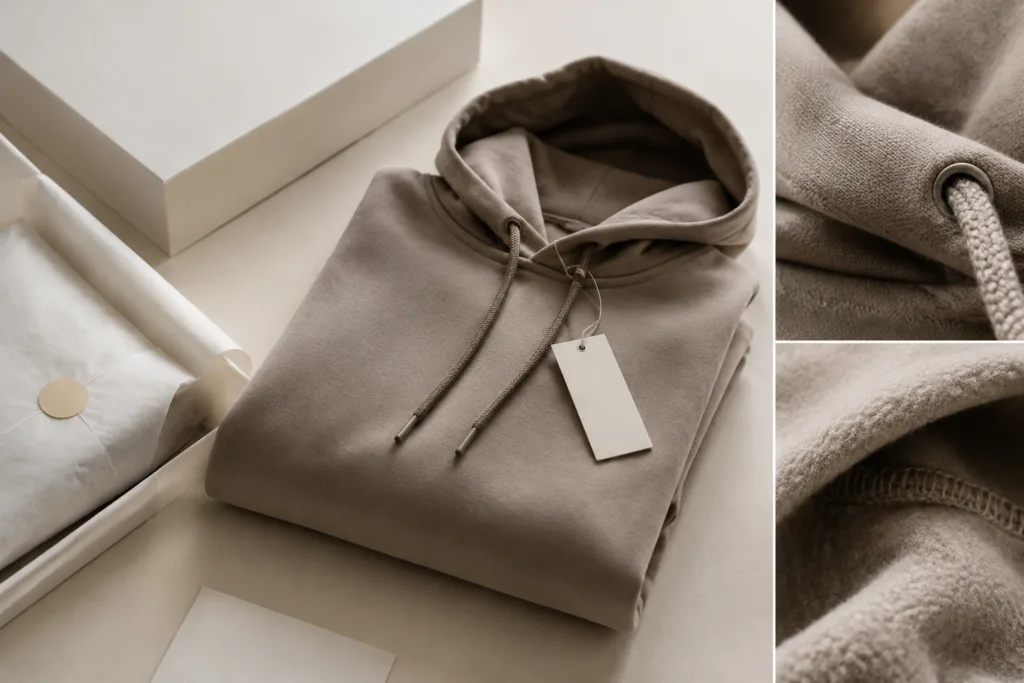
A premium custom hoodie is built through discipline, not excess. Better fabric selection, balanced fit, controlled branding, cleaner construction, and stronger inside finishing usually do more for perceived value than louder graphics or extra decoration. For sourcing teams and brand owners, the key is to define the retail target early and make sure every development decision supports that target through sampling and production.
FAQ
What is retail ready hoodie design?
Retail ready hoodie design is the process of developing a custom hoodie with the fit, fabric, branding, construction, and presentation standards needed to sell as a branded product rather than look like promotional merchandise.
What makes a custom hoodie look premium?
A premium hoodie usually combines better fabric handfeel, a well-balanced fit, cleaner hood construction, controlled logo placement, stronger rib quality, and more polished inside branding and packaging details.
Is a heavier hoodie always more premium?
No. Higher GSM can add substance, but premium value also depends on surface finish, drape, softness, recovery, and whether the weight matches the intended fit and customer use.
How large should a hoodie logo be for a retail brand?
There is no single rule, but retail-focused hoodies often look stronger with restrained branding that fits the garment design instead of oversized graphics used to dominate the whole front.
What should brands check in a hoodie sample before bulk production?
Brands should review fit, hood shape, pocket balance, rib recovery, logo quality, stitching consistency, wash appearance, color accuracy, and how the hoodie looks in photography and packaging.
Can small batch production help improve premium hoodie launches?
Yes. Small batches can help brands test fit acceptance, color demand, price positioning, and presentation details before committing to larger production volumes.