


NINGHOW APPAREL / MATERIAL FIELD GUIDE
Choose the fabric. Shape the garment.
A practical guide to composition, construction and the checks that connect a fabric choice to a finished product.

START WITH THE WEARER
What does your garment need to do?
Movement. Climate. Layering. Care. Set your priorities before choosing a swatch.
01 Compare materials 02 Check the garment 03 Approve the evidence
TWO QUESTIONS. ONE MATERIAL DECISION.
What is it made of? How is it built?
01 / COMPOSITION
The fiber choice
C
Cotton
Confirm composition, care and shrinkage requirements.
P
Polyester
The fiber name alone does not establish breathability or moisture management.
B
Blends
Confirm the exact ratio and the finishing.
COMPOSITION + CONSTRUCTION
Specify both.
Record the fiber ratio and structure together. Then add color, hand feel and the checks your garment needs.
02 / CONSTRUCTION
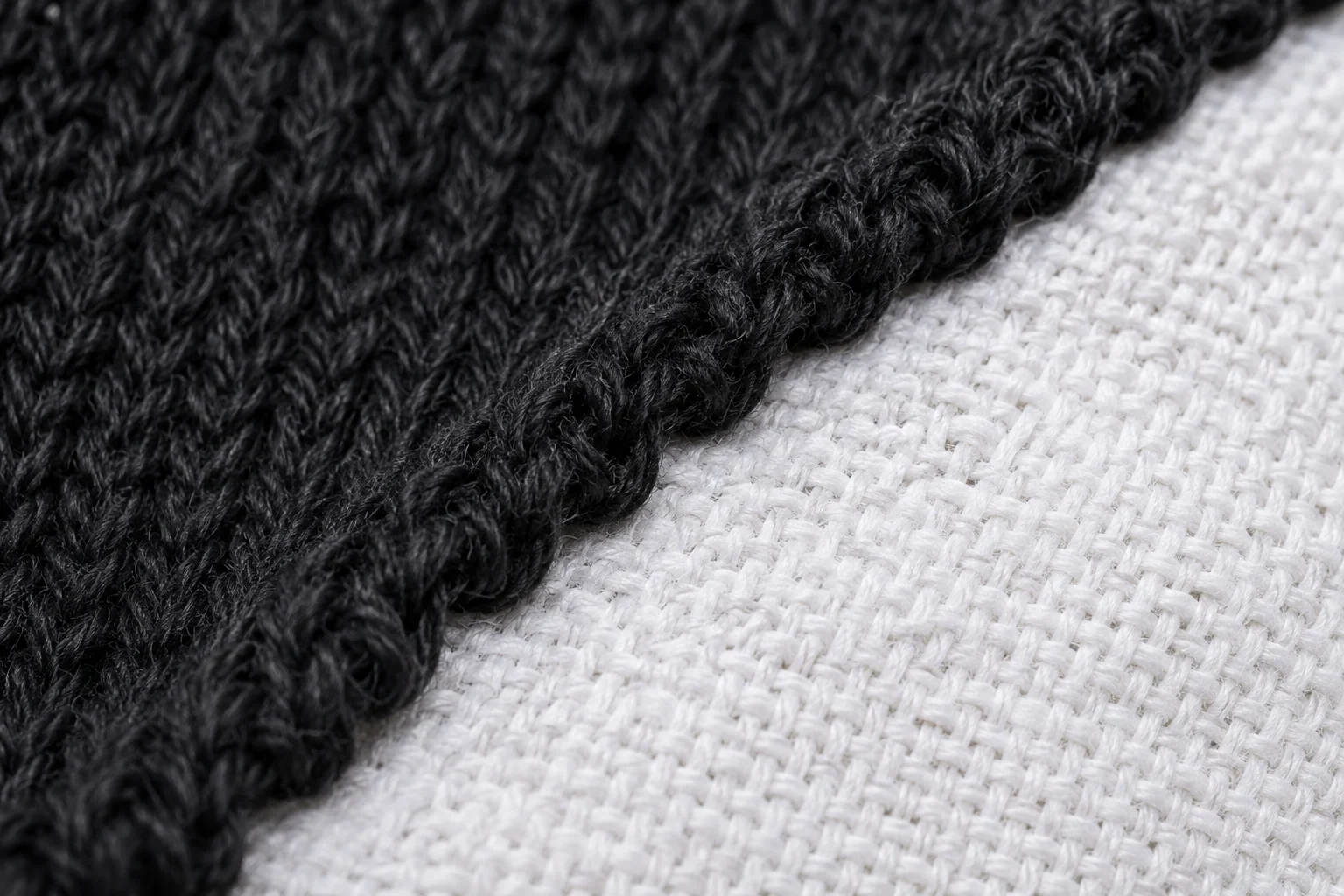
Knitted
Woven
K
Knitted
Loop structure, surface, drape and fit.
W
Woven
Yarn construction, shape and the structure your design needs.
SURFACE / FINISH
Fleece
Review the construction and finishing together: bulk, hand feel, care and decoration suitability for a mid-layer.
USE → PRIORITIES → FABRIC
Start with garment, activity, wearer and market. Rank hand feel, drape, appearance, decoration, price, quantity and repeat-order consistency.
No material family guarantees weight, stretch, durability or performance. Explore materials & techniques
FROM SWATCH TO SAMPLE
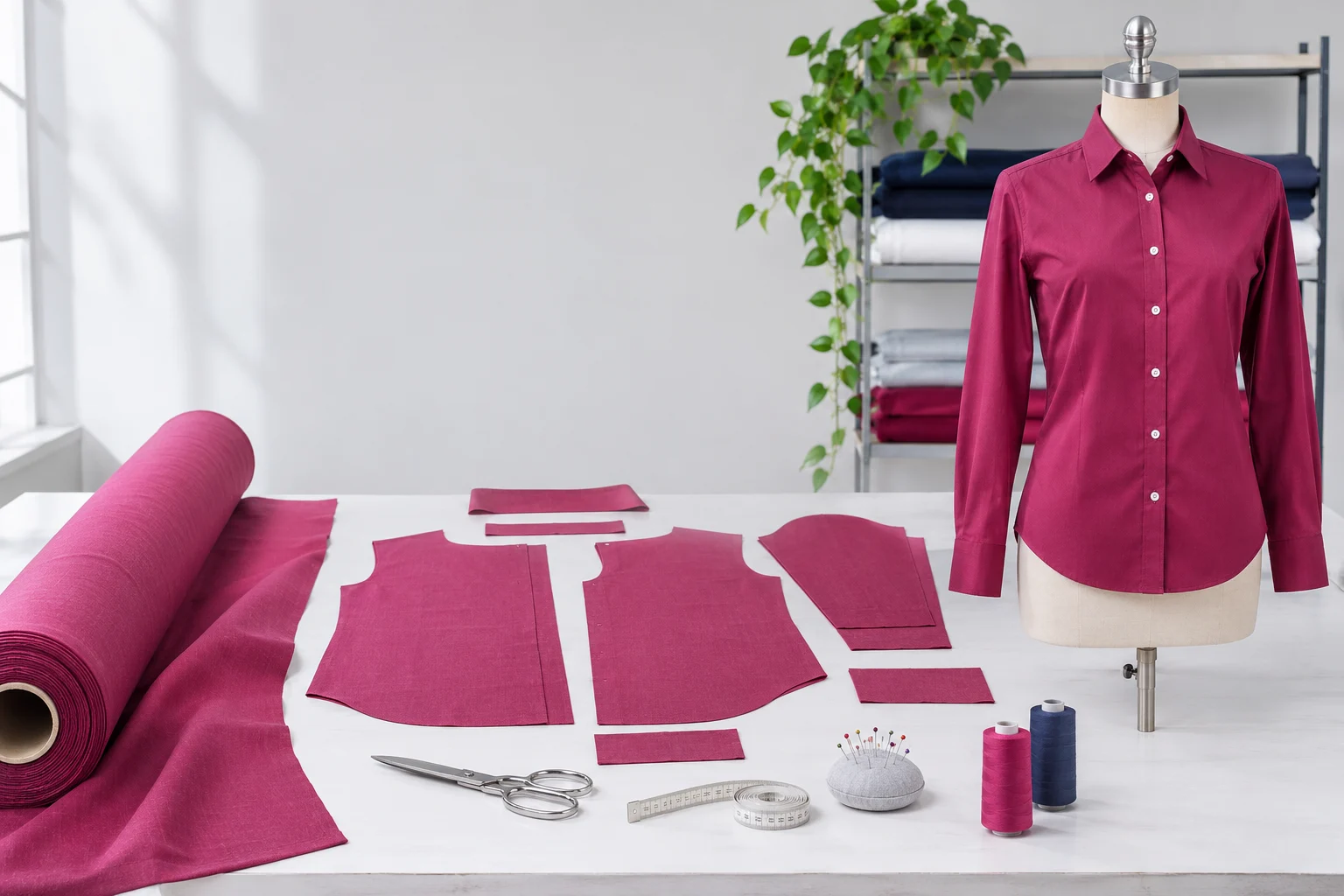
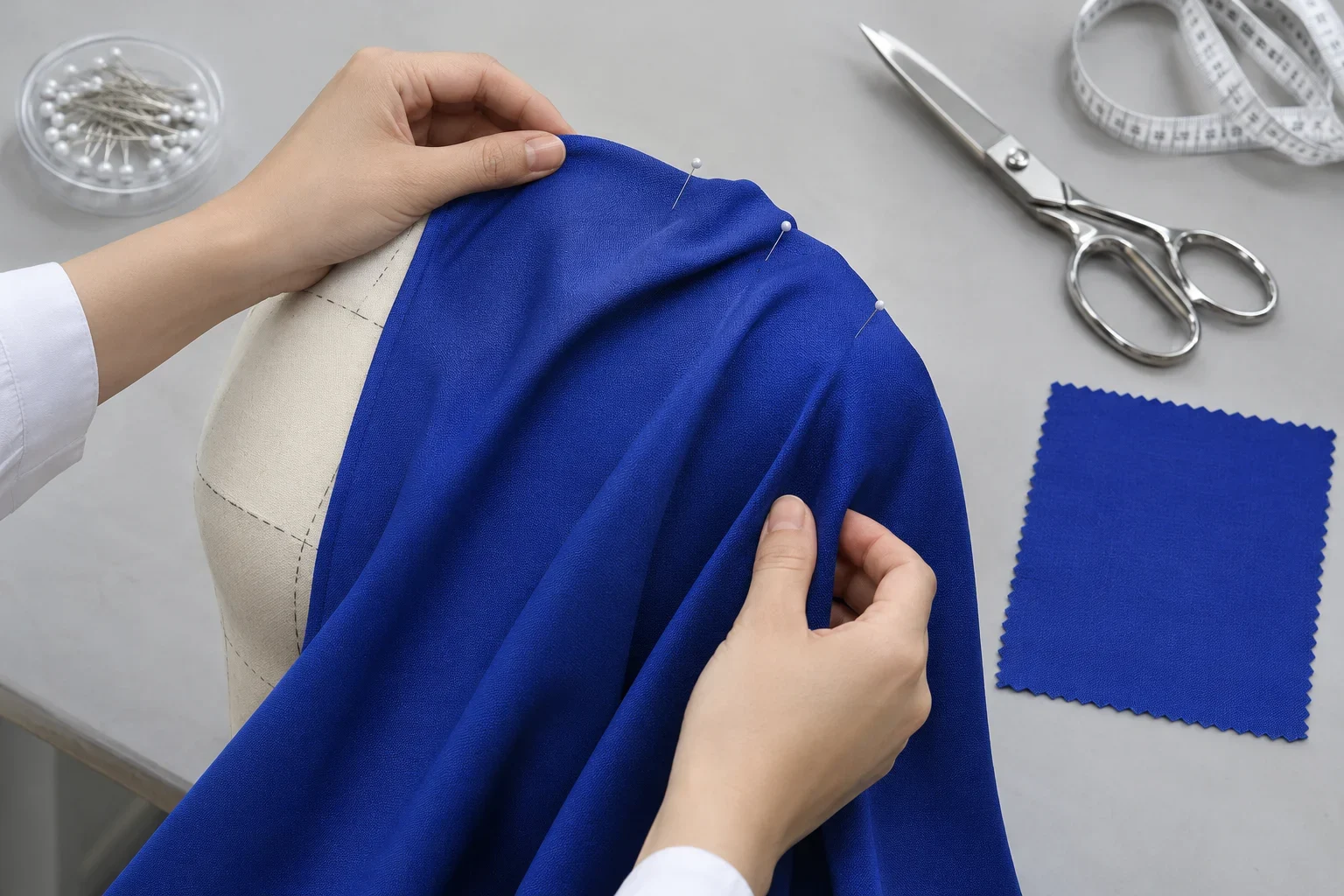
A fabric becomes a garment.
01 / IN THE HAND
The swatch tells you
Color, texture, opacity, sheen and initial hand feel.
The garment tells you
How the fabric behaves with the pattern, seams, movement and proportions. Define the intended fit and stretch before judging the result.
A
Material identity
Construction, color and care information.
B
Fit & finish
Measurements, shape, seams, decoration, labels, trims and closures.
C
Approval reference
Packing, required tests and one current record of fabric, measurements, artwork, trims and revisions.
Use sample development to review the decisions. Request a sample with the garment, sample size, material direction, quantity and delivery needs. Timing, charges and revisions are agreed for the project.
THE GARMENT CHANGES THE QUESTION
Choose for use. Then check the branding.
01
Everyday & close-fitting
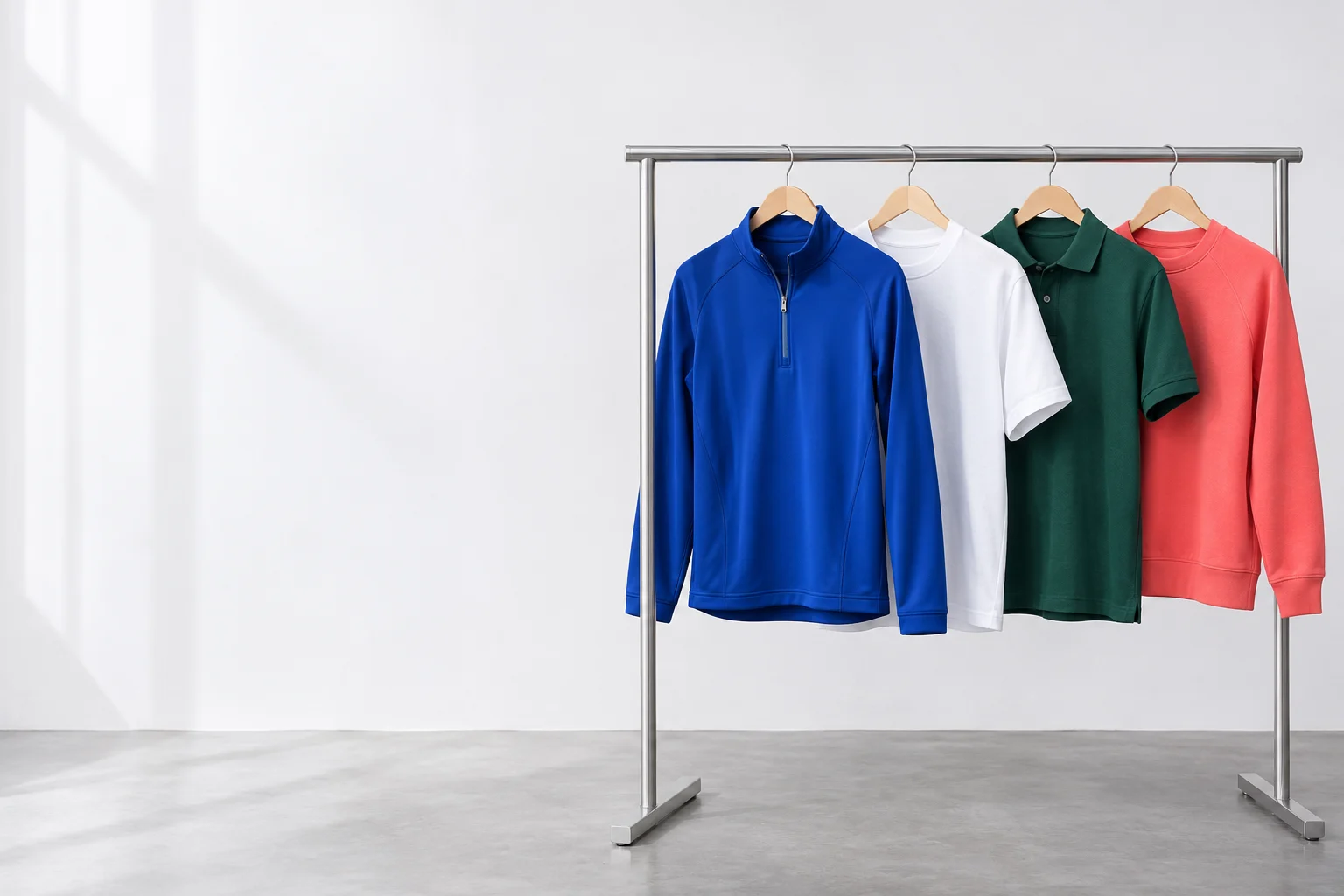
Review fit, surface, movement and decoration position. T-shirts / Polos / Base layers
02
Layers & outerwear
Check bulk, closures and branding on sweatshirts & pullovers. Jackets and vests need layering and structure review; warmth or weather resistance needs evidence.
03
Activity-led garments
Define the activity for activewear and golf apparel. Test moisture management, UV protection, breathability and stretch-recovery claims.
04
Uniform programs
Include wearer groups, size allocation and repeat-color consistency. Explore uniforms

SURFACE + ARTWORK
Review artwork size, placement, texture, stretch and usable surface before choosing printing, heat transfer or embroidery. Confirm shade references and required wash validation.
Review labels, elastic, drawcords, closures and packaging together.
APPROVAL IS MORE THAN A SWATCH
Keep the material and the evidence together.
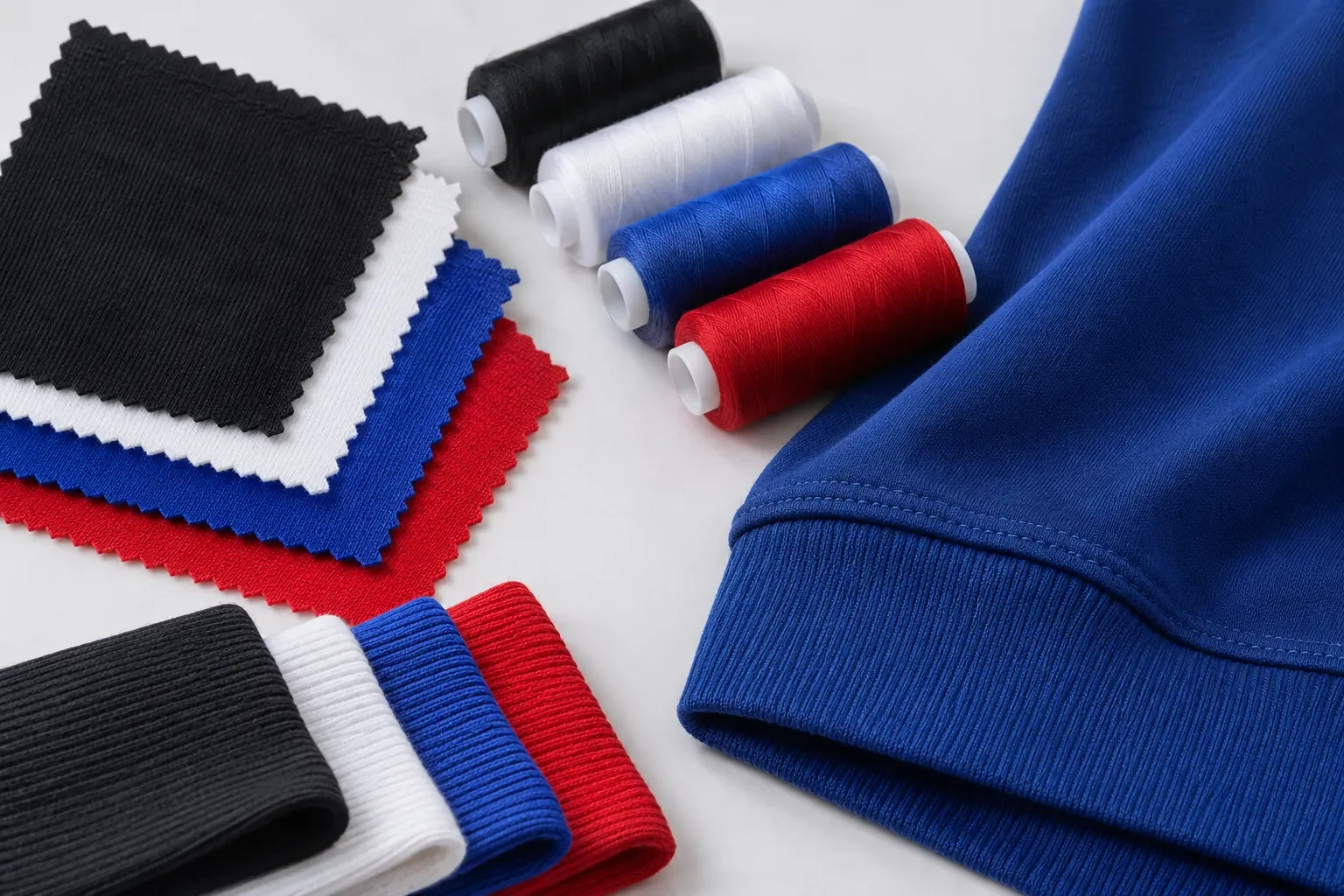
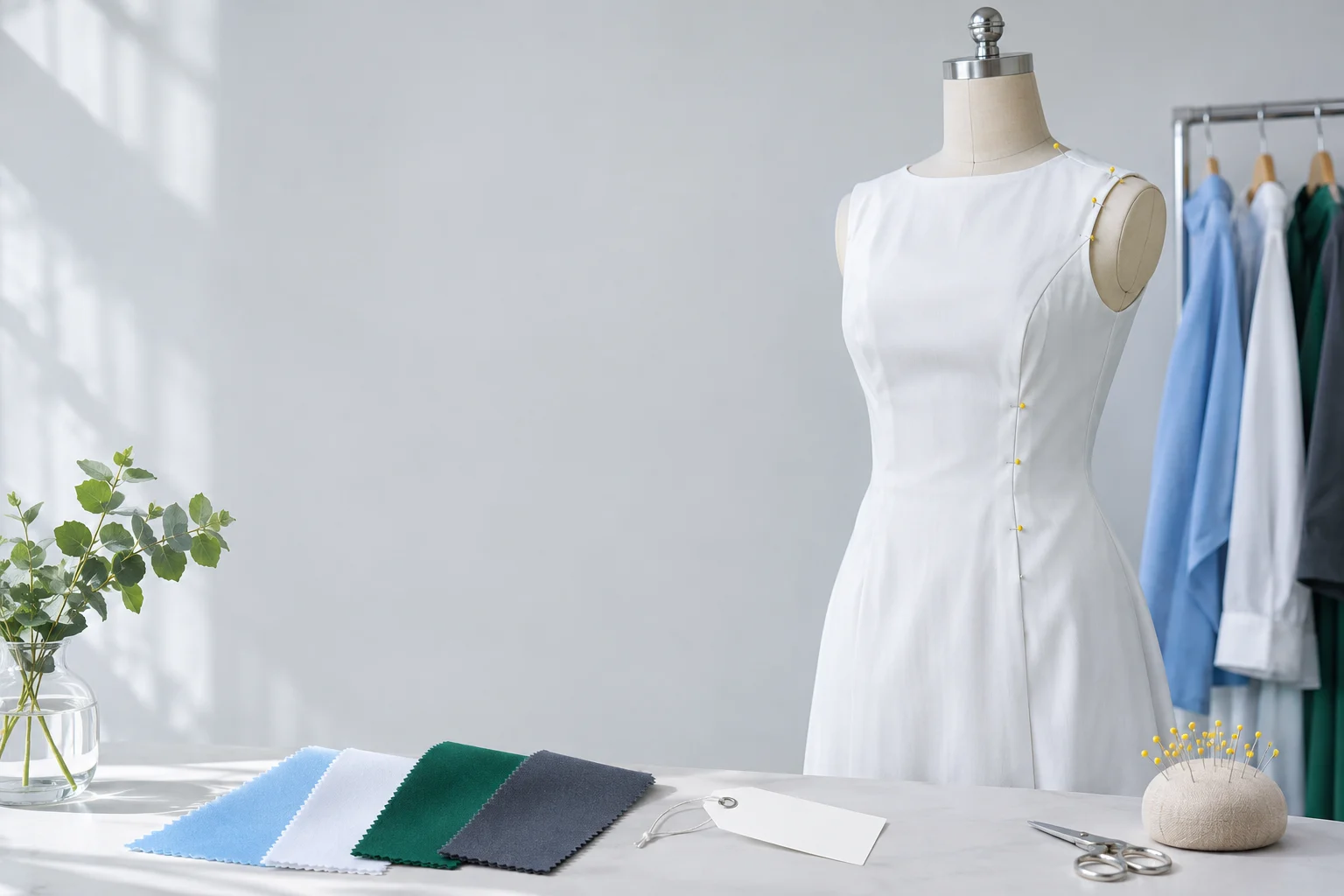
FABRIC / TRIM / COLOR REFERENCE
01
Material record
Composition, construction, swatches, color references and care information. Confirm which current documents apply to the selected material.
02
Test evidence
A useful report identifies the sample, method, date and acceptance requirement. A fabric name cannot substantiate a specific performance claim.
03
Repeat-order plan
Confirm source, availability, approved color, shade control, substitution rules and retained records. Availability depends on fabric, color, quantity and schedule.
SEND A FOCUSED FABRIC BRIEF
Garment use, composition preference, structure, color, hand feel, performance needs, artwork, trims, quantity, samples, destination, documents and target timing.
Availability, pricing and sourcing responsibilities are confirmed for your brief.
YOUR NEXT STEP
Find the fabric direction for your garment
Tell us what you are making, how it will be worn and which material decisions remain open. Include your preferred hand feel, color, decoration and quantity to focus the discussion.