


NINGHOW APPAREL / PRODUCTS
Custom uniforms and promotional apparel, organized by wearer.
Plan the garments, identity and size allocation for staff, teams, clubs, schools or events with Ninghow Apparel. Build a defined B2B program from product selection through distribution.

FABRIC / FIT / FINISH
WEARER / USE / PRODUCT
Choose garments around the people and the setting.
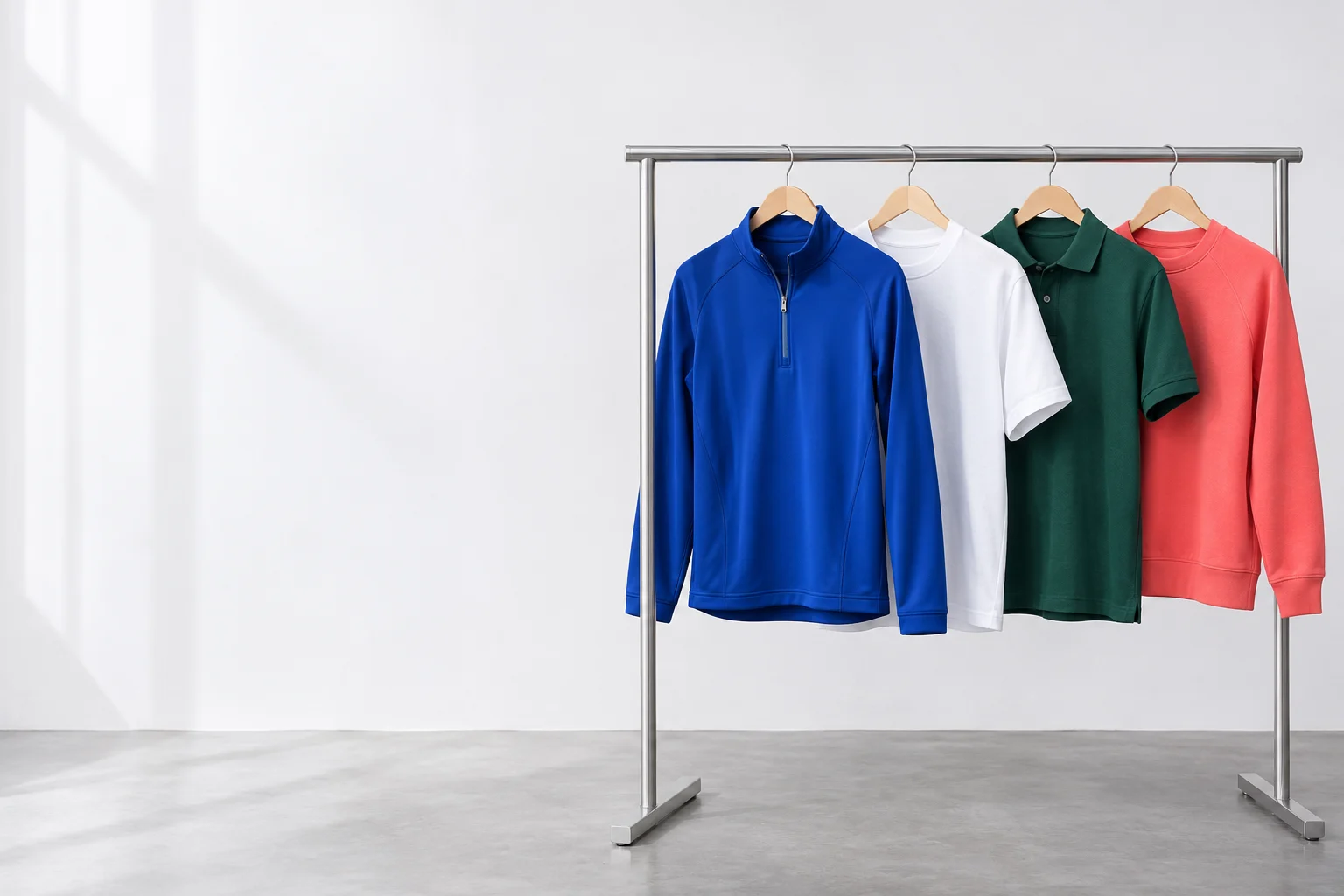
Programs may include polos, T-shirts, hoodies, sweatshirts, pullovers, jackets, vests, pants, shorts or activewear, subject to the brief. Confirm product-specific compliance, protection and performance requirements.

01
Staff and service teams
Identify work settings, roles, presentation needs and repeat-order requirements. Polos can be reviewed for the intended fit and construction.
02
Schools, clubs and teams
Coordinate tops, bottoms and layers. Separate wearer groups and any gender, fit or role-specific requirements.
03
Events and campaigns
Choose garments around purpose, artwork, quantities and distribution. T-shirts may suit casual promotional programs. A campaign date needs a confirmed production and delivery plan.
CONSTRUCTION / FINISH / ARTWORK
Specify the details that carry the identity.
Confirm material composition, structure, weight or hand feel, color references, care needs and closures for each garment. Cotton, polyester, blends, knits, wovens, fleece and performance directions require availability and suitability review.

A
Pocket stitching
B
Collar
C
Embroidery
A / Pocket stitching
B / Collar
C / Embroidery
01
Construction and fit
Connect pockets, collars and other details to the wearer role and measurement requirements.
02
Brand application
Specify logo dimensions, placement, artwork and approval method. Review printing, embroidery, labels and trims against material compatibility; durability and wash claims require evidence.
GROUP → GARMENT → SIZE → APPROVAL
Turn a headcount into an approved size allocation.
Provide quantities for each garment, color and size, not just a total headcount. Confirm available sizes, measurements, grading and how changes will be handled before bulk approval.

01
Name the groups
List staff roles, teams, clubs or distribution groups and the intended use.
02
Assign the garments
Record the items and colors each group receives, including any outer layers.
03
Review the sample
Assess fit, construction, material, decoration, labels and packing. Agree sample charges, timing, revision limits and shipping.
04
Approve the allocation
Confirm final size quantities and retain the approved specification, artwork and sample reference.
IDENTIFY / SORT / PACK / REPEAT
Prepare the order for its distribution route.

Review branding and packaging before production. Upload reference files and use the specification checklist to organize the complete program.
01
Identify
Define labels, artwork, trims and garment identification for the selected items.
02
Sort
State whether items are distributed individually, by team or by location; connect size quantities to that plan.
03
Pack and deliver
Approve folding, standard export or custom packaging, destination and date. Confirm express, air or sea options, documents, restrictions, costs and timing.
04
Retain for repeat orders
Keep specifications, size allocations, artwork, samples and packing instructions. Replenishment depends on material continuity, order thresholds, pricing and scheduling.
ACCEPTANCE / COMMERCIAL REVIEW
Approve the program against a shared reference.
QUALITY
Garment and presentation
Agree incoming, in-process, measurement, visual and pre-shipment checks. Record tolerances, decoration acceptance, packing checks and corrective actions.
EVIDENCE
Relevant to the program
Confirm AQL, acceptance criteria, testing, third-party inspection and current certification records for the exact garments.
FEASIBILITY
Materials, approvals and timing
Confirm availability, MOQ, sample and bulk schedules against styles, quantities and customization. Resolve open garment, fit or decoration questions before quotation.
YOUR NEXT STEP
Send the program, including who receives what.
Include organization type, wearer groups, garments, colors and quantities by size, artwork, packing method, destination and required timing. Add any replenishment expectations.