
Remote Hoodie Manufacturing: A Complete Guide
Working with a hoodie manufacturer remotely can unlock exciting possibilities. Whether expanding a brand globally or seeking specialized craftsmanship, this approach streamlines sourcing and production. Remote hoodie manufacturing combines digital collaboration tools, well-planned sample evaluation, and precise communication to guarantee results—no matter where your production partner is located.
How to Work with a Hoodie Manufacturer Remotely

In remote hoodie manufacturing, the process blends technology with hands-on checks and clear agreements. Brands set strong communication with their partner, from first concept to the final shipment. Below are practical steps for navigating cross-border cooperation, keeping quality and timelines in focus.
1. Initial Communication: Set Expectations and Share Vision
Start by outlining your project details: target market, style goals, quantities, and expected fit or performance features. Prepare a brief or brand deck, including style references and required certifications (such as OEKO-TEX for textiles safety or GOTS for organic cotton). Share your expectations for garment sizing, shapes, and branding. Mention your preferred timeline and any compliance needs—this avoids confusion later. Ninghow Apparel, for example, uses a structured onboarding call to clarify requirements for hoodie orders.
2. Tech Packs & Design Sharing
A tech pack is the master document for manufacturing. It lists hoodie measurements, construction details, stitch types, trims, logo placements, and technical drawings. Digital platforms like Adobe Illustrator or cloud services (Google Drive, Dropbox) help exchange tech packs efficiently.
- Send graded size sets to ensure fit on all target sizes.
- Include fabric specification tables (e.g., 320gsm brushed fleece, combed cotton, or recycled polyester blends).
- Detail labeling, hangtag, and care label requirements (using ISO 3758 symbols).
3. Fabric, Color, and Finish Selection
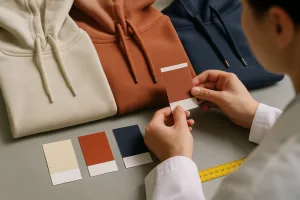
The right hoodie fabric and finish affect bulk durability, handfeel, and cost. Per cross-border standards, request physical fabric swatches and lab dips for color matching. Review photos and videos taken under natural light, then arrange sample shipments for tactile approval. If using Pantone matching, request shade bands and batch control information. Ninghow Apparel, for instance, mails swatches and provides lab dip evaluations through live video.
| Fabric Type | GSM Range | Key Properties | Best Use |
|---|---|---|---|
| Brushed Fleece | 300–360 | Soft, warm, durable | Streetwear, sports |
| French Terry | 250–320 | Lightweight, absorbent, flexible | Summer, athleisure |
| Organic Cotton | 280–320 | Sustainable, soft, hypoallergenic | Eco programs |
| rPET Blend | 260–340 | Recycled, moisture-wicking | Active and teamwear |
4. Sample Development: Confirmation Before Bulk
Request physical pre-production samples before approving bulk manufacturing. Samples show quality, fit, wash stability, print/embroidery finish, label placement, and packaging methods. Use high-definition video conferencing to visually inspect details and ask for close-up photos showing seams (e.g., ISO 301 lockstitch, ISO 504 safety stitch), rib attachment, and decoration quality.
- Evaluate specs against your tech pack.
- Request a fitting session via video with live measurements.
- Confirm print and embroidery results: test for handfeel, stretch, and durability.
- Review packaging samples for export and retail standards.
5. Pattern Making & Digital Sample Review
Remote pattern confirmation often uses cloud-based digital platforms like Gerber AccuMark, Lectra Modaris, or Browzwear. These allow you to view graded patterns, seam allowances, and fit digital avatars or 3D samples for review. Brands can zoom into notches, grainline, and construction details, adjusting tolerance or marker layout prior to cutting.
6. Video Meetings for Decision-Making
Regular video conferences keep stakeholders on schedule and clarify doubts in real time. Typical milestones include fabric selection, sample feedback, bulk cut approval, and decoration method confirmation (screen print, DTG/DTF, embroidery). Use document sharing for signed approvals or specification updates.
7. Bulk Production Process: Step-by-Step Remote Control
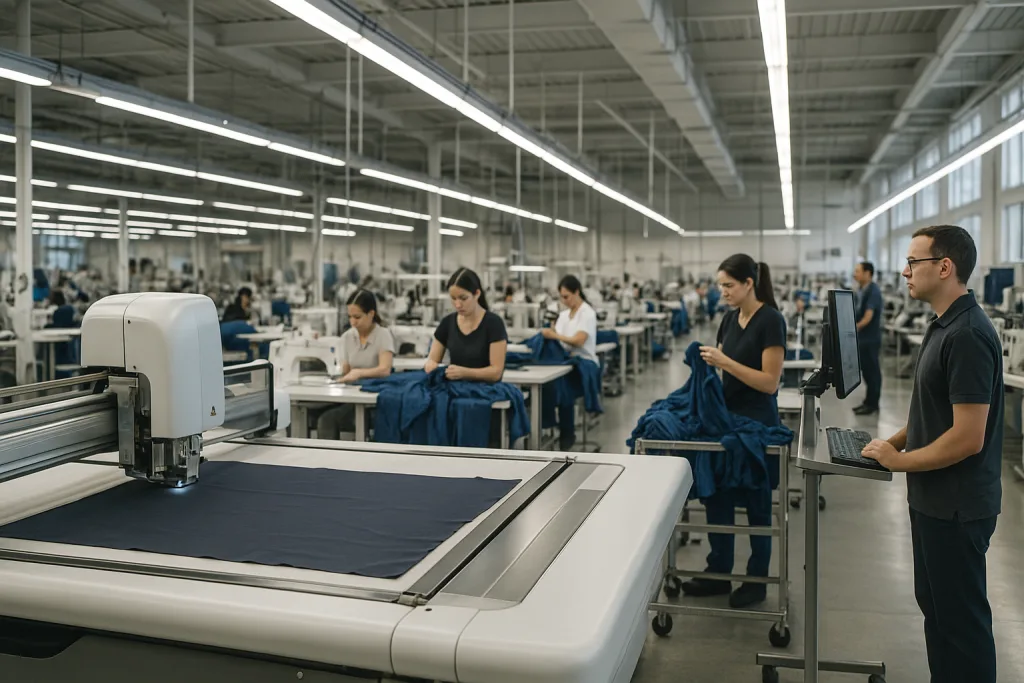
Once samples are approved, the manufacturer provides a production timeline. You can monitor progress via shared dashboards, with photo/video updates showing key stages such as auto-cutting, sewing line balancing, decoration, and inline quality checks.
- Fabric Relaxation: Let knit fabric relax 24 hours before cutting to prevent shrinkage or skew.
- Marker Setup: Optimize fabric markers for yield and precision.
- Sewing Line: Balance operations for key seams: raglan, overlock, cover stitch at hem.
- Decoration: Approve screen print location, embroidery threads (including 3D/puff), and heat transfer durability.
- Final QC: Endline checks covering spec measurement with tables, needle detection (especially for children’s wear), AQL 2.5 sampling, and wash testing.
8. Quality Control and Testing: Remote Transparency
Quality assurance is not optional. Top manufacturers, like Ninghow Apparel, provide digital QC logs and footage. Review inline checks for seam strength (ASTM D1683), fabric pilling (ISO 12945), colorfastness (ISO 105), and size conformity.
- Verify inline inspection documents and images.
- Request random video checks and packaged sample verification.
- Ensure compliance (OEKO-TEX, GOTS, BSCI/WRAP for social responsibility).
9. Packaging, Labeling, and Logistics
Remote hoodie manufacturing demands careful export packaging and labeling. Confirm folding methods (flat, hanger, bag), polybag specs (biodegradable preferred), hangtag and care label details, and carton marks for international shipping. Share and review photos of barcodes, size packs, and outer carton labels. Decide on Incoterms (e.g., EXW, FOB, CIF, DDP) to clarify shipping cost and risk responsibilities.
10. Payment, Documentation, and Client Feedback
Finalize payment terms early (T/T wire, L/C, or escrow for security). For cross-border deals, require signed sample and bulk approval docs. Ask for logistics tracking and post-shipment feedback interviews to improve future runs.
Cross-Border Collaboration in Hoodie Manufacturing
Managing remote hoodie manufacturing across countries means understanding both process and culture. Time zones, language, and technical standards play a role, but modern workflow tools bridge gaps:
- Schedule regular video meetings for updates, clarifications, and milestone sign-off.
- Use cloud storage for tech packs, photos, pattern files, and approval documents.
- Set up clear escalation lines for urgent issues (e.g., CRM system or messaging apps).
- Plan buffer time for international shipping (samples and bulk orders may take extra days).
Digital Tools for Remote Apparel Partnerships
Top manufacturers rely on integrated digital platforms for smooth collaboration. These include project management (Trello, Asana), video conferencing (Zoom, Teams), and cloud pattern sharing (Gerber, Lectra, Browzwear). A shared Google Drive folder tracks all key files and approval records. Brands often use e-signature platforms for final signoffs.
Expert Insight
“The most reliable remote partnerships blend technical detail with transparent, rapid feedback—brands get quality, speed, and control regardless of location.”
Remote Sample Confirmation: Why It Matters
Remote sample confirmation stops surprises before mass production. Physical samples let you touch and see the garment, while digital reviews clarify technical details. Request several photos with rulers and close-ups of seams, prints, and embroidery. If the hoodie has moisture-wicking or antimicrobial performance, ask for lab results from recognized test methods (AATCC).
Lab Dips, Strike-offs, and Bulk Color Approvals
- Lab dips for solid colors
- Strike-offs for print placement and ink handfeel
- Shade bands for color consistency
- Bulk swatch review before main production
Decoration Approval: Print, Embroidery, & Heat Transfer
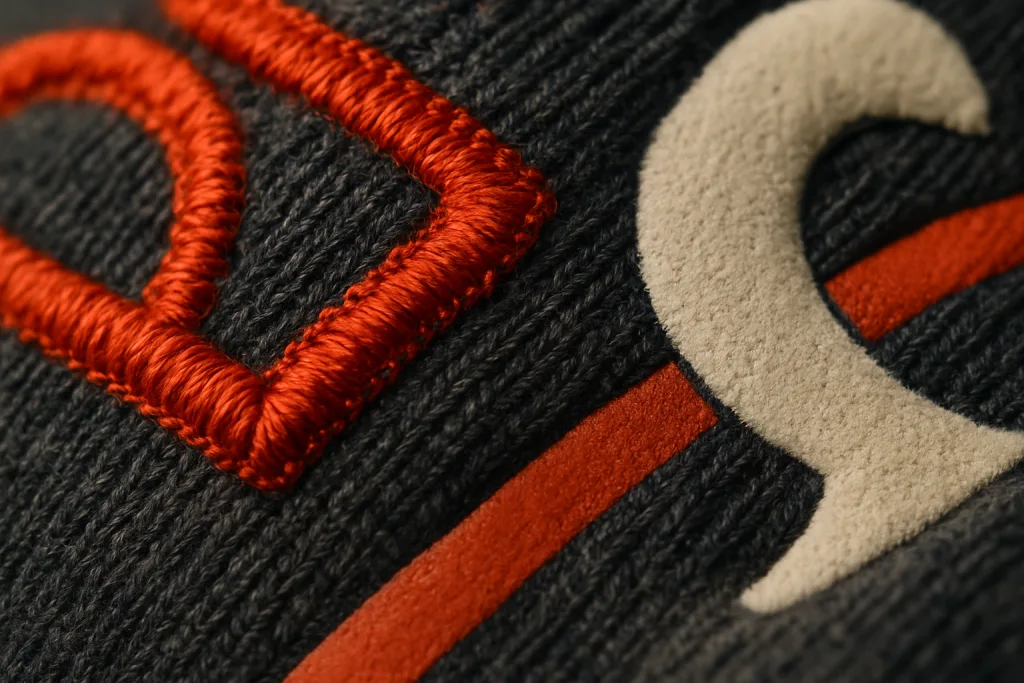
Review screen print, embroidery (flat, puff/3D), and heat transfer samples. Ask for photos from multiple angles and wash test reports. For remote checks, confirm print edges, thread tension, and logo sharpness.
Quality Control in Remote Hoodie Production
Stringent QC is essential. Use video and photo logs for:
- Inline sewing checks: stitch type conformity, seam quality
- Endline checks: puckering, skew, spec mismeasurements
- Measurement tables for body, sleeve, hood, pocket placement
- Needle detection (for safety, especially youth/children’s styles)
- Sample batch washing for dimensional change (AATCC 150)
- Packing audits for export carton marks and labeling
Remote Approval of Decoration and Special Features
Finish and decoration approval affects retail appeal. Approve all artwork layouts and stitch samples digitally, then request physical strike-offs for final agreement. Compare embroidery coverage, stitch quality, and thread colors against Pantone or brand requirements.
Common Decoration Methods for Hoodies
- Screen print (plastisol, water-based, discharge)
- Direct-to-film (DTF) or direct-to-garment (DTG) print
- Sublimation print (for high-poly blends)
- Embroidery: flat, 3D/puff, metallic thread
- Heat transfer labels and appliques
Payment, Shipping, and Incoterms in Remote Manufacturing
International deals require clear payment and shipping rules. Set agreed terms (EXW, FOB, CIF, DDP), choose secure payment methods (T/T wire, L/C, escrow), and require regular shipment tracking. Confirm carton packing specs and customs labels before dispatch.
Export Packaging and Documentation
- Polybag spec: thickness, recyclable options, vent holes
- Size ratio packs for efficient bulk handling
- Hangtag and care label design, using ISO 3758 symbols
- Carton marks showing quantity, size, barcodes (UPC/EAN)
- Customs documentation for HS code, country of origin, import clearance
Best Practices for Successful Remote Hoodie Manufacturing
Here are proven ways to keep your remote partnership smooth and effective:
- Keep communication regular and structured—weekly calls, milestone emails, and instant messaging for daily questions.
- Document all sample approvals, spec changes, and quality checks before bulk production.
- Match technical requirements with visual and tactile checks—never rely on photos alone for final decision.
- Work with manufacturers providing full transparency and digital traceability (photos, videos, QC logs).
- Partner with trusted companies like Ninghow Apparel, who specialize in OEM/ODM cross-border processes and uphold robust quality standards.
Applications: Who Benefits Most?
- Brands scaling quickly to global markets
- Corporate programs needing volume and fit consistency
- Sports teams and events requiring custom colors or decoration
- Streetwear and lifestyle startups demanding flexible style runs
Frequently Asked Questions
How do I ensure quality when working with a remote hoodie manufacturer?
Request detailed sample photos, lab reports, and conduct live video inspections before approving bulk production.
How are samples handled in remote hoodie manufacturing?
Manufacturers send physical samples by courier for fit, fabric, and finish checks, along with virtual feedback using high-res images and videos.
What is a tech pack and why is it important?
A tech pack is a detailed document with specs, measurements, patterns, and finishing instructions for accurate hoodie production and communication.
How can I approve colors and prints remotely?
Use lab dips, strike-offs, and Pantone cards mailed for review, plus video calls to verify actual shades and finishes in natural lighting.
What platforms are used for remote pattern confirmation?
Manufacturers share digital patterns and 3D samples through platforms like Gerber, Lectra, or Browzwear for precise virtual review.
Which compliance standards should I check for hoodie manufacturing?
Check for OEKO-TEX, GOTS for organic cotton, AQL 2.5 sampling, and relevant import/export safety or labeling standards.