
What Is a Clothing Brand Style Guide?
A clothing brand style guide is a document that defines how your brand looks, feels, and sounds. It sets rules for your logo, font choices, colors, photography, and tone of voice. This guide keeps your visual style consistent—across everything from your website, to product tags, packaging, and social media. Big and small brands rely on style guides to build customer trust.
Why Consistency Matters
Consistency in style makes your brand recognizable. People remember clear logos, unique colors, and certain fonts. When customers see your products online or in stores, consistent visuals help them connect with your message and values. Uniform styles also make it easier for clothing manufacturers, like Ninghow Apparel, to deliver exactly what you want.
Examples of Great Clothing Brand Style Guides

Let’s look at how some leading brands approach this:
- Nike: Always uses its iconic “swoosh,” bold sans-serif fonts, and strong black-and-white photography.
- Patagonia: Combines earthy colors, high-contrast outdoor photos, and a conversational tone.
- Uniqlo: Simplicity rules—red logo, clean sans-serif fonts, neutral tones, and sharp studio photography.
Learn From These Elements
Think about what details make these brands stand out. Each one has a unique, on-brand look and voice. Their style guides specify everything down to logo spacing, color shade, and photo crops.
Building Your Clothing Brand Style Guide
Creating a clothing brand style guide means making choices and setting clear guidelines. Below are steps and tips for each major element. This blueprint helps as you design and order products—even if you work with an OEM like Ninghow Apparel.
Step 1: Define Your Core Brand Values
Before crafting visuals, clarify what your brand stands for. Ask:
- What problems does my clothing solve?
- What values do I promote—quality, sustainability, style, comfort?
- Who is my audience—teens, athletes, professionals?
Your answers shape every visual choice. For example, brands focused on sustainability may prefer earthy colors and natural photo settings.
Step 2: Logo Guidelines
Your logo is the face of your brand. Nail down:
- Logo Variations: Main logo, icons, and wordmarks—show each version.
- Clear Space: How much room must surround your logo?
- Minimum Size: Smallest size it can print or display (in mm or px).
- Usage Rules: What backgrounds work? Which colors are allowed?
- File Types: Vector (AI/EPS/SVG) and raster (PNG/JPG)—provide master files.
Mistakes in logo use can make your brand feel cheap or confused.
Logo Example Table
| Logo Variant | Use Case | Minimum Size |
|---|---|---|
| Main Logo | Website, hangtags, large prints | 35 mm / 200 px |
| Icon Only | Labels, zipper pulls, small embroidery | 10 mm / 70 px |
| Wordmark | Packaging, care labels, digital banners | 20 mm / 110 px |
Step 3: Typeface & Font Choices
Fonts give your brand personality. Choose:
- Primary Font: Use this for headers and product names.
- Secondary Font: For body text, descriptions, smaller details.
- Web Font: What should be used online?
- Styling: Bold, italics, uppercase/lowercase rules.
- License Info: Verify commercial use rights.
Expert tip: Sans-serif fonts (such as Helvetica, Arial, Montserrat) look modern. Serif fonts (like Times New Roman, Georgia) feel classic.
Step 4: Select Your Brand Colors
A strong clothing brand style guide lists your official colors using precise codes. Define:
- Primary Colors: Centerpiece of your palette (logo, buttons, trims).
- Accent Colors: For highlights, call-outs, or secondary branding.
- Neutral Colors: Backgrounds, text, and subtle elements.
- Color Codes: List Pantone, CMYK, RGB, and HEX.
- Pantone Matching: Critical for perfect fabric or print color. Use lab dips—small fabric samples dyed to test color accuracy.
Ninghow Apparel uses lab dips and bulk color approval to ensure color stays consistent fabric to fabric, batch to batch.
Brand Color Table
| Color Name | Sample | Pantone | HEX | Example Use |
|---|---|---|---|---|
| Primary Red | PMS 186 C | #D72631 | Logo, tags, print details | |
| Accent Gray | PMS 432 C | #373F51 | Background, text | |
| Neutral White | PMS 11-0601 TCX | #FAFAFA | Packaging, website |
Step 5: Photography Style & Direction
Your photos should match your branding. Decide on:
- Lighting: Natural, studio, bright, moody?
- Settings: Plain backgrounds or lifestyle shots?
- Model Guidelines: Pose style, diversity, clothing fit.
- Crop & Composition: Close-up, head-to-toe, product-only?
- Retouching: Minimal or editorial?
- Example: Streetwear brands use bold urban settings and candid group shots. Golf apparel brands often prefer bright, green backgrounds and action poses.
Step 6: Create a Tone of Voice and Brand Messaging
Words matter as much as visuals. Set rules for:
- Voice: Friendly, bold, confident, playful, or serious?
- Taglines: Your brand’s slogans or short messages.
- Storytelling: How do you share your brand journey?
- Calls to Action: What do you want customers to do?
- Key Phrases: Words to repeat—reflecting your brand essence.
Describe preferred sentence length, contractions, or forbidden words. Example: “Quality meets comfort,” “Engineered for performance,” and “Always sustainable.”
Step 7: Application on Product and Packaging
Style guides must cover finished goods. For each item, define:
- Hangtag Design: Placement of logo, color, shape, finish.
- Care Label: Position, ISO 3758 laundry symbols, and brand tone.
- Packaging: Polybag specs, carton marks, barcode requirements, ratio packing, export label layout.
- Decoration: Screen print, embroidery, heat transfer—specify technique, finish, and handfeel needs.
Ninghow Apparel aligns decoration format (like embroidery or screen print) with your approved guide for every bulk order.
Step 8: Layout Templates and File Sharing
Use clear templates for web, print, and tags. Provide master layout grids—show how logo, colors, type, and images combine. Include links to logo files, font files, approved photos. This cuts errors and speeds production.
Clothing Brand Style Guide
Your finished style guide should be easy to update but firm enough to avoid confusion. Structure sections for each element: logo, type, colors, photography, messaging, product, and packaging. Insert sample images, color blocks, logo use examples, and real brand copy.
Common Mistakes to Avoid
- Ignoring file type compatibility with manufacturers.
- Overcomplicating fonts—hard to match globally.
- Poor color codes—leading to off-shade bulk goods.
- Unclear photography instructions—causing mismatched product shots.
- Style guide locked in PDF—difficult to share and update.
Style Guide Example Structure
- Brand Story
- Logo & Usage
- Typography
- Color Palette
- Photography Direction
- Brand Voice
- Product Packaging & Decoration
- File Library & Templates
Technical Details: From Guide to Garment
Style guides support key decisions during apparel manufacturing. Below are main areas where precision matters:
Fabric Selection & Testing
- Materials: Choose combed cotton (20s/24s/32s), organic (GOTS), recycled polyester (rPET), elastane blends, viscose.
- Knit Types: Single jersey (soft for tees), pique (classic for polos), interlock, French terry, fleece.
- Woven Types: Twill, poplin for dress shirts and pants.
- GSM: Match weight to product—160–240 gsm for polos/tees, 280–360 gsm for fleece.
- Lab Dips: Essential for color approval. Strike-offs test print techniques on actual materials.
Pattern, Cutting, and Assembly
- Tech Packs: Provide graded size specs, fit tolerance, markers.
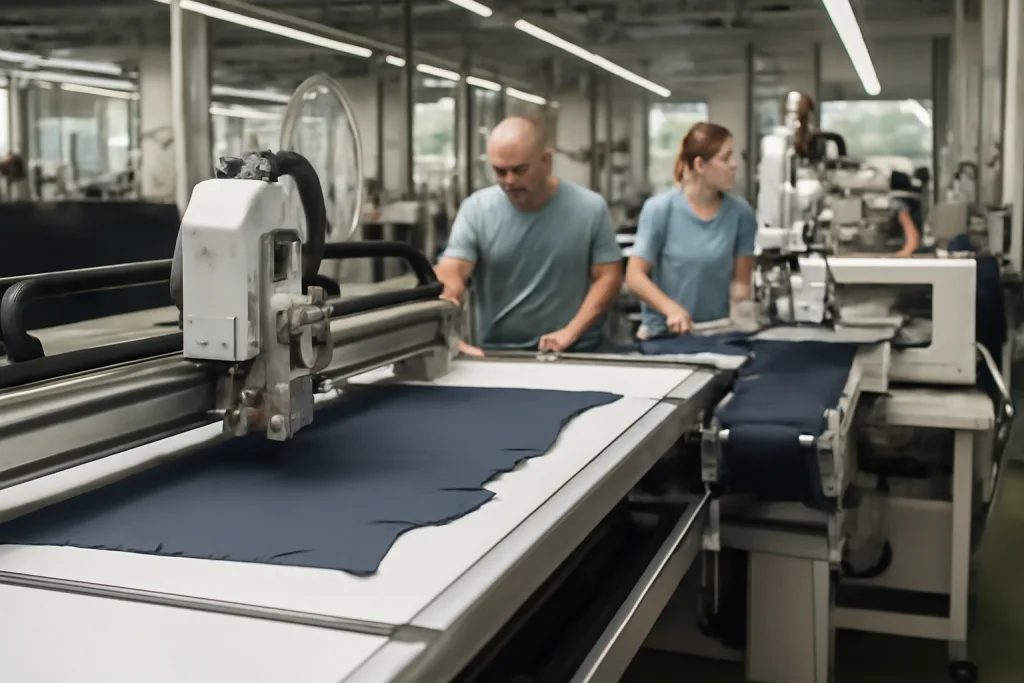
- Cutting: Use auto-cutters for bulk runs, manual for small batches. Control fabric grain direction and relaxation.
- Sewing: Pick ISO stitch types (ISO 301/401/504/602); align seam types for strength and comfort. Needles must match fabric type (ballpoint for knits, sharp for wovens).
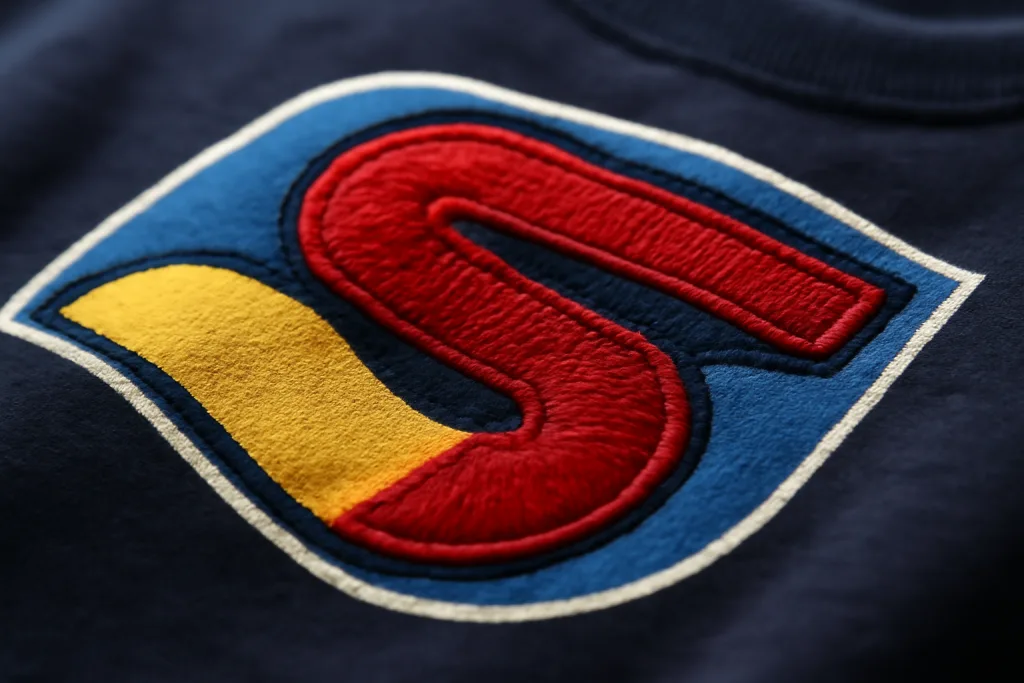
- Decoration: Screen print (plastisol, water-based), DTG, DTF, embroidery (3D/puff), heat transfer. Specify thread colors, coverage, and handfeel.
Quality Control, Compliance & Packaging
- QC: Inline, endline checks, spec table measurements, needle detection. AQL (ANSI/ASQ Z1.4) for final inspection.
- Testing: Colorfastness tests (ISO 105-C06/X12), shrinkage (AATCC 135), seam strength (ASTM D1683).
- Compliance: OEKO-TEX 100, GOTS, BSCI/WRAP/SEDEX, REACH, CPSIA/Prop 65.
- Packaging: Fold method, polybag thickness, hangtag design, barcode standards, carton marks, care label symbols (ISO 3758).
- Logistics: Use Incoterms (EXW/FOB/CIF/DDP), set sample→PP sample→TOP approval workflow.
Applying Your Guide: Sample Use Cases
Streetwear Brand Launch
The style guide drives creation of bold logo embroidery, heavy fleece with premium screen prints, urban lifestyle campaign photos, and playful copy on care labels.
Golf Apparel Team Uniforms
Style guide covers classic polo branding—clean icons, Pantone-matched color palette, performance fabric selection, and action-oriented photography. Product labels blend consistency and club identity.
Corporate Merch Programs
Style guides lay out neutral palettes, crisp serif or sans-serif fonts, and clear logo usage for high-volume B2B orders. Ninghow Apparel matches visual specs over large size ratio packs and batch runs.
Tips for Keeping Your Style Guide Fresh
- Review quarterly for new trends, fabric changes, or market shifts.
- Share digital, editable copies with designers, partners, and manufacturers.
- Collect feedback from suppliers about practical printing or assembly constraints.
- Use real photos from production runs as future samples.
- Align style updates with new product launches.
- Archive old versions to track brand evolution.
Getting Started With Your Clothing Brand Style Guide
Start small. Focus on logo, fonts, and color codes. Expand to photography and messaging as you grow. Gather ideas from successful brands. Every decision in your style guide shapes first impressions and customer loyalty.
As your line expands, work closely with your manufacturer to keep style details tight from lab dips to finished decoration. Ninghow Apparel specializes in aligning production details—color, fit, finish—from your first guide draft to bulk orders.
Frequently Asked Questions
What is a clothing brand style guide?
A clothing brand style guide is a rulebook for logo, fonts, colors, images, and messaging that keeps branding consistent.
How does a style guide help manufacturing?
It tells factories exactly how to print, decorate, and label products so your brand stays uniform across every item.
Should my style guide include Pantone codes?
Yes, using Pantone codes ensures color accuracy during fabric dyeing and printing, making product batches match perfectly.
Can I update my style guide over time?
You can update your guide as trends shift, new products launch, or your brand evolves. Use an editable format.
What’s the best way to share my style guide?
Share your style guide digitally with designers and suppliers so everyone follows the latest approved standards.
Why do logos look different on apparel?
Logo size, placement, and technique (embroidery vs. print) can affect appearance; style guides prevent these differences.