
Introduction
The clothing manufacturing process is a highly intricate and systematic procedure that transforms raw materials into finished garments. It involves various stages, from fabric selection to final packaging, ensuring high-quality apparel for consumers. This guide provides a detailed overview of the entire apparel manufacturing process, highlighting the key steps involved in the garment production cycle.
1. Design and Development
The garment manufacturing process begins with design and development. Designers create sketches, select fabrics, and determine garment specifications. This stage also involves:

- Trend analysis – Understanding market demands and fashion trends.
- Fabric selection – Choosing materials based on durability, texture, and cost.
- Technical drawings – Creating detailed sketches for production teams.
2. Sourcing of Raw Materials
After the design is finalized, the next step in the clothing production process is sourcing raw materials. This includes:
- Fabric procurement – Acquiring textiles from suppliers.
- Trims and accessories – Buttons, zippers, labels, and embellishments are sourced.
- Quality inspection – Ensuring all materials meet industry standards.
3. Pattern Making and Grading
Pattern making is an essential part of the garment factory process. Patterns serve as blueprints for cutting fabric. The steps involved include:
- Creating base patterns – Drafting patterns based on design specifications.
- Grading – Adjusting patterns for different sizes.
- Marker making – Laying out patterns efficiently to minimize fabric waste.
4. Fabric Cutting
In the clothing manufacturing industry, fabric cutting is a crucial step in ensuring accuracy. Techniques include:

- Manual cutting – Using scissors and knives for small-scale production.
- Machine cutting – Automated cutting machines for mass production.
- Laser cutting – Precision cutting using laser technology.
5. Sewing and Assembly
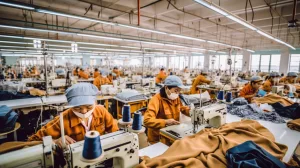
The garment production phase includes sewing and assembling fabric pieces to create the final product. Key processes in the factory garments sector involve:
- Stitching – Sewing different parts together.
- Seam finishing – Enhancing durability and aesthetics.
- Pressing and ironing – Ensuring a smooth and professional finish.
6. Quality Control and Inspection
Before garments move to the next stage in the garment manufacturing industry, they undergo strict quality control checks, such as:

- Fabric inspection – Checking for defects or inconsistencies.
- Seam strength testing – Ensuring durability and longevity.
- Visual inspection – Assessing overall appearance and finishing.
7. Washing and Garment Processing
Depending on the garment processing requirements, clothes may undergo different treatments, including:
- Pre-washing – Removing impurities and shrinkage.
- Dyeing and printing – Adding colors and patterns.
- Special finishes – Waterproofing, softening, or anti-wrinkle treatments.
8. Finishing and Packing
In the final stage of the cloth making process, garments are prepared for distribution. This includes:
- Trimming excess threads – Ensuring neatness.
- Folding and tagging – Adding brand labels and size tags.
- Packaging – Packing garments for shipment.
Conclusion
The apparel process is a multi-step journey from concept to consumer. Understanding how garments are made helps businesses optimize their production cloth workflow, ensuring efficiency and quality. Whether in a small garment factory process or large-scale clothing manufacturing industry, each step plays a vital role in delivering high-quality apparel.
If you are looking for a reliable garment manufacturing partner, Ninghow Apparel provides customized garment production services tailored to your brand’s needs. Contact us today to learn more about our expertise in the apparel production process!