


NINGHOW APPAREL / COMPANY
Discuss apparel experience that is relevant to your brief.
A useful project discussion starts with comparable requirements: garment construction, materials, fit, branding, quantity and intended use. Tell Ninghow Apparel which development or production decisions you need to evaluate.

PRODUCT / COMPLEXITY / ORDER CONTEXT
Compare the work behind the garment, not just its category.
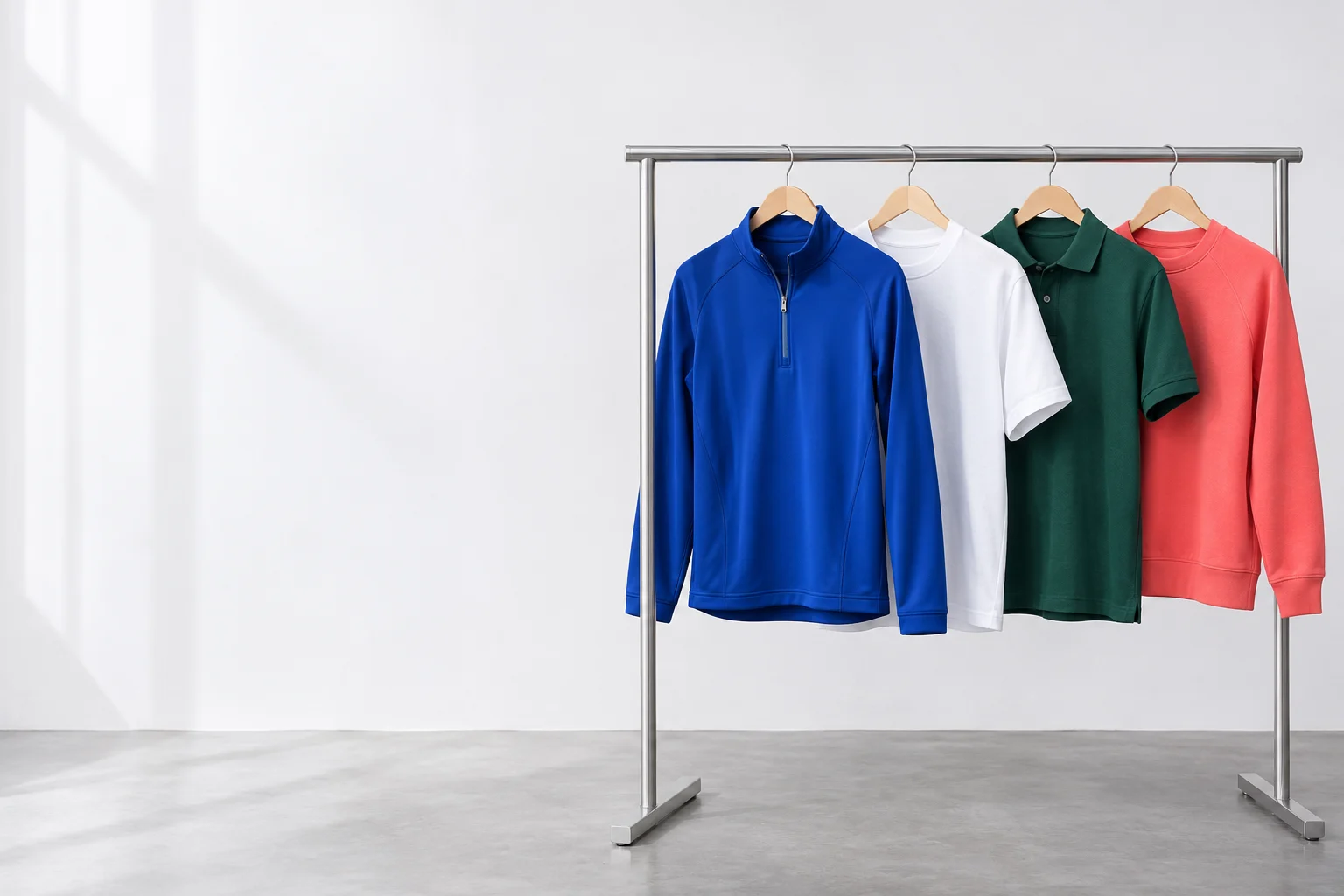
A polo, hoodie or T-shirt reference is a starting point. Similar-looking garments can require different material sourcing, fit development, decoration and inspection.

PRODUCT
Does the construction match the task?
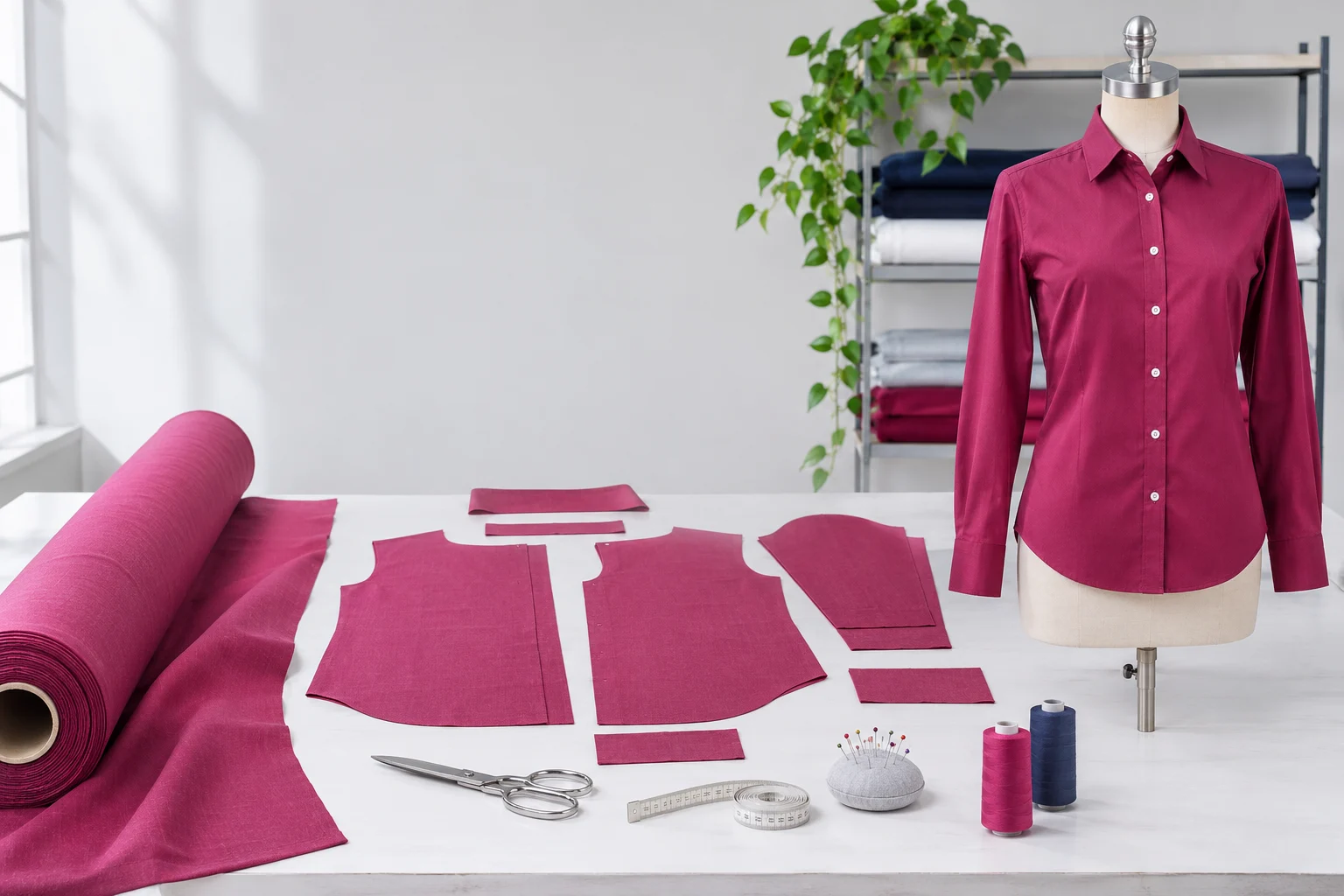
Compare the garment family, silhouette, materials, measurements, grading, fit adjustments and pattern-development requirements.
CUSTOM
Was the customization comparable?
Review fabric and trim sourcing, colors, artwork, printing, embroidery or heat transfer, labels, packaging and the number of styles and sizes.
CONTEXT
Are the order conditions relevant?
Ask about quantity, material availability, sample approvals, production allocation, destination, freight, documents and delivery terms. Earlier quantities or timelines do not establish the terms of a new order.
CONSTRUCTION / MATERIAL / BRAND DETAIL
Use visible details to make the comparison specific.
Describe which feature matters to your product and why. A clear comparison is more useful than a broad request for “similar work.”

BUILD
Name the construction detail
Identify the neckline, cuff, binding, seam or closure you want to discuss, and the relevant fit or assembly question.
MATERIAL
Compare the fabric requirements
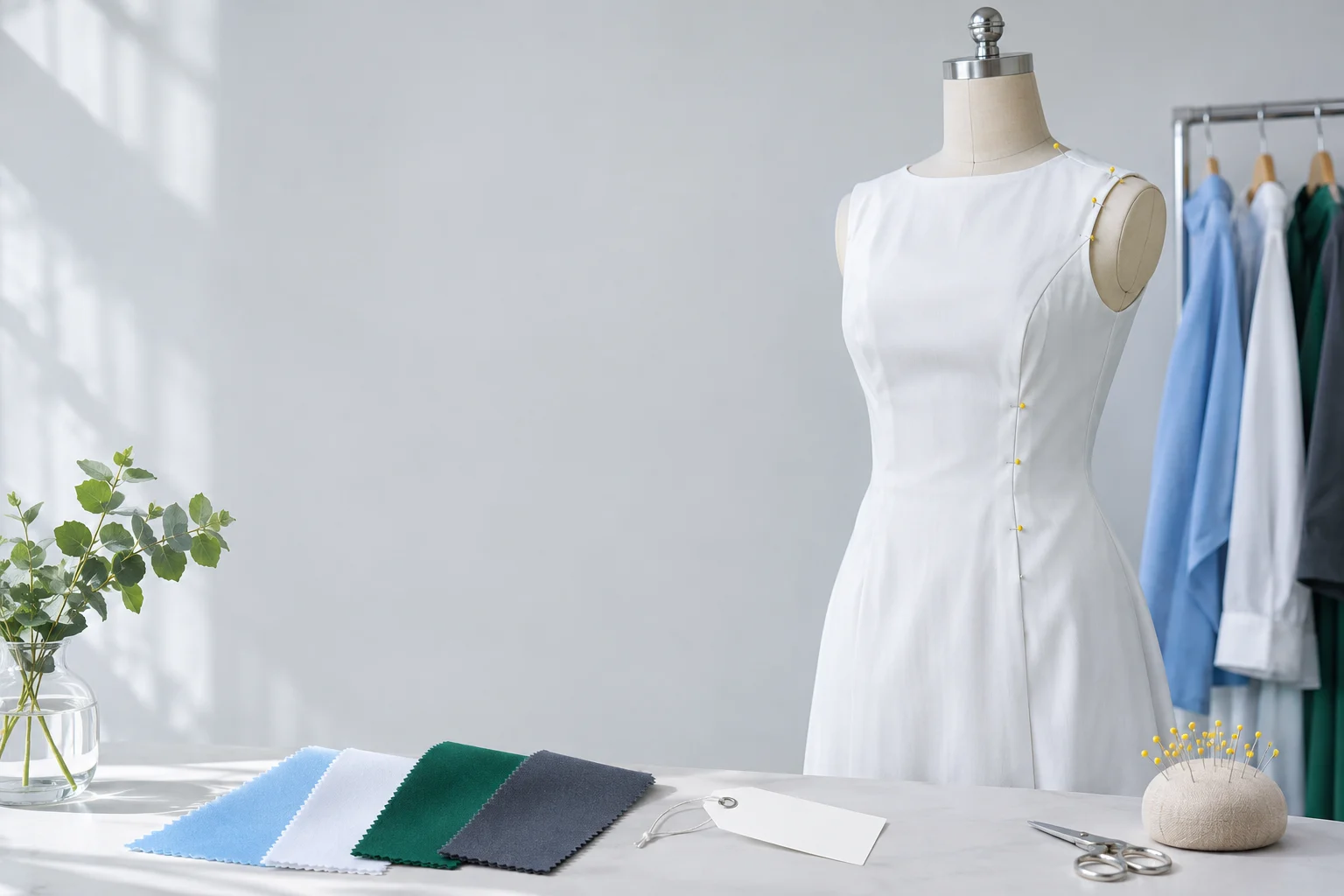
Include composition, construction, color, surface and required characteristics. Ask which records or approved specifications support the comparison.
IDENTITY
Explain the finish and presentation
Specify decoration, label placement, trims and packaging. Check whether the development and approval work is comparable.
REFERENCE → REQUIREMENT → APPROVAL
Move from a reference to your own controlled specification.

01
Identify the useful reference
State which silhouette, material or construction feature helps explain the brief. Ask what development or production scope was involved in a relevant example.
02
Define your exact requirement
Write the measurements, material, construction, decoration and packing instructions for your order. Do not treat a reference garment as the final specification.
03
Approve your own sample and changes
Record fit, material and finish decisions before bulk production. Repeat orders still require current material availability, approved references and scheduling confirmation.
SCOPE / RECORDS / DISCLOSURE
Ask for the evidence that supports the comparison.
Ninghow Apparel’s service scope includes development, sampling, branding, production coordination, quality follow-up and export assistance. For a comparable project discussion, confirm which work was managed and what information can be shared.
SCOPE
An approved project summary
Ask whether a relevant description or anonymized summary can be provided, including product, customization, buyer context, quantity, timing and shipment context where disclosure is approved.
RECORDS
The decisions and checks behind the work
Request suitable specification or sample-approval records, revision summaries, inspections, measurements and corrective-action records. Ask for product-specific testing or certification when required; confirm AQL, methods and validity separately.
Customer names, images and project details need permission for disclosure. Use only current, relevant information and verifiable outcomes; a previous result is not a guarantee for a new order.
BRIEF / QUESTION / NEXT STEP
Give the discussion a clear evaluation purpose.

BRIEF
Describe your proposed order
Include garment type, construction, intended market, materials, fit, branding, quantities, number of styles and target sample or delivery timing.
QUESTION
Name what you need to evaluate
Explain the development challenge, comparison required, quality or testing needs, and whether you need technical records or an approved project summary.
NEXT STEP
Choose the route for your readiness
Use technical consultation for unresolved comparisons. Submit files for review, request a sample for physical validation, or request a quote when product, quantity and delivery needs are defined.
YOUR NEXT STEP
Ask a focused question about comparable work.
Send the garment type, reference files and the development or production challenge. Identify the information you need and whether an approved anonymized summary would support your review.