



NINGHOW APPAREL / APPLICATIONS
One uniform program. Clear decisions for every wearer.
Coordinate staff clothing, teamwear, school, club and event programs with Ninghow Apparel. Connect garment selection and brand approval to the size allocation and packing plan.
ORGANIZATION / WEARER GROUP
Decide what is shared and what changes by role.
Choose garments around activity, working environment, season, coverage and fit. Confirm whether departments, teams, locations and events share one specification or need distinct items.

SHARED
An organization-wide reference
Agree colors, artwork rules and presentation that should remain consistent across the program.
SPECIFIC
A brief for each wearer group
Define garment, fit, size requirements and branding area for each role; confirm the applicable size chart and grading.
GROUP → ITEMS → ALLOCATION
Turn the wearer list into garment assignments.
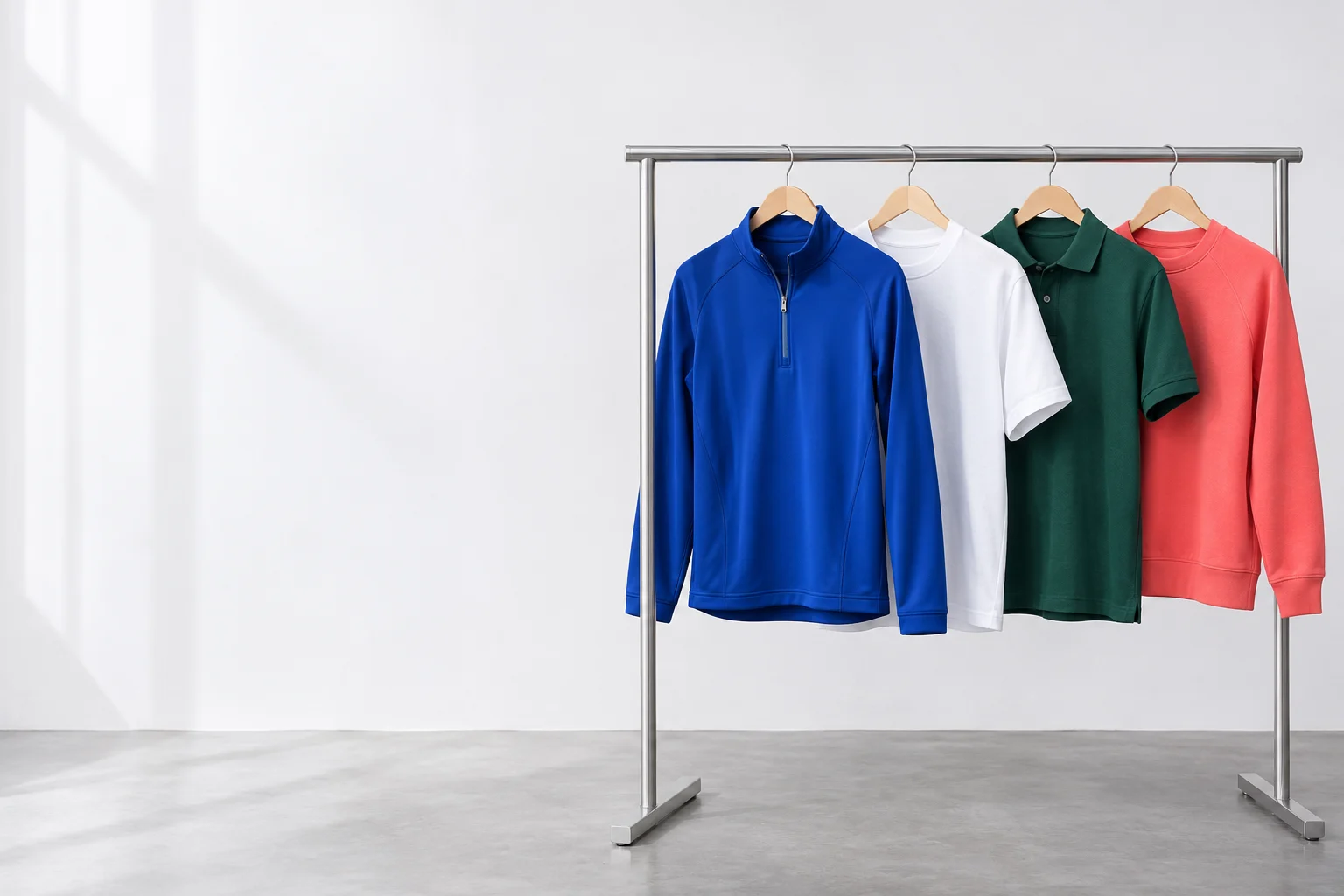
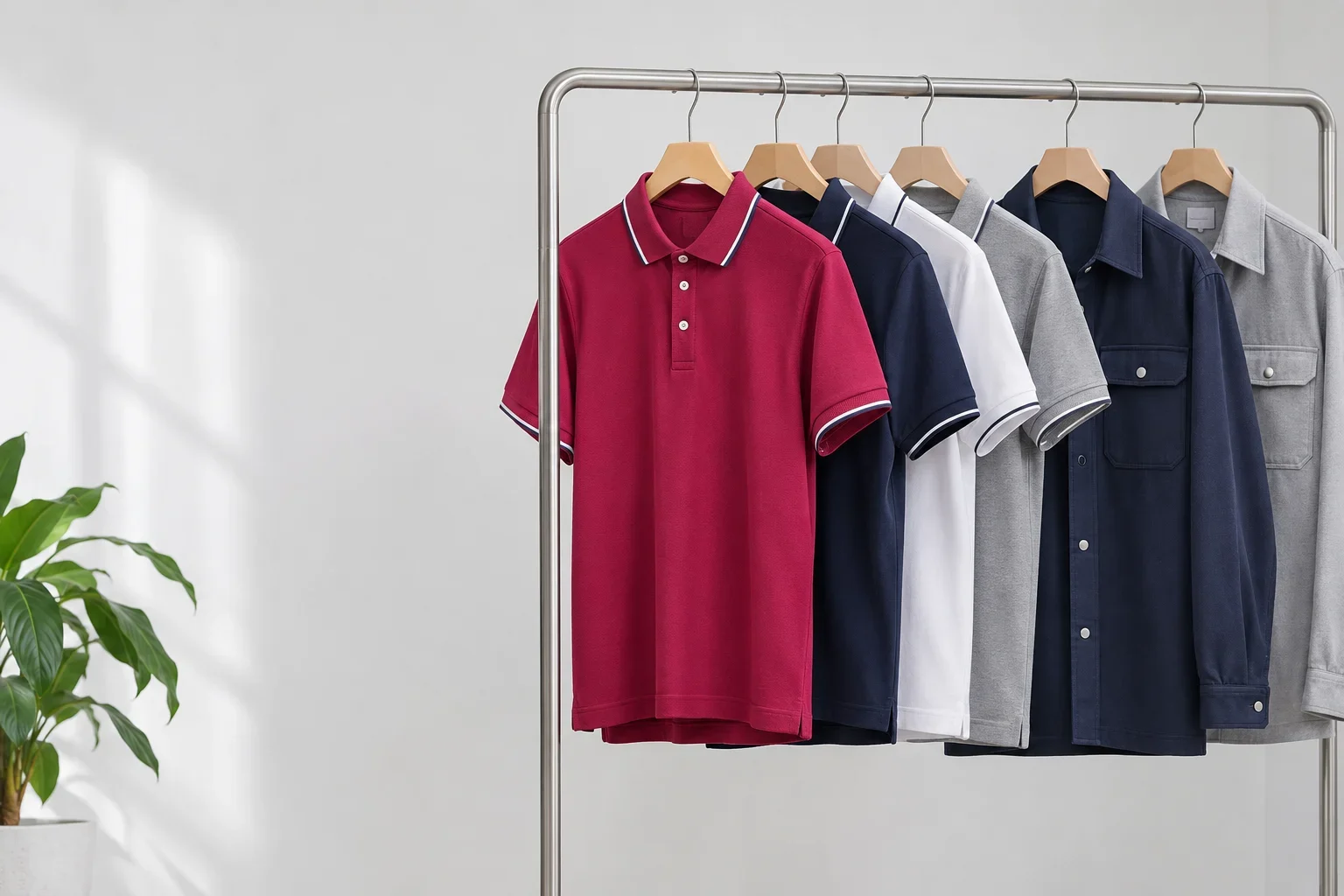
Polos or T-shirts may form the core, with jackets, pants, shorts or vests where required. Confirm each garment and its construction before finalizing the mix.
STAFF
Core staff clothing
Assign garments by department, location and work setting. Record color, fit and quantity for each group.
TEAM
Teams, schools and clubs
Separate players, coaches, members or other roles and any different clothing requirements.
EVENT
Campaign or event clothing
Link the garment mix to the activity, distribution group and required arrival date.
LAYERS
Seasonal or role-specific additions
Record who receives extra layers and whether they share the core color and identity standards.
ARTWORK / PLACEMENT / PRESENTATION
Agree who approves the identity.
Provide artwork files, colors, approximate dimensions, placement and restrictions on use. Confirm who can approve changes. Review screen printing, transfer or embroidery against the fabric, construction and artwork.

A
Collar color detail
B
Placement review area
A / Collar color detail
B / Placement review area
ARTWORK
Approve the application
Record the selected method, size and placement for each garment, including any role-specific differences.
PRESENTATION
Include the supporting details
Confirm brand, care and size labels, trims, folding and packaging formats, artwork and minimums.
GROUP DATA → FIT → QUANTITY SIGN-OFF
Approve the size allocation before it becomes a packing task.
A total headcount is not a size breakdown. Keep quantities linked to garment, color and wearer group.

01
Collect requirements
Gather size needs, fit preferences, group names and any location-specific differences.
02
Confirm the garment basis
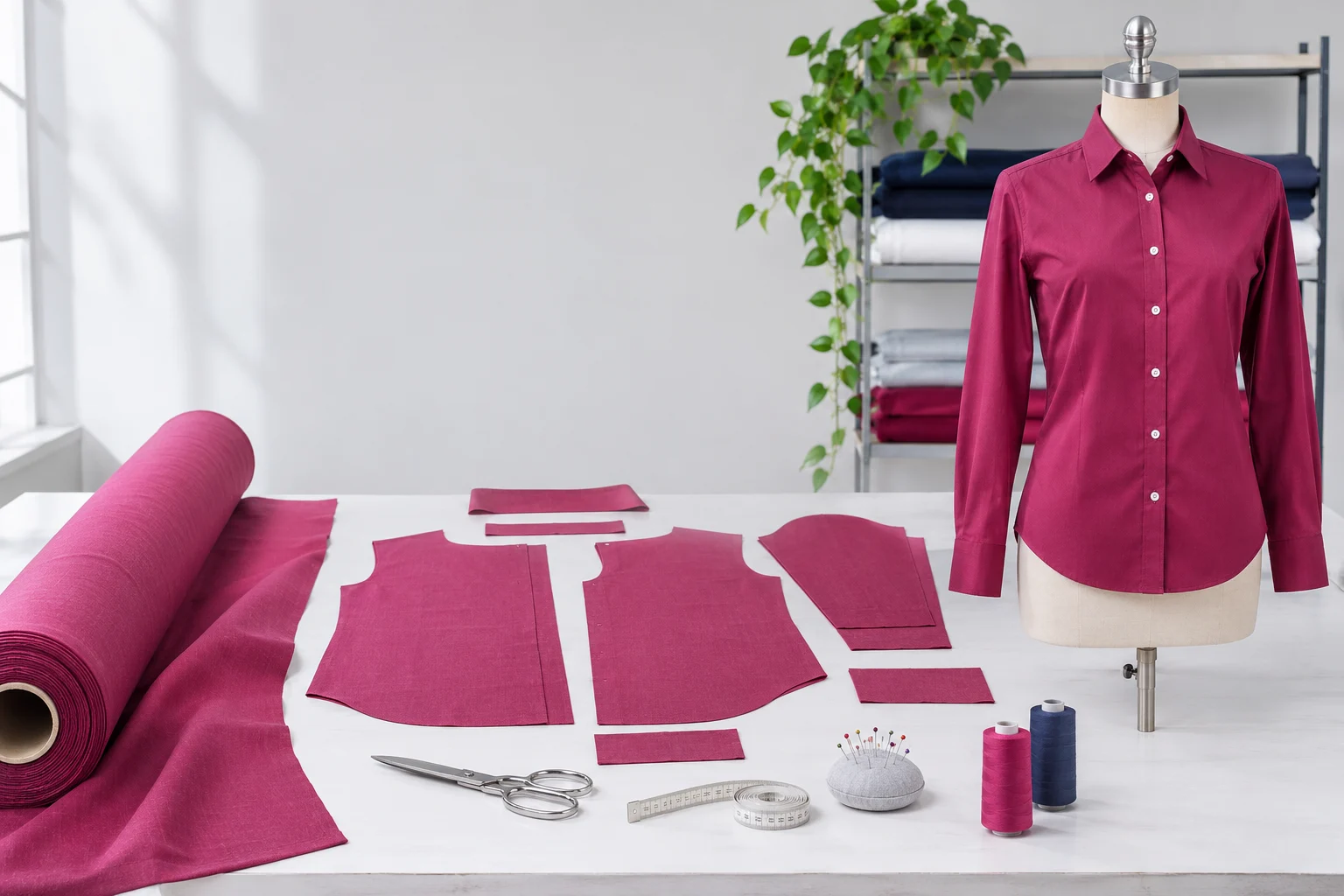
Agree measurements, size standard and grading for the selected garment. Resolve fit questions before approval.
03
Sign off the quantities
Approve the final style, color and size breakdown with the artwork and packing instructions.
LABEL / GROUP / PACK / DELIVER
Make distribution instructions part of the order.

Use the specification checklist and upload the program files. Follow file limits and agreed confidentiality terms.
01
Identify the garments
Keep garment and size labels, artwork and approved references together.
02
Identify the destination group
Specify individual packing, team allocation or grouping by department, school, club or location.
03
Approve presentation
Confirm folding and standard or customized packaging before the order is packed.
04
Check delivery feasibility
State country, city and required date. Confirm MOQ, sample and bulk timing against materials, quantities, customization and scheduling.
ACCEPTANCE / CONTINUITY
Control the first issue and the next replenishment.
ORDER
Set acceptance criteria
Review fabric, construction, measurements, color, decoration, labels and packing. Agree incoming, in-process, visual and pre-shipment checks, tolerances, AQL if used, testing and inspection records. Confirm third-party inspection and current certification validity where required.
REORDER
Keep the approved program record
Retain specifications and samples, then reconfirm material availability, size-management procedures, continuity terms and production scheduling for each replenishment.
YOUR NEXT STEP
Send the program with its allocation plan.
Include departments, teams or locations, garment assignments, quantities by color and size, artwork, packing requirements and destination. State the required date and future replenishment needs.