


NINGHOW APPAREL / CUSTOMIZATION
Turn the garment idea into decisions a sample can follow.
Ninghow Apparel supports design consultation, pattern development, sizing, fit adjustments and sample revisions. Define the work needed to make your concept, existing garment or incomplete brief ready for review.
FABRIC / FIT / FINISH
CONCEPT / EXISTING SAMPLE / TECHNICAL BRIEF
Start with the information you have.
For brands, product developers and sourcing teams, the scope should follow the unresolved decisions.
CONCEPT
An idea or visual reference
Clarify silhouette, garment type, construction, intended use and the details that define the design.
SAMPLE
A garment that needs changes
Mark what should stay, what should change and where fit or construction causes a problem.
BRIEF
An incomplete technical package
Identify missing measurements, material decisions, size logic or documents needed for sampling.
SILHOUETTE / COMPONENT RELATIONSHIPS
Name the shape before defining the measurements.
References explain appearance; a sample brief also needs construction intent. Describe sleeve or leg shape, openings, closures, pocket position and how the garment will be used.
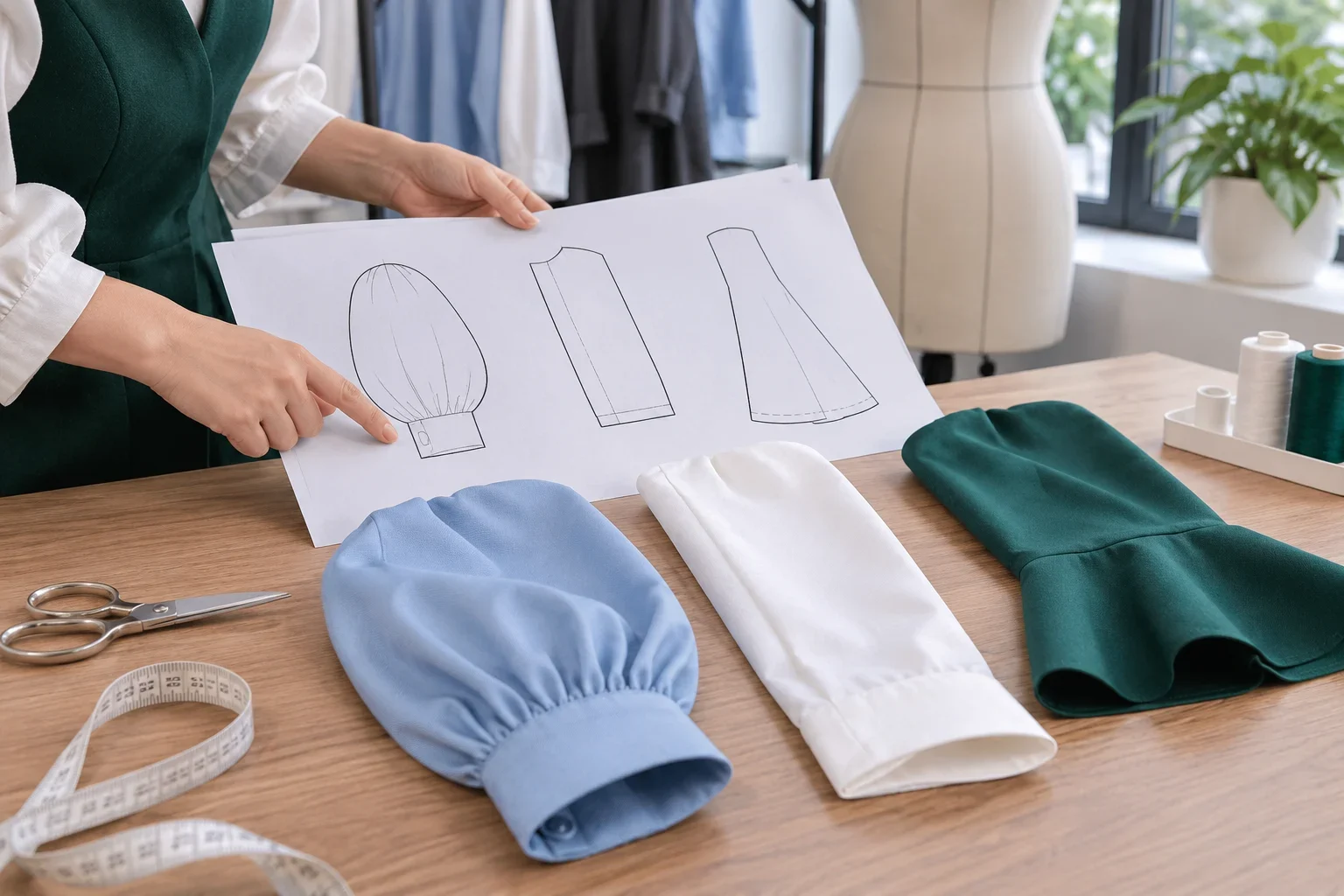
A
Gathered sleeve
B
Straight sleeve
C
Flared sleeve
A / Gathered sleeve
B / Straight sleeve
C / Flared sleeve
DESIGN
Identify what must be preserved
Mark essential proportions and details, then distinguish optional changes and open decisions.
CONTEXT
Connect shape to the wearer
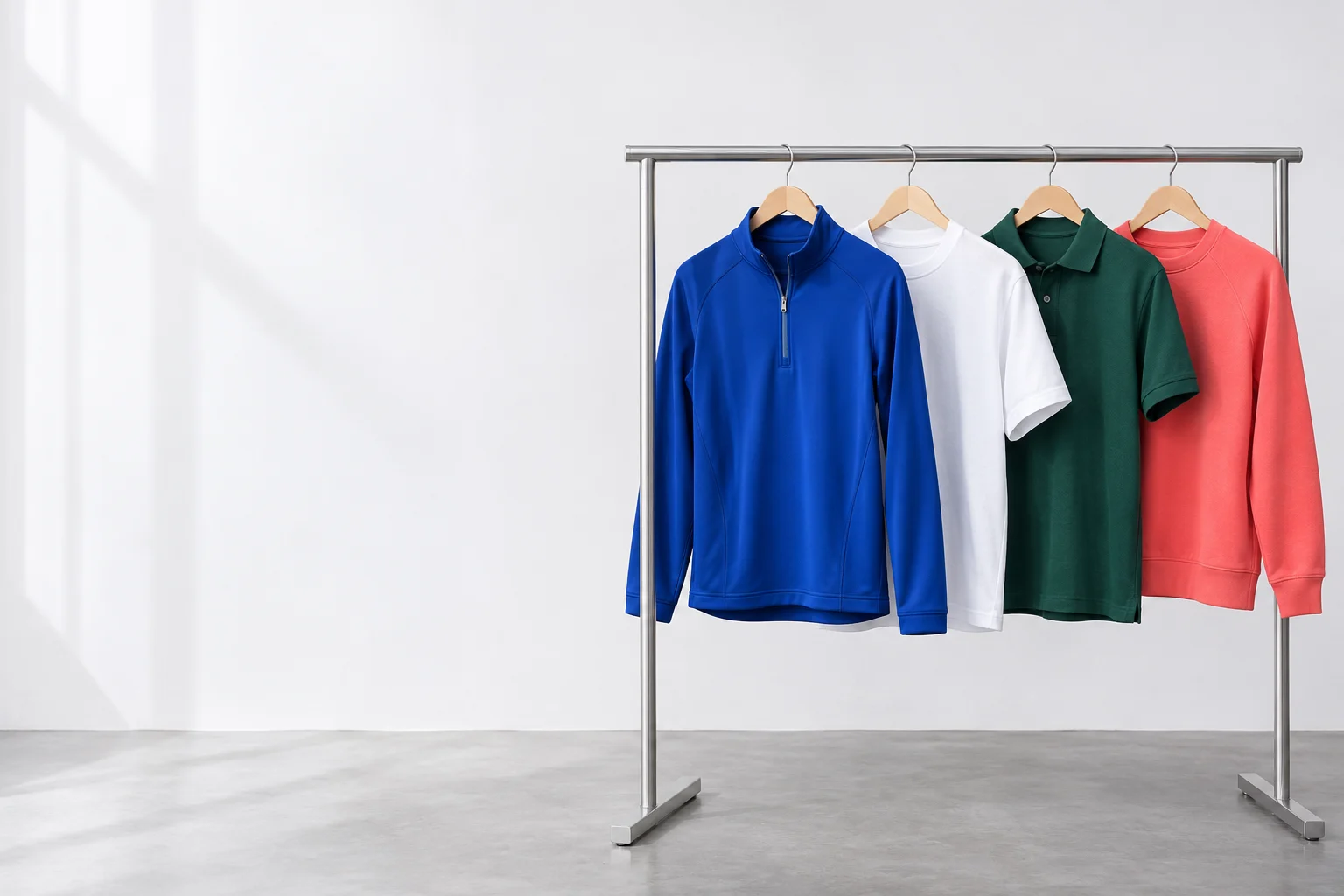
Explain movement, coverage, fit, decoration and material priorities for the intended golf, activewear, streetwear, uniform or retail use.
REFERENCE SIZE / MEASUREMENT POINTS
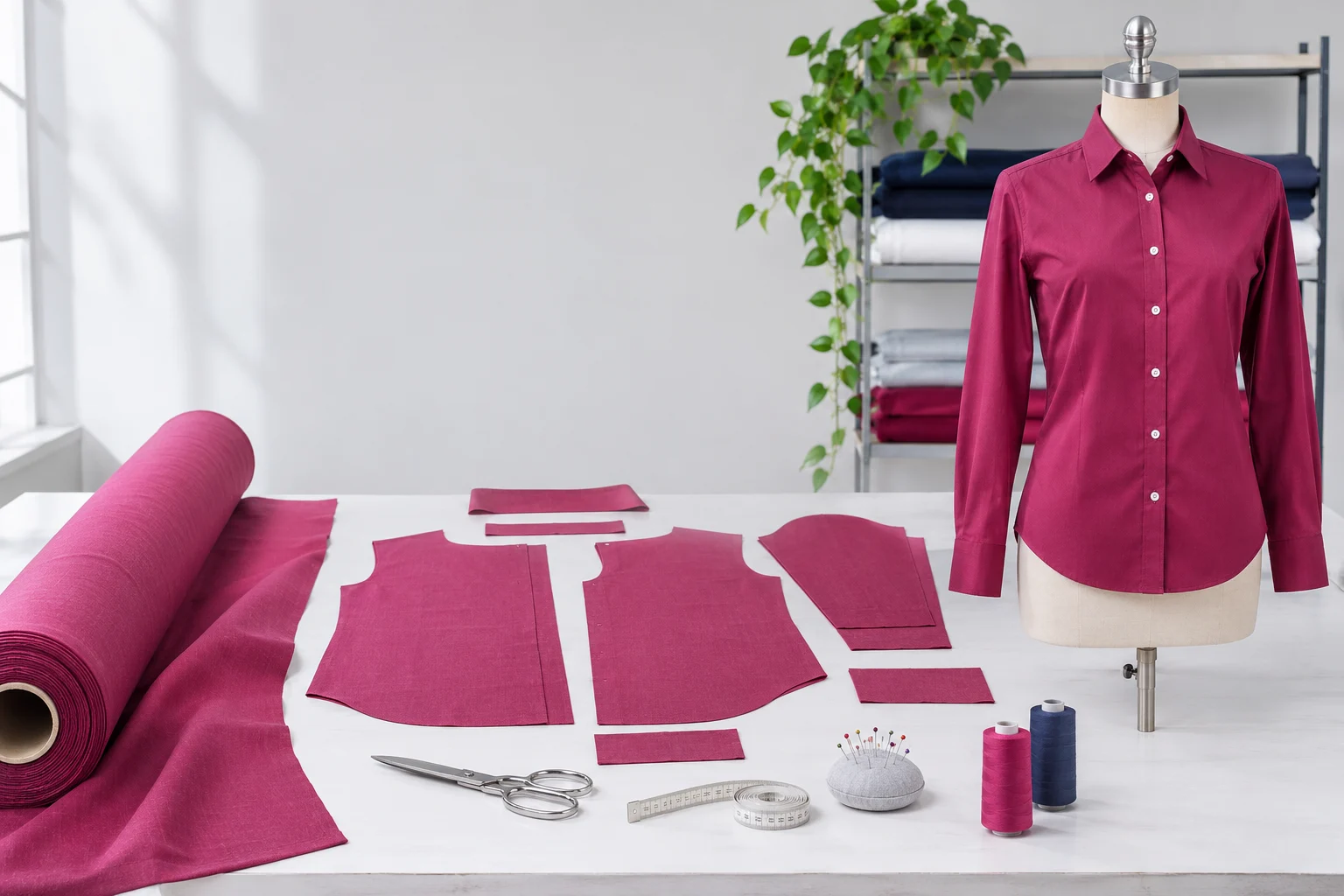
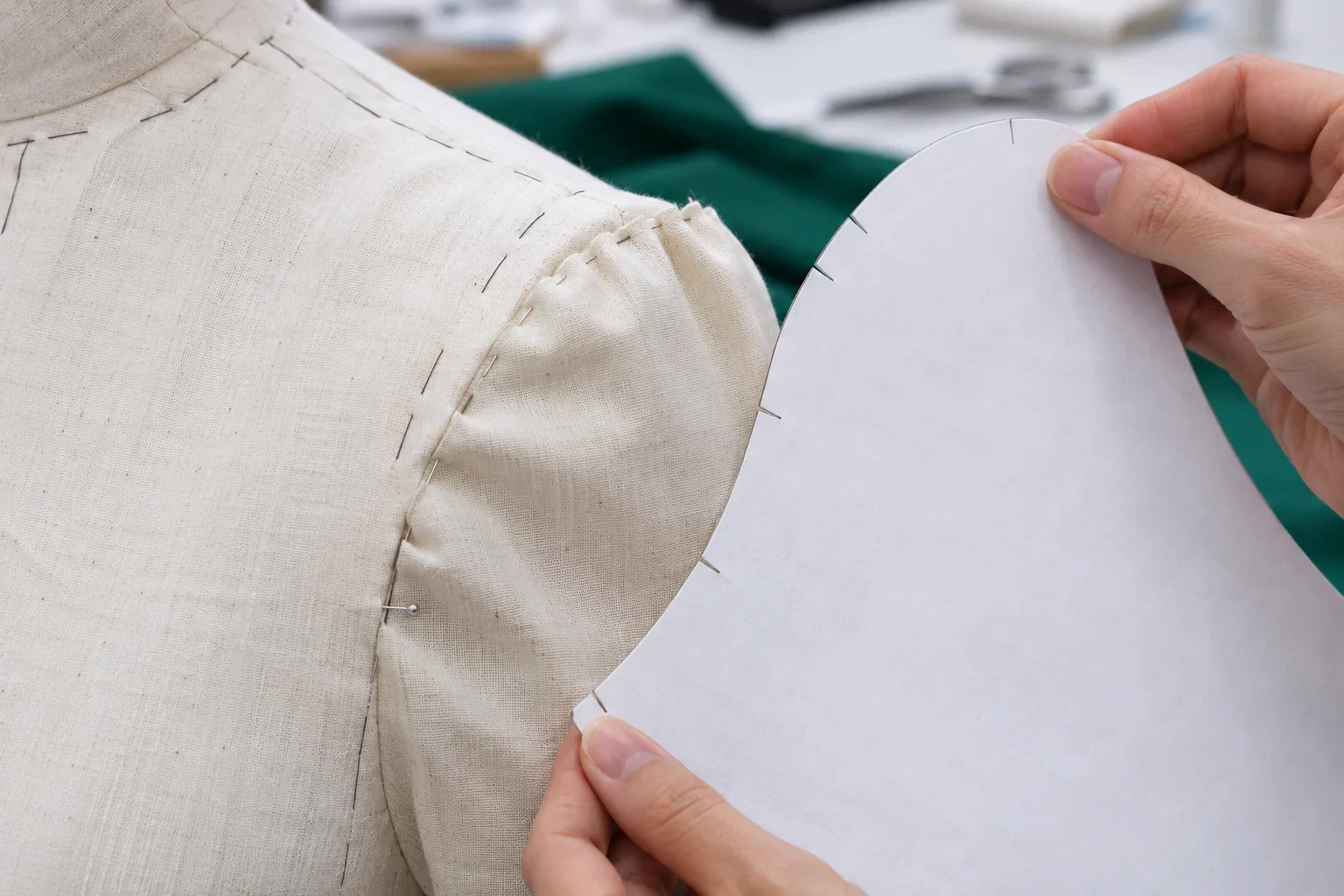
A pattern connects the parts to the fit brief.
Set a reference size, key measurement points, intended ease and fit direction. Confirm the size range and grading scope; one approved sample does not establish every size.
BASIS
Agree how fit will be assessed
Confirm fitting method, model or form, tolerances and who supplies feedback.
FEEDBACK
Describe the location and the change
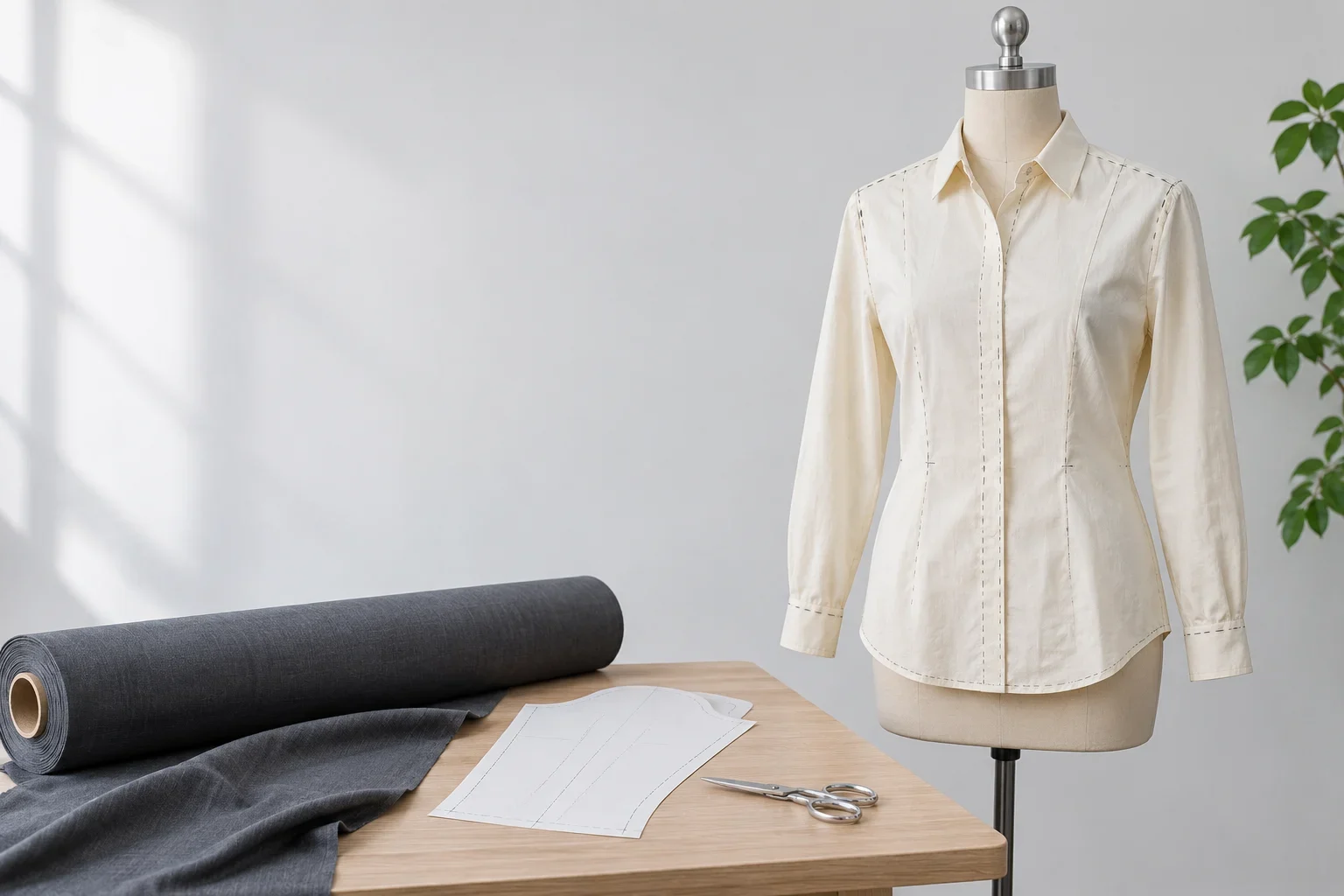
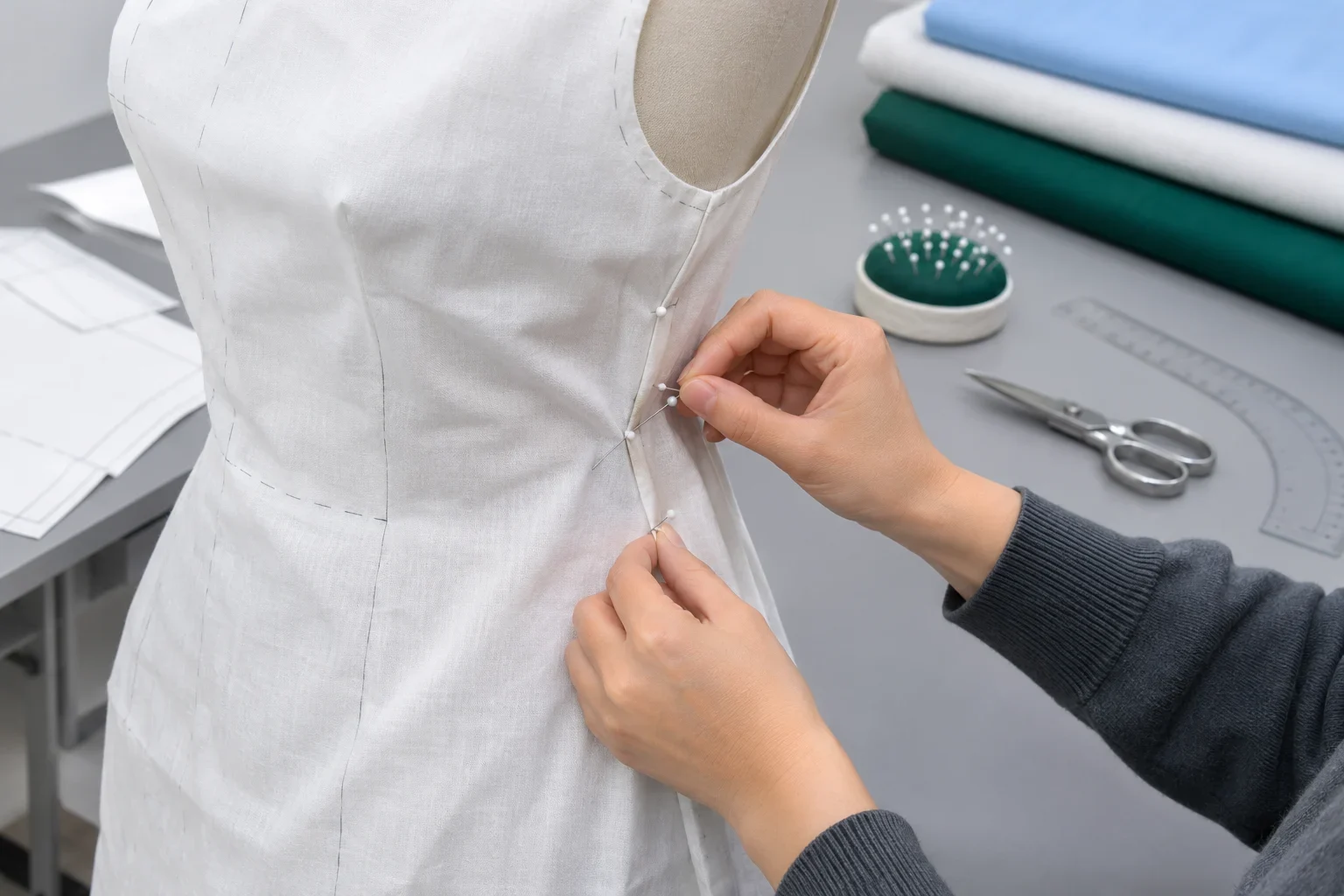
Use photos, marked samples and measurement comparisons for shoulder width, body length, sleeve balance, rise, waistband or pocket position.
CLARIFY → DEVELOP → REVIEW → RECORD
Keep each revision connected to the brief.
01
Clarify
Collect references, measurements, fit priorities and the decisions still open.
02
Coordinate
Resolve fabric, color, trims, closures, artwork, labels and packing; agree required pattern work.
03
Review the sample
Confirm sample type, quantity, size, materials and approval points, then assess fit and construction.
04
Record the accepted changes
Retain revision comments and the approved version for the next sample or production discussion.
SCOPE / FILES / RIGHTS / TERMS
Agree the deliverables, not only the garment image.
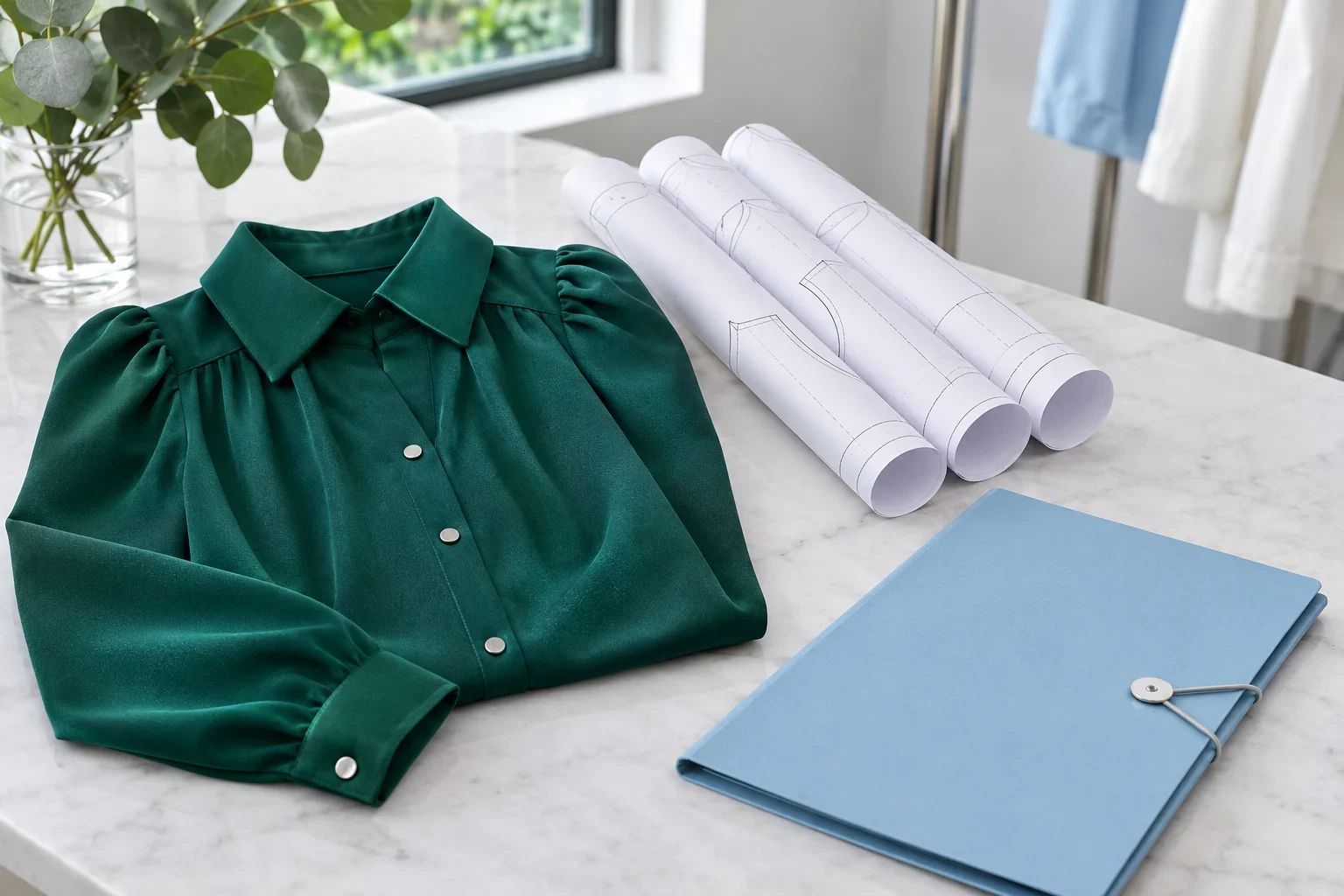
Use the specification checklist, then upload available development files.
01
Technical outputs
Specify drawings, measurement charts, construction notes, material records, artwork, pattern files or grading required. A complete tech pack must be agreed as a deliverable.
02
Ownership and confidentiality
Confirm pattern and technical-file ownership, intellectual-property arrangements and file formats.
03
Revision responsibilities
Agree fitting input, approval records, revision treatment and how decisions pass into sampling or production.
04
Commercial conditions
Confirm development timing, sample charges, material responsibility, sample and planned bulk quantities, destination and target date.
MATERIALS / VALIDATION / PRODUCTION
Move to the service that answers the next question.
Evaluate a development partner by brief interpretation, measurement control, material coordination and usable revision records. Confirm the agreed scope before relying on the handoff.
MATERIALS
The garment is defined; components are open
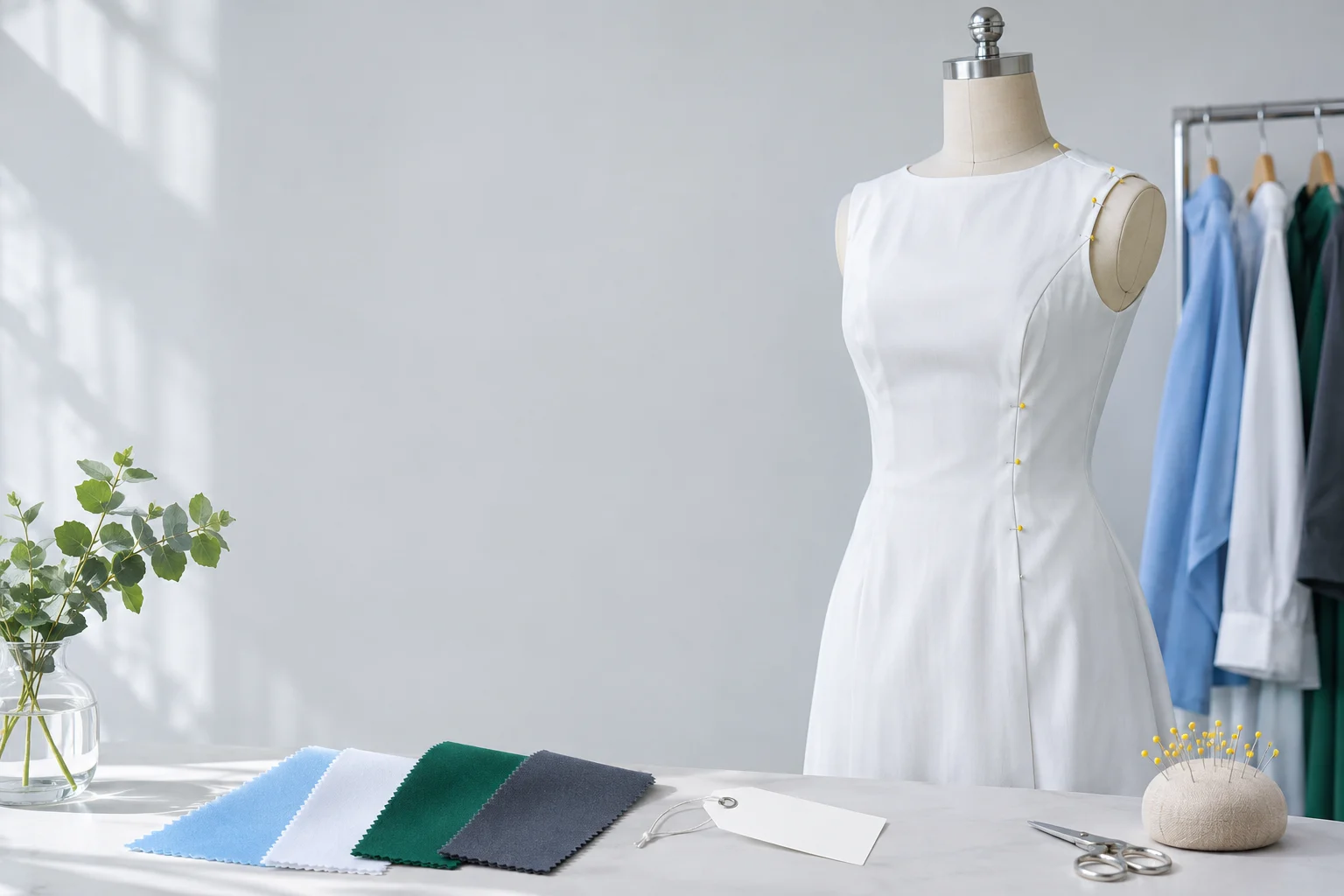
Review fabric, trim and decoration compatibility.
VALIDATION
The brief needs physical review
Assess fit, construction, materials and branding through sampling.
PRODUCTION
The product and commercial requirements are ready
Review the broader OEM/ODM route or request an order-specific quotation.
YOUR NEXT STEP
Bring the references and the questions still open.
Include garment type, intended wearer and use, sketches or samples, known measurements and fit concerns. Add material, trim, branding, sample quantity and delivery requirements where available.